

























































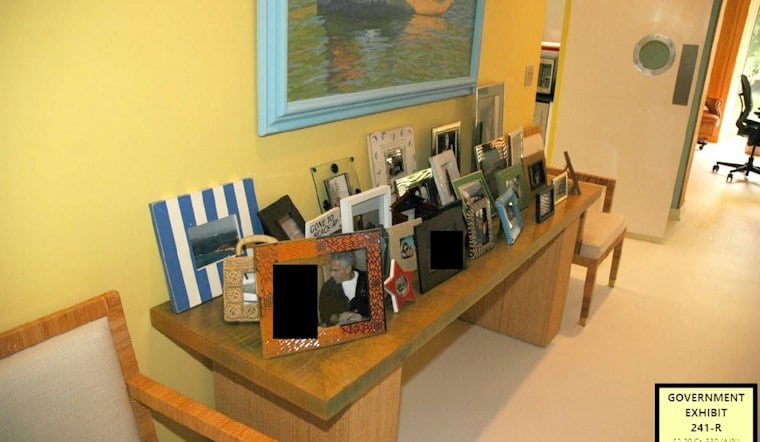
Two women have sued Jeffrey Epstein's estate in federal court, alleging he possessed child sexual abuse material depicting them as children and demanding that a judge order a court-supervised process to identify and notify everyone else who may appear in his collection. The lawsuit also revives a lingering mystery from the earliest days of the Epstein investigation: computers that investigators expected to find inside his Palm Beach mansion were never located.
Suit Targets Estate Executors Over Alleged CSAM Collection
The two plaintiffs are anonymous in the court filing but are described as survivors of Epstein's alleged crimes involving child sexual abuse material, according to The Guardian. Their complaint, filed in the U.S. District Court for the Southern District of New York, names Epstein estate co-executors Darren Indyke and Richard Kahn and alleges that Epstein possessed, transported, produced and distributed child pornography or child sexual abuse material involving countless children over more than two decades, per the same outlet. As reported by WESH 2 investigative reporter Terri Parker, the two women are seeking both an accounting of the sexual abuse images connected to Epstein and a process to identify and notify others depicted as children in the material.
Central to the complaint is the argument that many people whose images may appear in Epstein's collection have never been identified or notified, even though the National Center for Missing and Exploited Children runs a victim-identification program designed to do exactly that, the Guardian's reporting states. The lawsuit asks a federal judge to establish a court-supervised process to account for the relevant material and to order cooperation with that national center so the child victim identification program can help determine who is depicted in the images, according to WESH 2. It separately seeks information about relevant images, electronic devices and records still held by Epstein's estate.
Missing Computers Trace Back to 2005 Palm Beach Search
The lawsuit's questions about missing electronic evidence reach back to October 2005, when Palm Beach police searched Epstein's mansion on El Brillo Way, an investigation that had begun in Palm Beach County that March, according to the Palm Beach Post. Detectives who searched the home found erotic photographs, a massage table and a dentist's chair, per WESH 2's reporting, while the Palm Beach Post reports separately that the search of the Brillo Way home turned up multiple hidden cameras. Court testimony from Ghislaine Maxwell's trial, cited by the New York Times, described a bright green folding massage table found in a second-floor bathroom, along with photographs, including images of “nude females,” that were discovered in closets throughout the house.
But investigators did not find the computers they were looking for, according to the lawsuit's account relayed by WESH 2, and wires were reportedly left hanging where electronic equipment had apparently been removed. During the 2005 search, Sgt. Michael Dawson testified that some computers found at the property did not have accompanying towers, the Times reported from the Maxwell trial proceedings. Investigators believed Epstein's computers could contain evidence of sexual abuse of minors, including child pornography, per WESH 2's account of the complaint, and the lawsuit alleges that law enforcement was advised at the time that Epstein's attorneys or other agents had possession of the computers.
Non-Prosecution Deal Preceded Later Federal Seizure
According to the lawsuit, investigators never obtained access to Epstein's computers before he entered into a federal non-prosecution agreement in South Florida, a gap the complaint frames as part of a broader failure to fully account for his collection. The Palm Beach Post's reporting notes this pattern of missing electronic evidence as a recurring issue in the case, even as later investigators moved on the same material years afterward.
Federal agents arrested Epstein on federal sex trafficking charges in 2019 and seized computers, hard drives and other electronic media from his properties that year, WESH 2 reports. FOX5 New York reports that a collection of sexualized images of children was confiscated by federal investigators in 2019 from Epstein's New York residence. Epstein died in a New York jail that August while awaiting trial on those charges, and the electronic evidence seized in 2019 remains in federal government custody, according to WESH 2.
Damages Sought Remain Unclear, Attorney Points to Wider Scope
Reports diverge on the financial stakes of the case. FOX5 New York reports the suit seeks roughly $6 million on behalf of more than 40 individuals, while IJR reports that the complaint itself does not specify a dollar amount. IJR's reporting frames the litigation's core ask as a coordinated, court-supervised program for identifying and notifying those depicted in the material, rather than simply a damages claim.
The plaintiffs' attorney told FOX5 New York that the case could ultimately involve thousands of class members, and that most people pictured in Epstein's collection had never been identified. Epstein's estate has not filed a response to the allegations in court, WESH 2 reports.


