

























































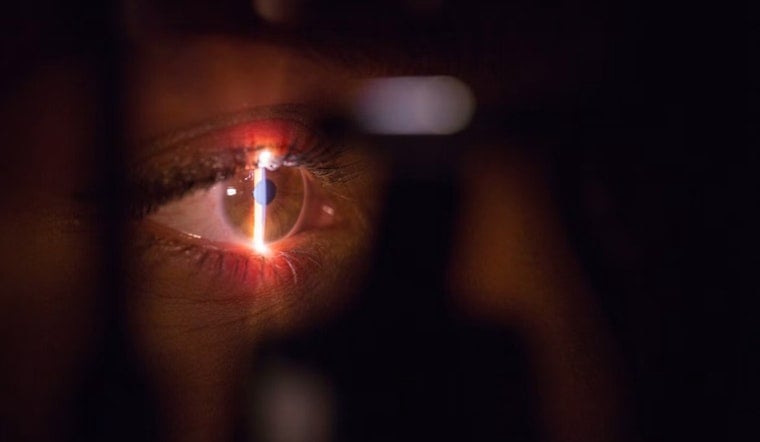
Sandra Fletcher is 70 years old and had lived for years with vision that kept getting dimmer until a new surgical suite tucked into the Monument Valley Community Health Center gave her the chance to see clearly again. She is one of seven patients who received cataract surgery there in June, marking the first surgeries of any kind ever performed on the Utah portion of the Navajo Nation, according to Utah Navajo Health System officials.
The suite opened through a partnership between the John A. Moran Eye Center, the Utah Navajo Health System, and the Seva Foundation, which funded the buildout. Before it opened, cataract surgery for patients in this part of the reservation had to happen at the hospital in Blanding, Utah, forcing many to travel far from home for even routine procedures, per the University of Utah Health report. Craig J. Chaya, Moran's vice chair of community outreach, said improving access to surgical eye care on the Navajo Nation has been a top priority for the outreach team, and announced that office-based surgery was brought to the health center in collaboration with UNHS and Seva.
A Nearly Three-Hour Drive, Finally Unnecessary
Thomas Eddie became the first patient to enter the new surgical suite, traveling nearly three hours to reach it for surgery on one eye; he is expected to receive surgery on his second eye later, per the same report. That distance illustrates a problem researchers have long flagged on the Navajo Nation, which spans more than 27,000 square miles across Utah, Arizona, and New Mexico — an area larger than 10 U.S. states — with widespread unpaved roads and only 10 full-service grocery stores, according to MillennialEYE. Those logistical barriers have historically caused some patients to forgo needed care altogether, the University of Utah Health article notes.
Revina Talker, a physician assistant at Monument Valley Community Health Center who grew up on the reservation, welcomed and cared for patients on the suite's first day of surgeries. Michael Jensen, chief executive director of the Utah Navajo Health System, oversees the network, which operates as a nonprofit community health center system providing primary medical, dental, and behavioral care across four main facilities in southeastern Utah and treats patients regardless of citizenship status or financial resources, according to the Utah Navajo Health System.
The Scale of Preventable Blindness
The stakes behind this expansion are backed by years of clinical data. A nine-year study of 2,251 first-time patients at Moran Eye Center outreach clinics from 2013 to 2021 found that cataracts accounted for 40% of blindness and an unmet need for eyeglasses accounted for 33% among uncorrected Navajo patients, according to research published in PMC. Within that same patient group, the same research found that 73% of bilateral blindness was completely treatable or preventable through eyeglasses or cataract surgery. Nearly 18% of diabetic Navajo patients screened during Moran outreach visits between 2016 and 2021 were also diagnosed with diabetic retinopathy, a leading cause of irreversible vision loss.
Despite elevated regional rates of type 2 diabetes and hypertension, which can raise surgical risk, an eight-year retrospective study of 200 ophthalmic surgeries performed on Navajo Nation patients from 2013 to 2020 found a 92.5% rate of uncomplicated procedures, according to research published in Investigative Ophthalmology & Visual Science. Moran has provided vision screenings, eye care, and eyeglasses on the Utah portion of the Navajo Nation since 2012, and the center says it has built a strong relationship with the community through years of clinics and eye care.
Fletcher's Family History With Cataracts
For Fletcher, the surgery carried a personal weight tied to her family's history. Her grandfather went blind from cataracts, and she said losing vision makes life different. After her own charitable cataract surgery through Moran's Global Outreach Division, Fletcher said she can see much better now, and she plans to finish an acrylic painting.
Jennifer Leo, program officer for Seva's American Indian Sight Initiative, represents an organization that has worked for years to bring eye-care surgical capabilities to Indian Country in the Southwest. Seva, an international nonprofit eye care organization founded in 1978 in Berkeley, California, by public health leaders including Dr. Larry Brilliant and Ram Dass with early support from Steve Jobs, established the American Indian Sight Initiative to deliver sustainable eye care to more than 5 million Indigenous people across the United States, according to the Seva Foundation. The organization works with local communities worldwide to develop self-sustaining sight-preservation programs rather than relying solely on short-term outreach trips.
Part of a Broader Push for On-Reservation Surgery
The Monument Valley suite is the first surgical suite of its kind on the Navajo Nation, and it now enables Moran's Global Outreach Division to serve patients from throughout the reservation rather than referring them elsewhere. Cataract surgery in Monument Valley is expected to become a regular part of Global Outreach Division trips going forward, per the University of Utah Health report, with Moran providing staff and specialized equipment for the procedures while future trips bring sight-restoring care directly to patients.
The opening fits into a wider tribal effort to rebuild local surgical capacity. In January, Sage Memorial Hospital in Ganado, Arizona, performed its first surgical procedure in nearly two decades, according to the Office of the Navajo Nation President, reflecting a broader movement across the Navajo Nation to restore surgical services and reduce reliance on off-reservation medical travel. For patients still needing higher levels of care beyond what Monument Valley can offer, leaving the reservation often remains necessary, but the new suite opens access to specialty care much closer to home for many others.





