

























































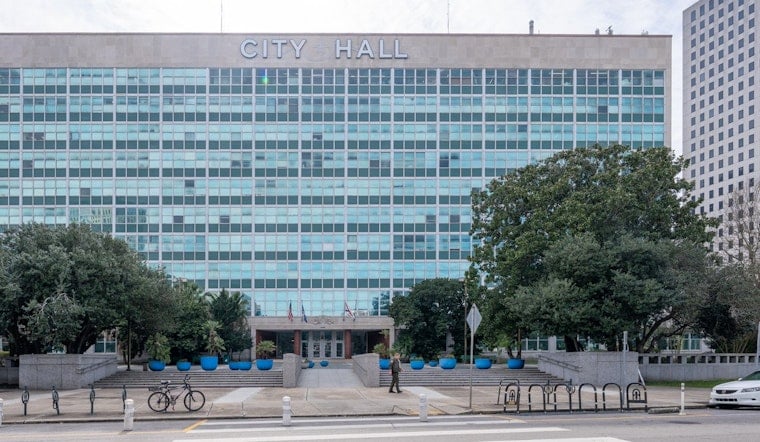
New Orleans City Hall now has sharper teeth to punish contractors who shortchange their workers on public projects. The city council this week adopted a rewritten Responsible Bidder Ordinance that requires officials to evaluate every contractor bidding on public works, sets fines of $500 for a first labor violation and $1,000 for repeat offenses, and establishes procedures for disqualifying bidders over violations.
The updated rules, approved this week, expand the types of contracts required to comply with city labor policies, now reaching city public works contractors, consultants, and even nonprofits that receive city grant funding, according to NOLA.com. City officials will now have 30 days to investigate possible violations, with the revised process setting out how violations are handled. Councilmember Matthew “Matt” Willard, who discussed the changes, said the ordinance increases accountability and transparency and should prevent the city from awarding contracts to companies that repeatedly violate labor laws.
Willard chairs the council's Economic Development and Special Development Projects Committee, according to the New Orleans City Council, putting him at the center of the city's ongoing effort to police how taxpayer-funded work gets done. The original Responsible Bidder Law, now five years old, imposed wage standards for contractors bidding on public projects and grew directly out of one of the city's darkest construction disasters.
An Ordinance Born From Tragedy
The Responsible Bidder Ordinance traces back to November 2021, when the council first passed contractor accountability requirements two years after the October 2019 collapse of the Hard Rock Hotel building, which killed three workers and exposed serious gaps in local construction oversight, as reported by The Lens. That history explains why contractor oversight remains such a high-stakes issue for city leaders, and why this week's update adds specific audit timelines and administrative judge oversight rather than leaving enforcement informal.
Jennifer Hernandez of IUPAT was quoted discussing the revised ordinance. The updated rules include enforcement mechanisms related to labor-law compliance.
Working Around State Wage Preemption
The reason New Orleans leans so heavily on contractor rules rather than a straightforward minimum wage hike comes down to state law. Under a 1997 statute, Louisiana preempts local governments from setting mandatory municipal minimum wages above the federal $7.25 floor, according to the Economic Policy Institute, which forces cities like New Orleans to rely on public procurement standards to influence local wage practices instead. That constraint isn't new: the Louisiana Supreme Court ruled that state preemption invalidated a voter-approved citywide living wage charter amendment, according to Justia Law, cementing a legal pattern the council has had to navigate for more than two decades.
With direct wage mandates off the table, the city has instead built a patchwork of procurement-based tools. In September 2025, the council created the Healthy Workplace Program within the New Orleans Health Department, offering voluntary designations to employers that provide living wages, paid leave, and organizing rights, as detailed by Biz New Orleans. The Responsible Bidder Ordinance updates work alongside that program as part of a broader strategy to raise labor standards without running afoul of state preemption.
Part of a Bigger Shift Toward Direct Oversight
This isn't the council's only recent move to tighten its grip on public works. In February, city leaders reallocated more than $5.8 million from private contractor bids to build an in-house Street Maintenance Unit staffed by 50 full-time municipal employees, Hoodline previously reported, citing a desire for greater direct public oversight over public works.
The push for accountability has also been fueled by enforcement failures elsewhere in the metro area. In May, a contractor in nearby Harahan pleaded guilty; separate reporting put payments in the city at more than $882,000, a case Hoodline covered at the time, underscoring the regional pressure on officials to tighten public works oversight. Federal regulators have also pursued individual wage and misclassification investigations.
Legal Limits Still Loom
Any disqualification the city hands down under the new rules will still have to survive scrutiny under the Louisiana Public Bid Law, which requires public contracts above certain thresholds go strictly to the lowest responsive and responsible bidder, according to Scott Vicknair, LLC. That statute leaves room for challenges to disqualifications viewed as overly discretionary, even as city departments now face the added administrative burden of investigating contractor complaints within 30 days.





