

























































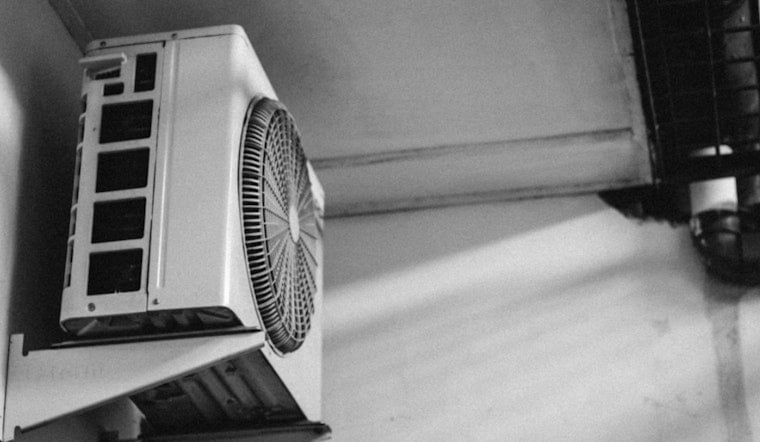
For nearly five years, Antonia and Armando Gonzalez battled a failing air conditioner in their North Las Vegas home, at times fleeing to relatives in Canada or Colorado for months just to escape the desert heat. Antonia is 76 and Armando is 82, and their AC unit was nearly 30 years old, leaking freon and struggling to keep the house livable through some of the hottest summers Southern Nevada has ever recorded. Then help arrived: a nonprofit installed a brand-new air conditioner in their home on Monday.
The couple's ordeal, and its resolution, was detailed by the Las Vegas Review-Journal, which reported that Rebuilding Together Southern Nevada installed the new unit just 28 days after the family applied for assistance. Their daughter, Erica Sanchez, had tried to repair the aging unit herself before turning to the nonprofit, which she learned about through a news story. Antonia Gonzalez agreed to speak to the press specifically so that other families in similar situations might learn help is available.
Before the fix, the family relied on small fans and a portable air conditioner to get through the worst stretches of summer. According to the Review-Journal's reporting, Antonia Gonzalez said that when the heat became unbearable, they simply decided to leave and let it pass, staying with relatives out of state for months at a time. Now, with the new unit installed, Sanchez said her parents are home and the difference is noticeable, and Antonia has resumed painting comfortably indoors.
A Nonprofit Racing Against a Shrinking Budget
Rebuilding Together Southern Nevada is a nonprofit that serves low-income homeowners across the valley, and it prioritizes air-conditioning repairs over other work, such as roof replacements, given the life-safety stakes. The organization operates on a budget of about $12 million, according to the Review-Journal, but CEO Bob Cleveland has said the group runs out of assistance money every year, unable to keep pace with demand. Cleveland has been blunt about the stakes, telling the paper that nobody cares about seniors, and pointing out that leaving people without cooling assistance carries steep costs of its own: rehoming a couple would cost taxpayers $600,000 over ten years, and rehoming a single senior runs about $30,000 per person annually, he said.
The financial case for keeping seniors cooled in their own homes echoes broader research. Survey work from AARP has found that 83% of older Americans prefer to age in place, even though most live in homes over 20 years old that require major maintenance and climate adaptation. Leslie Nix, the City of North Las Vegas' director of grants development and administration, has said aging in place matters for both health and psychological reasons. The city has channeled significant public money toward that goal, allocating $1,903,497.81 in subaward grant funding to Rebuilding Together Southern Nevada for affordable housing acquisition, rehabilitation, and rental programs, according to the City of North Las Vegas.
An Invisible Crisis Behind Closed Doors
The Gonzalez family's years-long struggle is far from an isolated case. Federal data cited in the Review-Journal's reporting suggests roughly 6,700 people in Clark County may lack air conditioning altogether, and the paper's investigation found that a lack of functional AC has contributed to the deaths of more than a dozen Southern Nevadans over the past three years during extreme heat waves. One single-income family referenced in that investigation went six months without any air conditioner at all.
Indoor heat exposure is a persistent and underappreciated killer in Clark County. An analysis of coroner records found that in 34 percent of local heat deaths, the victim died inside their home or was injured by heat at a residence, according to the Las Vegas Review-Journal's investigation into the region's cooling gap. A retrospective study of 2024 coroner data published in PubMed Central found that heat deaths clustered in low-income ZIP codes and disproportionately affected men, who made up 77% of victims, as well as middle-aged and older adults. Substance use and housing instability were also cited as major contributing factors.
Hotter Summers Are Straining Older AC Units Faster
The backdrop to all of this is a climate that has grown measurably more punishing. Southern Nevada logged its hottest summer on record in 2024, with an average high of 107.6°F and an all-time Las Vegas record of 120°F set on July 7 of that year, per the Southern Nevada Health District. That year alone brought over 3,500 heat-related emergency department visits across Clark County and 513 heat-associated deaths, a toll that fell 45% to 284 deaths in 2025 as conditions eased slightly, health district figures show.
Older, lower-income neighborhoods bear a disproportionate share of that risk. A 2022 study by the Regional Transportation Commission of Southern Nevada found that urban heat islands in the Las Vegas Valley can push temperatures in central and eastern neighborhoods up to 29.6°F higher than surrounding areas, a product of dense concrete and sparse tree canopy, the same Review-Journal investigation noted. Sanchez has pointed to the impossible math many families face in that environment, saying households sometimes have to choose between staying cool and putting food on the table.
Cultural barriers compound the problem in some communities. Spanish-speaking elders may distrust government-related services out of fear tied to immigration enforcement, according to the dossier of reporting on the issue, which can keep eligible families from seeking help even when programs exist. Applicants for aid must submit proof of income, a utility bill in their name, county assessor home-ownership documentation, and government-issued identification, and the income thresholds for eligibility shift each June when area median income metrics are updated.
State Programs and a Stalled Federal Fix
Beyond nonprofit assistance, Nevada households earning at or below 200% of the federal poverty level can access free home energy efficiency upgrades, including HVAC repairs and replacements, through the Nevada Housing Division's Weatherization Assistance Program, which is administered locally in North Las Vegas through the Rural Nevada Development Corporation. Renters, meanwhile, have firmer legal footing than low-income homeowners like the Gonzalezes: under Nevada Revised Statutes Chapter 118A, air conditioning is deemed an essential service, and landlords have just 48 business hours after written notice to fix a cooling failure, as Hoodline has previously reported. That protection does not extend to homeowners footing their own repair bills.
At the federal level, Cleveland has said he hopes extreme heat will eventually be added to FEMA's natural-disaster funding list. U.S. Senator Jacky Rosen introduced the Extreme Heat Emergency Act in July 2025 to amend the Stafford Act and explicitly make extreme heat events eligible for presidential Major Disaster Declarations, according to her office. The Stafford Act currently recognizes disasters such as floods and hurricanes but omits heat waves, leaving nonprofits like Rebuilding Together Southern Nevada to shoulder much of the burden as local governments face increasingly hard decisions with federal dollars drying up.
For the Gonzalez family, the resolution came just in time to salvage what remains of a brutal summer. Their new unit stands as a small but concrete example of what targeted funding can accomplish, even as thousands of other Clark County households wait for similar help to arrive.





