

























































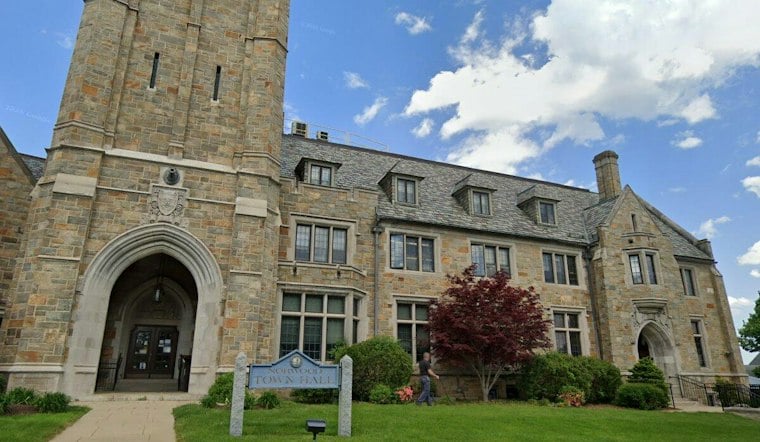
Norwood businesses caught selling kratom or synthetic cannabinoids such as delta-8 or delta-10 are subject to local restrictions under a Board of Health regulation. The local materials describe the products and their potential risks, and the rule bans their manufacturing, sale, and distribution anywhere in town.
The linked Norwood Police Department Facebook post does not provide substantive details here. The local materials describe the products and their potential risks. The regulation addresses public-health concerns involving unregulated psychoactive products. The Norwood Board of Health describes itself as committed to reducing substance-related harm and keeping dangerous, unregulated products out of the community.
A Local Rule and a Statewide Emergency Order
Norwood's ban came together after a May 2026 public hearing where two community members supported prohibition, with little debate. According to the Norwood Record, resident Kathryne Ahnger-Pier urged the town to adopt standing rules that health officials could update easily as manufacturers roll out new synthetic compounds designed to dodge existing tobacco regulations. That local pressure lined up with a broader wave: Lowell banned kratom and synthetic cannabinoids back in December 2024, and Edgartown and Tisbury passed their own local board of health bans over the summer, according to the MV Times.
In August, the state caught up. Governor Maura Healey and Department of Public Health Commissioner Robbie Goldstein announced a statewide emergency order placing all forms of kratom into Massachusetts's Schedule I, making its sale and possession illegal statewide as of August 28, 2026, according to Mass.gov. The governor's office cited concerns over unregulated potency and youth accessibility of kratom sold in smoke shops and convenience stores. The state's action followed a July 2025 FDA recommendation to schedule certain concentrated 7-hydroxymitragynine, or 7-OH, products. Federal health officials have raised concerns about the potency of concentrated 7-OH and its opioid-like effects.
Regulate or Prohibit? A Debate Still Unresolved on Beacon Hill
Not everyone in state government agrees prohibition is the right approach. During the 2025-2026 legislative session, lawmakers introduced House Bill H.2454, concerning kratom regulation. That legislative push remains an alternative even as Norwood, the state's emergency order, and other municipalities have moved toward outright bans. The tension between prohibition and regulated sale is playing out beyond Massachusetts, too: California officials reported in September that state enforcement sweeps had pulled more than 15,000 illegal hemp, kratom, and 7-OH products off store shelves, with regulators reporting 97 percent compliance among licensed retailers after targeted inspections, according to the Office of Governor Gavin Newsom.
Unregulated kratom use has been linked to seizures, respiratory depression, and dependence. Kratom is often bought at gas stations and vape shops by people trying to self-treat pain or anxiety. Norwood's regulation is part of a pattern Hoodline has tracked elsewhere in the region: Boston debated a citywide ban after a mother blamed her son's death on kratom use.
Separate Rules Govern CBD and THC in Food
Alongside the kratom and synthetic cannabinoid ban, separate Massachusetts guidance addresses CBD and THC in food and beverages.
The guidance addresses whole plant hemp extracts, full spectrum hemp extracts, and hemp-derived CBD or THC in food and beverages. The guidance also distinguishes among hemp-derived ingredients used in food.
Where Residents and Businesses Can Get More Information
The Norwood Health Department has published a retailer-focused document, CBD and THC in Food and Beverages: Guidance for Retailers, and residents are directed to the Town of Norwood website for the full text of the kratom and synthetic cannabinoid regulation. The available guidance addresses hemp-derived products and manufactured foods. Questions about CBD and THC compliance more broadly can be directed to the state's environmental-health authorities.
Local questions about Norwood's regulation can be directed to the Norwood Health Department. Town officials say the local rule and the layered state and federal guidance are meant to work together, closing off unregulated psychoactive products from smoke shops and convenience stores while addressing hemp-derived ingredients used in food.



