

























































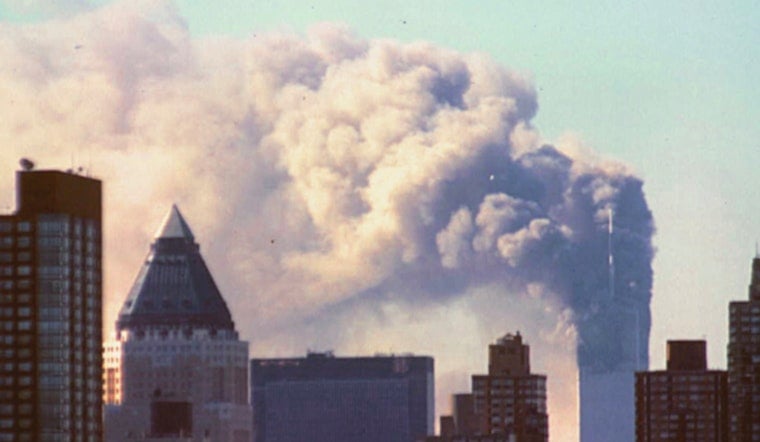
Ann Cooper dropped her 22-month-old daughter off at her parents' home on the morning of September 11, 2001, then went to work at a burn unit that would soon fill with the most severely injured survivors of the World Trade Center attacks. She did not know, as she made that decision, whether her husband, an NYPD officer, was alive. She would spend the day running a chaotic hospital floor without an answer.
Cooper, then an assistant nurse manager at NewYork-Presbyterian/Weill Cornell Medical Center, had watched the World Trade Center's north and south towers catch fire before deciding she would go to work, according to Spectrum News NY1. She called the hospital while the attacks were still unfolding. The unit she managed sat on the eighth floor of what is known as the William Randolph Hearst Burn Center, a facility founded in 1976 as New York City's first comprehensive burn center that normally treats more than 900 inpatients and 4,000 outpatients a year, according to NewYork-Presbyterian.
A Sauna-Like Unit Built to Fight Hypothermia
Cooper compared the burn unit to a sauna, and the comparison was not an exaggeration: staff heated every room to about 90 degrees, per the NY1 report. Patients with deep burns lose the outer layer of skin that normally regulates body temperature, leaving them at severe risk of hypothermia, a danger explained by burn-care research published by the National Center for Biotechnology Information. Deep burns would not heal on their own and required surgery, and the burn percentage a patient carried indicated roughly how long they would remain hospitalized, the station's report notes.
Patients came from inside the World Trade Center and the surrounding area, with some found on sidewalks and at a bus stop, per the same account. Hospital staff moved less critically ill burn-unit patients out to make room for the incoming wounded, and they wore plastic gowns and masks to protect the newly admitted from infection. Cooper said the main challenge that day was simply making sure every patient had at least one nurse caring for them, while the unit itself was chaotic.
The Most Severely Burned Reached the Eighth Floor
Some of the patients who arrived had third-degree burns, and some had burns covering more than 80% of their bodies, according to the NY1 account. Over the five months following the attacks, the burn center cared for 18 of the most severely injured 9/11 patients and ultimately saved 11 of them, per NewYork-Presbyterian. One of the most critically injured survivors treated there was Wall Street executive Lauren Manning, who suffered burns over 82.5% of her body, 75% of it third-degree, after a jet-fuel fireball engulfed her in the North Tower lobby; she survived after nearly two months in a medically induced coma, the hospital system has said.
A 2022 retrospective study by Weill Cornell Medicine researchers examining 15 surviving 9/11 patients treated at the burn center found they averaged 43.2 years of age with an average burn size of 29.2% of total body surface area, and that 46.7% suffered concomitant inhalation injuries, according to findings presented through Plastic and Reconstructive Surgery. Many patients died in the hospital unit, and some who survived remained hospitalized until February 2002, per the NY1 report. Burn recovery, Cooper has said, is a lifelong process.
Families Lined Up Outside for News
In the early morning hours of September 12, 2001, a line of family members clutching photos of missing loved ones wrapped around the block outside the medical center, seeking news of relatives who might have been admitted to the eighth-floor unit, according to NewYork-Presbyterian. People kept calling the burn unit in the days and weeks that followed to ask about loved ones, though by the time many of those calls came in, hospital staff had already identified all of the victims in their care, per the NY1 account.
Not every 9/11 burn victim reached a specialized facility that day. A 2006 study published by NewYork-Presbyterian/Weill Cornell physicians found that only 26% of burn victims on September 11 were triaged directly to specialized burn centers despite available beds, a gap that prompted citywide overhauls of disaster burn protocols and pushed direct burn triage above 75% in the years that followed, according to NewYork-Presbyterian. The attacks also struck the hospital system's own emergency responders directly, killing four NYP EMS personnel and destroying seven ambulances and two service vehicles during rescue efforts at Ground Zero.
Still Haunted, Decades Later
Cooper's workday that day did not end until 2 a.m., and she remained at NewYork-Presbyterian for years afterward, according to NY1. She said the World Trade Center attacks were the worst incident she has faced, and she said their effects still haunt her. She remembers the names of many of her 9/11 patients, and she has said that when the clock shows 9:11, she prays for the people who died in her unit.
Cooper described the survivors as amazing people and said she wonders what some of them are doing now, though she has not kept up with them, per the NY1 report. The article was written by Eric Feldman for Spectrum News NY1.




