

























































A manuscript that sat untouched for 70 years has finally reached readers: the unpublished autobiography of Jim Thorpe, the Sac and Fox Nation athlete widely regarded as one of the greatest competitors the United States has ever produced. His granddaughter, Anita Thorpe, tracked down the long-lost pages at the Library of Congress while helping assemble an exhibit for the U.S. Sports Academy this year, according to reporting by News On 6.
Anita Thorpe, who works with the Jim Thorpe Memorial Foundation, described the find in stark terms, as reported by News On 6: “It was like finding a treasure.” The manuscript originated from an interview a sportswriter conducted with Thorpe himself, and it includes an audio recording capturing him discussing his athletic career, including his own recollection that being crowned by the King of Sweden at the 1912 Stockholm Games was a thrill. Per that same account, the Swedish monarch called Thorpe the greatest athlete in the world after his Olympic performance.
Why the Book Sat Shelved for Decades
The manuscript wasn't published in Thorpe's lifetime because his wife, Patsy, opposed putting it into print, reportedly considering it not good enough, per News On 6's reporting. That decision left the 172-page account of Thorpe's own life buried for seven decades until Anita Thorpe's search turned it up. The finished book, now released as “Thorpe: The Lost Autobiography of an American Icon,” was co-authored with Associated Press sportswriter Orlo Robertson.
Justin Lenhart, connected to the Oklahoma Sports Hall of Fame, said Thorpe was one of the greatest athletes the United States has ever produced, per News On 6. The Hall already maintains a section dedicated to Thorpe memorabilia and is now building a new exhibit planned to coincide with the 2028 Olympics. Anita Thorpe's manuscript discovery grew directly out of her work helping the U.S. Sports Academy assemble that broader tribute this year.
A Personal Voice Missing From the Record
Biographers have written about Thorpe for decades, but the newly surfaced autobiography offers something those accounts couldn't: his own perspective in his own words, according to News On 6's reporting. Born in 1887 in Indian Territory near present-day Shawnee, Oklahoma, Thorpe was given the name Wa-Tho-Huk, meaning Bright Path, as a citizen of the Sac and Fox Nation, according to the Administrative Law Review. That identity anchors the Oklahoma exhibit work now underway and the broader effort to recenter Thorpe's own account of his life within his home state's history.
Decades of Institutional Reckoning
The manuscript's release lands amid a string of formal moves to restore Thorpe's standing after a lifetime marked by institutional mistreatment. In September 2026, 114 years after the Stockholm Games, the International Olympic Committee officially restored him as the sole gold medalist in both the decathlon and pentathlon, according to Smithsonian Magazine. The IOC had stripped those titles in 1913 over a minor league baseball amateurism violation, a decision that stood for over a century.
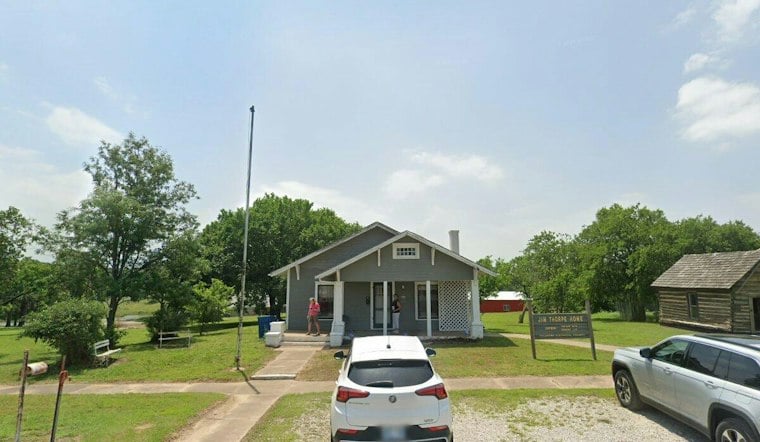
Two years later, in July 2024, the Thorpe family bought back his historic 1917 bungalow in Yale, Oklahoma, from the Oklahoma Historical Society, continuing to operate it as a private museum listed on the National Register of Historic Places, per Wikipedia's account of the Jim Thorpe House. Thorpe lived there from 1917 to 1923 during his professional playing years. Dickinson College held a ground-blessing in December 2025 at the future site of a $20 million Jim Thorpe Center for the Futures of Native Peoples, funded by philanthropist Samuel G. Rose; construction was set to begin after Dickinson’s 2026 commencement, according to ICT.
From Carlisle Upsets to League President
Thorpe's athletic legend was built on the field long before any of these reclamation efforts began. He was associated with the Carlisle Indian Industrial School. He later became the first president of the American Professional Football Association in September 1920, the organization that was renamed the National Football League in 1922, while still actively playing for the Canton Bulldogs, the same outlet reports.
In September 1963, Thorpe was enshrined as a charter member of the Pro Football Hall of Fame's inaugural 17-member class in Canton, Ohio. A 1950 Associated Press poll of sports editors and writers had already voted him the Greatest Male Athlete and Greatest Football Player of the first half of the 20th century, per the West River Eagle, a recognition that came three years before his death.
Thorpe died on March 28, 1953, in Lomita, California, following a heart attack; he had struggled financially and died penniless. His wife, Patsy, opposed publication, reportedly considering the manuscript not good enough.





