

























































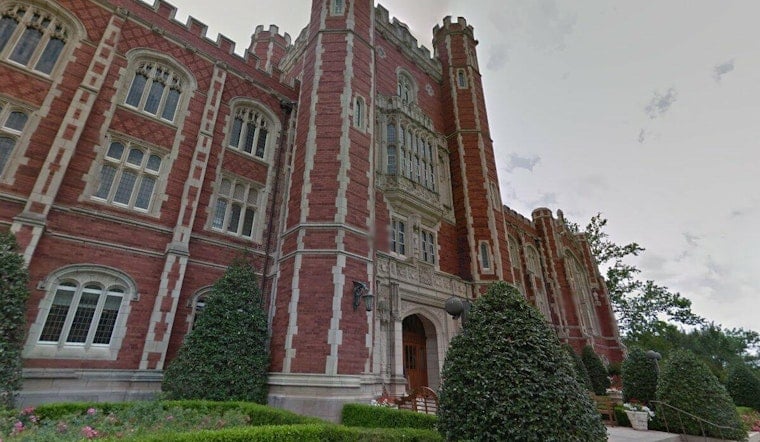
Oklahoma students at three public universities may eventually be able to pursue shorter bachelor's degree pathways after the Oklahoma State Regents for Higher Education approved proposals at the University of Oklahoma, Oklahoma State University and Rogers State University. The pathways range from 90 to 104 credit hours, and the programs still require Higher Learning Commission accreditation before launching.
As reported by The Oklahoman, OU received approval for a 90-credit-hour Bachelor of Applied Social Work, while Oklahoma State University plans to roll out a 90-credit Bachelor of Applied Science in Business Essentials and Applications alongside a 92-credit Bachelor of Applied Science in Artificial Intelligence. Rogers State University's approved program, a Bachelor of Applied Science in Workforce Development, was described in the same report as running between 99 and 103 credit hours, though Rogers State's own announcement lists two specific tracks — Cyber Defense and Digital Forensics at 98 credit hours, and Automation Manufacturing and Digital Systems at 104 credit hours, according to Rogers State University. The university designed the workforce development degree to feed regional employers tied to the MidAmerica Industrial Park and Tulsa Ports.
A Governor's Order Set the Clock Running
The push toward shorter degrees didn't emerge overnight. Gov. Kevin Stitt and the Oklahoma Legislature charged the State Regents with studying the feasibility of 90-credit-hour degrees, per the same Oklahoman report. That directive traces back to Executive Order 2026-07, which Stitt issued in February ordering a 90-day feasibility study, according to the Office of Governor J. Kevin Stitt. Hoodline reported in February that lawmakers followed with House Bill 3315, authored by Rep. Ryan Eaves and Sen. Julie Daniels, which would require the Regents to conduct a feasibility study.
That study led directly to policy. On June 1, the Oklahoma State Regents for Higher Education formally adopted updates establishing a structured evaluation process for degree proposals requiring between 90 and 119 credit hours, the agency said. The revised policies allow, but do not mandate, colleges and universities to propose bachelor's degree paths in as few as 90 credit hours, according to the Oklahoman's report. Under those guidelines, public universities must present evidence of specific workforce gaps, document student and employer demand, maintain academic rigor and prove alignment with third-party accrediting bodies, according to Oklahoma Voice.
Officials Frame the Move as Careful, Not Rushed
State Regents spokesperson Courtney Warmington said officials were deliberate and thoughtful when designing the reduced credit-hour programs to preserve academic quality and rigor, according to the Oklahoman. Warmington also said innovation requires asking whether every degree in every field must have the same structure nationwide, the paper reported. Accelerated degree programs still require a months-long accreditation process before launching, and the newly approved programs could be offered as early as fall 2027, per the Oklahoman's reporting.
OU President Joseph Harroz Jr. said reduced-credit-hour degrees will help meet Oklahoma's workforce needs, and he said the university is pursuing them thoughtfully rather than recklessly. Harroz added that the proposal requires understanding market needs and their effects on the state's wealth and health, according to the Oklahoman. OU's approved social work degree follows a January regents decision that already reduced credit requirements across eight of the university's online degree programs, and OU announced plans in June to submit a separate 90-credit-hour cybersecurity bachelor's degree under the new framework, targeting fall 2027 enrollment, according to OU News.
OSU Eyes AI and Business Pathways
Oklahoma State University wants to develop flexible pathways to serve the needs of the state, according to the Oklahoman's reporting. OSU official Chris Francisco said the university wants to streamline pathways into in-demand industries such as artificial intelligence, the paper reported. Reduced credit-hour degrees are already available at 60 or more schools across the United States, and five other states are working to test and develop similar reduced credit-hour programs, per a Georgetown University report cited in the Oklahoman's coverage.
Oklahoma is not the first state to test the concept. Oklahoma Baptist University, a private institution in Shawnee, received Higher Learning Commission approval in January for a fully online 90-credit Bachelor of Applied Science in Business Administration that incorporates 600 hours of required fieldwork, according to Oklahoma Baptist University. The Higher Learning Commission is the regional accrediting body for Oklahoma's colleges, per the Higher Learning Commission.
Part of a Wider National Shift
Oklahoma's move fits into a broader multistate trend. The Higher Learning Commission notes that Indiana passed a 2024 law requiring public universities to offer three-year degree options by 2025. The broader trend has also drawn attention beyond Oklahoma, with Hoodline tracking it in a separate report and in another report.
Not everyone is on board. Critics cautioned during Oklahoma's 2026 policy debate that reducing bachelor's degrees to 90 credits could raise concerns about rigor and preparation, according to Oklahoma Voice.
There's also an open question hanging over the entire experiment. Potential limits involving credit transfer, graduate school admission or professional licensure are among the issues associated with reduced-credit undergraduate degrees, as discussed in a SACSCOC FAQ. The broader implications for out-of-state licensing boards and graduate programs are among the questions surrounding the degrees.



