

























































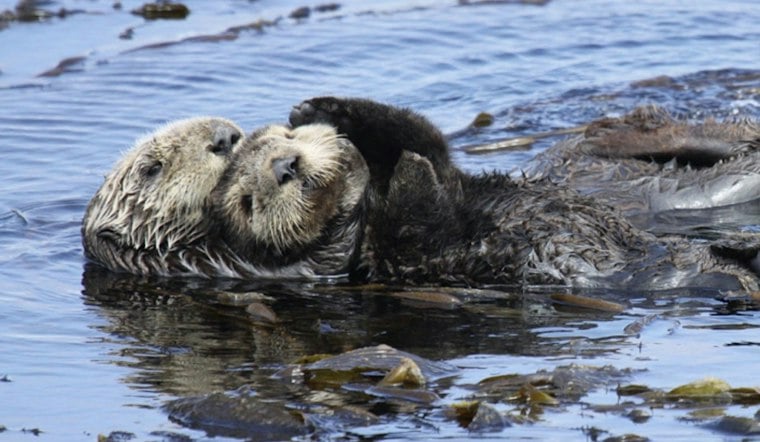
Sea otters have not lived in Oregon's coastal waters since 1981, but this September a string of events from Eugene breweries to the Oregon Coast Aquarium is putting the animals back in the spotlight. The Elakha Alliance, an Oregon nonprofit focused on restoring sea otters to the Oregon coast, is hosting Sea Otter Awareness Month programming throughout September, building toward Sea Otter Awareness Week from September 20 through September 26 along the Oregon coast.
According to KCBY, this year's theme, Rooted in Resilience, focuses on the connections that help coastal ecosystems thrive and on the relationship between sea otters, kelp forests and coastal ecosystems. Events include educational programs, viewing stations, art events and other activities, with locations spanning the Oregon Zoo and the Oregon Coast Aquarium. The Elakha Alliance has partnered with organizations and businesses across Oregon to host the community events, including local breweries and the Portland Aquarium. One highlight on the calendar is a Sea Otter Pint Night at Claim 52 Brewing in Eugene, set for September 22 from 5 to 8 p.m.
A Species Hunted to Local Extinction
Sea otters were once common along the Oregon coast before being hunted nearly to extinction during the fur trade, per the same report. While populations have recovered in parts of California, Washington and Alaska, the animals remain absent from much of their former range along the Oregon and Northern California coasts. That gap traces back to a previous reintroduction attempt: in 1970 and 1971, state and federal wildlife managers translocated 93 sea otters captured on Amchitka Island, Alaska, to Cape Arago and Port Orford, but the population steadily declined until the species disappeared entirely from Oregon by 1981, according to the Elakha Alliance.
The Elakha Alliance is studying the potential reintroduction of sea otters to Oregon, with research examining impacts on kelp forests, fisheries, marine habitat and coastal tourism, KCBY reports. The Elakha Alliance and the U.S. Fish and Wildlife Service have jointly examined the potential ecological and economic effects of bringing otters back. That federal involvement is not new: a June 2022 report to Congress by the U.S. Fish and Wildlife Service concluded that reintroducing sea otters to Oregon and Northern California is biologically and legally feasible and would deliver substantial ecological benefits, a study Congress mandated under the Consolidated Appropriations Act for 2021.
Tribal Leadership Now Central to the Effort
Indigenous stewardship has taken on a formal role in the planning process. In January 2025, the Confederated Tribes of Siletz Indians was awarded a three-year, $1.56 million federal grant through the America the Beautiful Challenge to lead Indigenous-focused planning for reintroduction in Oregon and Northern California, according to the Elakha Alliance. The grant supports collaboration with the Coos, Lower Umpqua, Siuslaw, Yurok and Tolowa Dee-ni' tribes.
A 2021 study led by Oregon State University researcher Dominique Kone found that Oregon's nearshore ocean and estuarine habitats have sufficient carrying capacity to support a stable population of more than 4,500 sea otters, based on an evaluation of available prey, benthic habitat and potential human conflicts, according to Oregon State University. Federal and academic modeling in USFWS planning documents has identified Depoe Bay, Yaquina Head, Blanco Reef, Simpson Reef, and estuaries such as Coos Bay and Yaquina Bay as prime candidate locations for initial releases, since protected estuary waters could improve early survival rates compared with open ocean reefs.
Why Kelp Forests Are at the Center of the Debate
The urgency behind the reintroduction push stems from what has happened to Oregon's kelp beds in the otters' absence. An Oregon Department of Fish and Wildlife survey at Orford Reef recorded an estimated 350 million purple sea urchins, a 10,000-fold population increase since 2014 that has decimated local kelp canopy cover, according to the Oregon Kelp Alliance. Without otters to keep urchin numbers in check, the reefs have turned into what the group calls destructive urchin barrens.
Restoration crews are already working to reverse some of that damage ahead of any otter release. In November 2025, the Oregon Kelp Alliance reported that diver-led restoration under the Oregon Kelp Forest Stewardship Initiative had removed more than 330,000 purple sea urchins from target sites in five months, allowing newly planted bull kelp at Nellie's Cove to mature. Governor Kotek also issued Executive Order 25-26 in October 2025 prioritizing nearshore marine resilience, the group noted. Restoring that kelp canopy carries climate implications too: reporting by High Country News in June 2025 cited research estimating that healthy kelp ecosystems can sequester carbon equivalent to removing 5 million passenger vehicles from the road.
Community Input and Lingering Caution
Reintroduction has not moved forward without friction. In 2023, the U.S. Fish and Wildlife Service held 16 community open house sessions across coastal Oregon and Northern California, spanning from Astoria, Oregon, to the San Francisco Bay Area, to hear from commercial shellfish fisheries, coastal residents and tribal leaders. Those conversations reflect ongoing economic debates between conservation advocates and commercial fishing interests over competition for shellfish resources.
Federal regulators are also weighing the status of the otters' closest relatives to the south. In October 2023, the U.S. Fish and Wildlife Service issued a 12-month finding maintaining Endangered Species Act protections for southern sea otters, citing lingering threats from climate change, shark-bite mortality and a restricted range that keeps the population confined mostly to central California. Wildlife managers have pointed to the failed 1970s translocation as a reason for caution, emphasizing that any future release will require sustained tribal leadership, carefully chosen release sites and broad community consensus before otters go back in the water.



