

























































Dozens of demonstrators gathered outside federal offices in Portland as President Donald Trump arrived in the Philippines ahead of a Southeast Asian summit, protesting a U.S.-backed tech initiative they say threatens to displace Indigenous communities and strain natural resources half a world away. The rally, held at the former Zenith Energy fuel storage site in Northwest Portland, targeted Pax Silica, a project aimed at building American technology supply chains independent of China.
As reported by KPTV, the protest drew advocates opposed to the overseas expansion of local technology companies, which organizers argue stand to benefit at the expense of the Filipino people. Fi Juni Delacruz, a member of Bayan Oregon, said the Portland demonstration was part of a larger global day of action. Delacruz said Pax Silica would make the Philippines ground zero for the international expansion of tech manufacturing and data centers, and warned the project would cause forced displacement, water contamination, loss of livelihoods and forced migration.
A U.S.-Led Push to Counter China's Grip on Tech Supply Chains
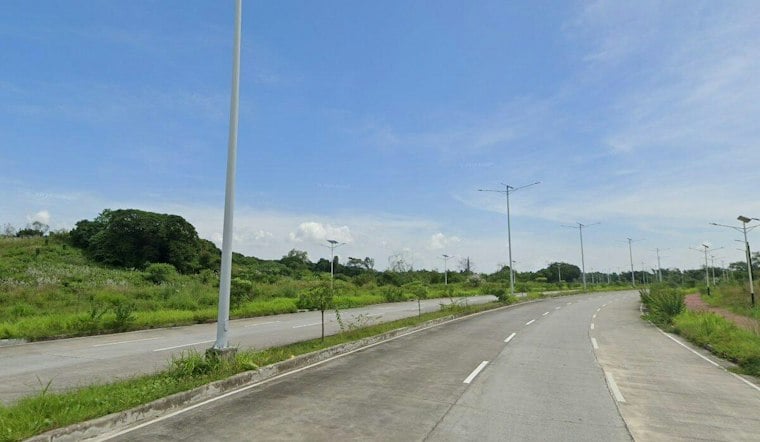
Pax Silica was launched by the U.S. Department of State in December 2025 through the signing of a non-binding declaration, according to TechPolicy.Press. The Philippines joined the initiative on April 16, bringing significant capacity in semiconductor assembly, testing and packaging, along with large nickel reserves, per the same outlet's reporting. The centerpiece of the plan is a proposed industrial hub on a 1,620-hectare, or roughly 4,000-acre, site in New Clark City in Tarlac province, as detailed by the Philippine Daily Inquirer.
Philippine President Ferdinand Marcos Jr. has said Pax Silica will create jobs. Estimates of the economic impact vary: TechPolicy.Press reported the Philippine government's projection of up to $70 billion in investment and as many as 200,000 jobs, while Rappler's reporting put the figure at up to $70 billion in investment and as many as 190,000 direct jobs. Once fully operational, the hub would consume 65 million to 90 million liters of water daily and up to 3 gigawatts of electricity, according to figures from the Bases Conversion and Development Authority cited by TechPolicy.Press.
Aeta Communities Face Uncertain Future
Concerns over the project's footprint center on Aeta communities living near the proposed site. The Inquirer reported that about 1,000 Aetas face the prospect of displacement, quoting a tribal leader who said BCDA employees told them to leave by December and relocate to an area roughly 16 kilometers, or about 10 miles, from their current home. Separately, Mongabay reported that planned construction would impede on the lands of at least three existing Aeta villages.
A U.S. State Department spokesperson told the Inquirer that environmental, water, energy and community-impact studies would inform the project's design. Yet the Philippines' Department of Environment and Natural Resources said it had not received any application to conduct an environmental impact assessment for Pax Silica, and that without a clear project description, the agency could not properly assess the hub's impact. Environmental groups have separately raised concerns about biodiversity loss, watershed protection, agricultural land conversion and cumulative environmental effects, according to Rappler.
Estimates of the project's energy demands also diverge by source: the Makabayan bloc has said the hub would need around five gigawatts of electricity, a figure that could strain the national power grid, distinct from the BCDA's 3-gigawatt estimate.
Protests Spread Across the Philippines
The Portland rally came amid a wider wave of demonstrations across the Philippines tied to Trump's visit. At least 11 protesters were arrested at Liwasang Bonifacio in Manila on Sunday during a demonstration opposing both Pax Silica and the presidential trip, Rappler reported. Two journalists and two police officers were reportedly hurt during a separate Pax Silica protest along Colon Street in Cebu City, according to GMA News. A day later, veteran activists, Indigenous groups and students gathered at Igorot Park in Baguio City to protest Pax Silica again and condemn the dispersal of a protest caravan and the arrest of its participants in Muntinlupa City the day before, the Inquirer reported.
Delacruz pointed to her own family's history as part of why she joined the Portland protest, saying her family migrated to the United States because conditions in the Philippines left them unable to find jobs to sustain the family. She said development in the Philippines should benefit the Filipino people and support economic development and national industry, rather than come, as she and fellow Portland protesters argued, at the cost of environmentally strained ancestral lands.
Wyden Weighs In, Local Project's Ties Questioned
Protesters at the federal building in Northeast Portland appealed to Senator Ron Wyden for intervention. Wyden said the United States must free itself from a supply chain reliant on China and its environmental practices for critical materials used in computer chips and other technologies, but added that the goal must not be pursued by steamrolling Indigenous Ayta populations or ignoring their environmental concerns.
The Portland demonstration's location carried its own backstory: the rally was held at the former Zenith Energy fuel storage site in Northwest Portland, which I Squared Capital acquired this year, according to KPTV's reporting. I Squared Capital has announced it is developing land for fuel storage in the Philippines, and a company representative said the Philippine fuel-storage development is unrelated to the president's initiative.
Tigard-based NuScale Power is also developing a nuclear plant in the Philippines alongside the country's utility companies, per the World Nuclear Association. The United States and the Philippines have a long and complicated history, and protesters in Portland said they fear the global AI race will cause further exploitation of the Philippines and its economy as the two nations' tech and energy ties deepen.



