

























































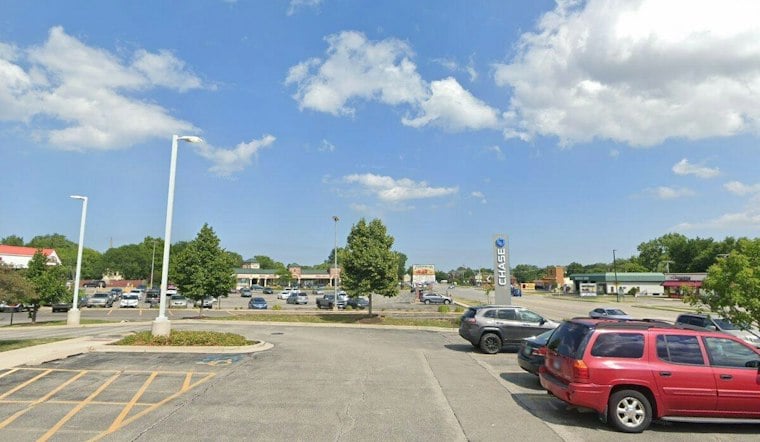
A Palatine man who works at Mariano's handed over his life savings, $73,000 in total, after callers posing as Chase Bank fraud investigators convinced him his account was compromised and that federal agents were closing in. David Lipsky was told to move the money into a supposedly safe account to protect it, and when he balked, the callers threatened him with FBI involvement and arrest if he didn't comply. He completed three separate bank transfers before realizing he'd been conned.
According to ABC7 Chicago, the scam began last year when Lipsky got a call from a number that appeared to belong to Chase Bank. A second caller identifying himself as a Chase employee told Lipsky his account had been breached and he needed to move his money immediately to keep it safe. When Lipsky first tried to send $1,000 through Zelle, Chase actually blocked the transaction, a red flag that should have ended things right there. Instead, the callers escalated, claiming federal authorities were now involved and instructing him to go into a bank branch in person to complete the transfers.
Lipsky ultimately completed three separate transfers at the branch totaling $73,000, wiping out his savings. He reported the theft to the Palatine Police Department, whose detectives launched an investigation.
Nationwide Warrants Issued for Three Suspects
Palatine police have obtained nationwide arrest warrants charging three men with theft by deception: 35-year-old Jose A. Luis Mateo, whose last known address is in Union City, New Jersey; 28-year-old Fredduar A. Escobar Bautista, last known to live in Lockbourne, Ohio, but who detectives believe may currently be somewhere in the New York/New Jersey area; and 35-year-old Breider A. Iriarte Campomar, whose last known address is New York City. Police are asking anyone with information about the suspects' whereabouts to call 847-359-9000.
Chase has managed to recover some of what Lipsky lost. The bank returned $24,000 to his account several months ago, but $49,000 remains unrecovered, and Lipsky is calling on Chase to return the rest of his savings. Speaking about the theft, he said he cannot afford the loss and needs the money back. A Chase spokesperson called scams like this heartbreaking and said the perpetrators, not the bank, are to blame, adding that Chase will continue cooperating with law enforcement.
Why Getting the Rest of the Money Back Is So Hard
The gap between what Chase has returned and what Lipsky is still owed points to a broader legal ambiguity around bank transfers. While instant payment services like Zelle fall under Regulation E of the Electronic Fund Transfer Act, consumer wire transfers have historically been governed by a different, older set of commercial rules, according to Katten Muchin Rosenman LLP. That distinction matters because the legal treatment of wire transfers can differ from that of electronic transfers covered by Regulation E.
Bank impersonation scams like the one that hit Lipsky are a form of business impersonation fraud. The FTC reported more than 1 million imposter-scam complaints in 2025. Total reported consumer fraud losses hit $15.9 billion that year, up from about $12 billion in 2024, an increase of approximately 32.5%, and fraud losses reported to federal agencies have climbed more than fivefold since 2020, per the FTC's data.
Those federal figures likely understate the true scale of the problem. A July 2026 report by Gallup and the Stop Scams Alliance, cited by American Banker, estimated Americans actually lost roughly $68 billion to scams in 2025. Only 13% of victims reported those losses to federal agencies, while 55% reported them directly to their banks instead, meaning financial institutions function as the country's de facto scam reporting system even though they share limited data with law enforcement.
Spoofed Bank Alerts Remain the Most Common Trick
The tactics used against Lipsky mirror a pattern in which scammers spoof bank security alerts and fraud department phone calls. Consumers should never use a phone number provided in an unverified text or call and should instead contact their bank directly using the number on the back of their card.
Chase Bank has warned that legitimate banks will not ask customers to move money to resolve fraud.
For now, the suspects remain wanted, and recovering the remaining $49,000 through law enforcement channels remains far from certain.





