

























































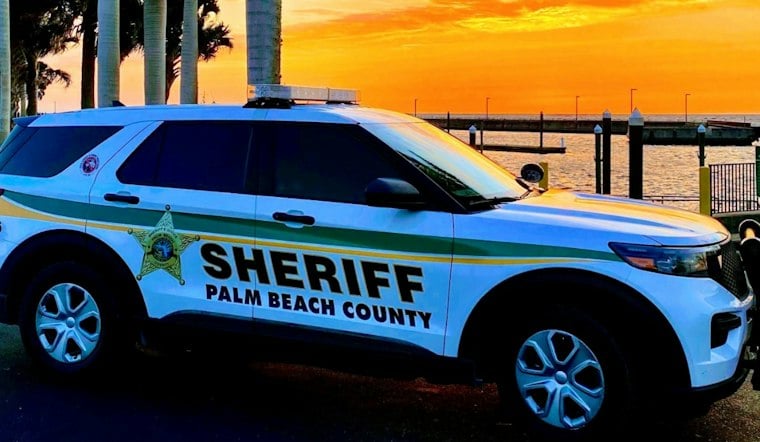
Palm Beach County commissioners voted 5-2 on Tuesday, September 15, 2026, to approve an ordinance creating a framework for a new law enforcement taxing district in unincorporated areas, a move that could eventually reshape how roughly 700,000 residents pay for sheriff patrols. The framework does not set a tax rate or immediately impose any new tax, but it lays the legal groundwork for a Municipal Service Taxing Unit, or MSTU, that could begin funding Palm Beach County Sheriff's Office services as soon as fiscal year 2028.
The vote, reported by WPTV, covers unincorporated Palm Beach County, which makes up roughly 45% of the county's population. Under the county's current general fund structure, residents living in incorporated cities pay countywide taxes that help fund sheriff patrols in unincorporated areas while also paying municipal taxes or contract fees for their own local police, according to Stet News. Shifting those patrol costs into a dedicated district would relieve city taxpayers of that subsidy, but it could load a substantial new bill onto unincorporated property owners instead.
What the Framework Does — and Doesn't — Do Yet
Commissioner Joel Flores requested that the county explore the MSTU idea, and County Administrator Joe Abruzzo said the discussions began after state officials scrutinized county spending, per the WPTV report. Abruzzo said the district would separate sheriff costs from the county's general budget, making spending easier to track, and could offer another avenue for financial information not otherwise furnished to or shielded from the county commission. Jail operations, courts, and other countywide law enforcement functions would remain funded through the general fund and shared by all Palm Beach County residents, officials said, according to the same report.
Any actual tax still requires additional action. County budget officials estimated in July that if the district is activated, unincorporated property owners could see an increase of up to $6 per $1,000 of assessed valuation to cover sheriff patrol and school crossing guard services, per Stet News reporting. Setting that initial millage rate will require a unanimous 7-0 vote of the commission, a bar the 5-2 vote did not come close to meeting, and Florida law requires commissioners to approve the enabling ordinance before December 31 to use the district as a funding source for fiscal year 2028, according to the Boca Post.
Residents Push Back on Transparency and Cost Questions
Not everyone at the meeting was sold. Resident Pia Skoran said she had never seen a speed patrol in the Acreage during 35 years living there and told commissioners she was not convinced residents would receive enough additional services to justify future costs, per the WPTV account. Another resident, Lisa Johnson, urged commissioners to reject the proposal outright, saying residents need information about existing county taxes, ITID assessments, MSTU services, and assurance against duplicate payments before any district moves forward.
County staff had not studied where crime is occurring before pursuing the MSTU, the WPTV report noted, and other residents questioned whether taxpayers had enough information about what services the district would fund and how costs would be calculated. Commissioner Maria Sachs, who voted against the ordinance, said requiring more taxation just to obtain transparency from the sheriff's office belies the real issue. Commissioners did approve amendments focused on budget transparency and cost allocation language before the final vote, according to the same reporting.
A Budget That Kept Growing
The debate landed against a backdrop of rapidly rising sheriff spending. Palm Beach County funded the sheriff's office with over $134 million last year and $77 million this year, totaling more than $200 million across the two years, per WPTV's review of budget figures. That spending included $84.4 million in overtime, $55.9 million for other services, $28.3 million for rental and leases, and $25.1 million for operating supplies. This year, the sheriff's office requested another $100 million or nearly that amount, WPTV reported.
That request arrived after Sheriff Ric Bradshaw sought an 8.66% budget increase over the summer, which would have pushed total sheriff's office operations to nearly $1.2 billion, according to WLRN. Commissioners ultimately approved the broader county budget for fiscal year 2027, WLRN also reported.
Sheriff Says He Won't Stand in the Way
Bradshaw himself has signaled he is not opposed to the restructuring. He said in August that he would not block creation of an MSTU, noting that separating his budget removes commissioners' political burden of being blamed for tax hikes tied to law enforcement spending, according to 98.7 The Gator. Under Florida's constitutional 10-mill cap on such taxing units, the county has 6.5419 mills of remaining capacity in unincorporated areas after accounting for the existing 3.4581-mill Fire Rescue MSTU, per Boca Post's review of the framework.
Commissioner Gregg Weiss said the county needs to prepare for possible future funding changes, while cautioning that the framework itself is not an immediate tax increase, per WPTV. Commissioners also expressed concern about Florida's Amendment 3, a statewide ballot measure this November that would expand non-school homestead property tax exemptions from $50,000 to $250,000 by 2028. State economists project that change could cut local government property tax revenues statewide by $4.93 billion in its first year and $11.83 billion annually by fiscal year 2032, according to 1000 Friends of Florida.
With the framework now approved but no rate set, the fight over who pays for sheriff patrols — and how much — is set to continue into the county's push to finalize an enabling ordinance before the end of the year.



