

























































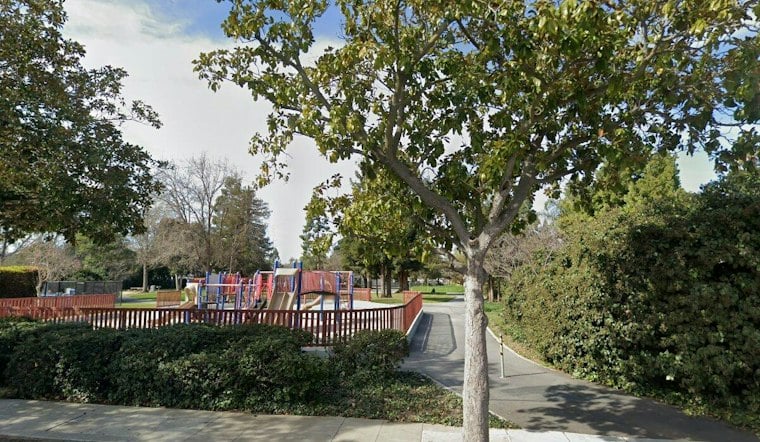
Palo Alto's parks commissioners spent their Tuesday evening meeting picking apart a question the city has wrestled with for years: should synthetic turf keep showing up on local playgrounds, or is it time to draw a harder line? The Parks and Recreation Commission considered new synthetic turf use guidelines at its Sept. 22 meeting, with city staff pushing a flexible, case-by-case framework while several commissioners pushed back, arguing the city needs firmer, enforceable rules instead.
The debate lands just months after Palo Alto closed out a costly, yearslong fight over turf at El Camino Park, according to Palo Alto Online. That project, which included a consultant study, two Parks and Recreation Commission discussions, a council ad hoc committee and two city council sessions, ended up costing more than $1 million before artificial turf won out over grass on the park's soccer fields. On January 12, the city council ultimately voted to replace the existing synthetic turf at El Camino Park with a new synthetic system using organic cork infill, while also backing a natural grass pilot program for future projects, according to Paloaltocivic.com.
Staff Wants Flexibility, Not a Blanket Rule
Palo Alto Online reports that council member Keith Reckdahl directed the parks commission to focus both on language for a playground synthetic turf use policy and on a natural grass pilot project, part of the Parks and Recreation Commission's fiscal year 2027 workplan. City staff responded with proposed guidelines covering intended use and function, location and performance, maintenance costs, and community stakeholder input.
Ben Heistein, assistant director of open space, parks and golf, framed the approach as an attempt to judge the whole picture rather than fixate on one material. The goal, per the same account, is to evaluate the entire application for future synthetic turf use instead of only the material itself. The proposed guidelines would establish consistent criteria for evaluating synthetic turf when a specific playground project comes up, but they would stop short of a citywide rule determining whether synthetic turf is permitted or prohibited in playgrounds at all.
Commissioners Push for Something With Teeth
That distinction did not sit well with several commissioners, who advocated for firmer synthetic turf rules during the discussion. Commissioner Shani Kleinhaus said the work plan explicitly called for developing a policy, not just guidance, and she has previously opposed turf at the El Camino Park soccer fields. Kleinhaus raised the same environmental mechanism the Sierra Club has flagged: synthetic turf blades can end up in the sewage system and pollute San Francisco Bay, and children can ingest microplastics from picked artificial grass.
Commission chair Nellis Freeman raised concerns about stakeholder engagement ahead of the meeting, and city staff pointed to Magical Bridge Playground representatives as among the key stakeholders consulted. That playground is designed for children with physical, developmental, cognitive or sensory disabilities and includes synthetic turf, poured-in-place rubber and bonded rubber mulch — a combination the city says supports wheelchair accessibility. Boulware Park and Rinconada Park also currently have synthetic turf on their playgrounds.
A Threshold Instead of a Ban
Division manager of open space, parks and golf Sarah Robustelli said the commission meeting itself provided an opportunity for additional stakeholder input before any guidelines move forward. Commissioner Amanda Brown, who served on the commission's ad hoc committee dedicated to synthetic turf and weighed input from past park development outreach, argued the guidelines should not completely shut the door on synthetic turf altogether.
Commissioners Yudy Deng, Shani Kleinhaus and Nellis Freeman each separately suggested folding a health and safety evaluation with a measurable threshold for turf applications into the guidelines, according to Palo Alto Online's account of the meeting. Vadim Axelrod, who also served on the synthetic turf ad hoc committee, said the goal is to balance strict regulations with allowing synthetic turf where appropriate, while acknowledging that plastic turf raises real public health and environmental pollution concerns. Axelrod said he wanted a policy — something the commission can actually vote on — to come back before the group.
Not everyone at the meeting was persuaded that guidelines, however written, would be enough. Dashiell Leeds, conservation coordinator for the Sierra Club Loma Prieta Chapter, said guidelines are not enforceable and cannot meaningfully limit harmful artificial turf use, calling instead for enforceable standards on plastic turf. Two public commenters opposed the turf guideline approach during the meeting, and the guidelines are now set to return to the commission for a vote at a later date before being forwarded to the full city council.
The Regional Backdrop
The Santa Clara County Board of Supervisors was considering a countywide ban on artificial turf on county-owned playing fields in January 2025 amid health advocates' concerns about severe heat emissions and exposure to carcinogenic PFAS; surface temperatures on synthetic fields can exceed 122 degrees compared with 82 degrees on natural grass, according to Palo Alto Daily Post. Recreation managers noted turf accommodates up to 3.5 times more playing hours than grass.
A California law allowed cities and counties to ban plastic lawns, per Contra Costa News. Governor Gavin Newsom vetoed a separate measure, Assembly Bill 1423, in October 2023 — a bill that would have banned the sale and installation of artificial turf containing intentionally added PFAS starting in 2026 — citing a lack of designated state agency oversight, according to Exponent.
Legal exposure has already touched the city directly. Palo Alto was named in a personal injury lawsuit filed in October 2024 by the family of a youth soccer player injured at Stanford’s Mayfield Soccer Complex on Aug. 26, 2023, after gum-like material seeped from the turf, stuck to his shoe and caused him to fall, San José Spotlight reported. The Sierra Club Loma Prieta Chapter has also raised concerns about microplastics and synthetic turf.
Palo Alto Online reporter Riley Cooke, who joined Palo Alto Weekly and Palo Alto Online in 2025 after graduating from UC Berkeley with a bachelor's degree in political science, covered the commission's discussion. With replacement of synthetic turf at Cubberley Community Center anticipated in 2028 as the city continues studying alternatives, whatever guidelines the commission eventually approves and sends to the full council will shape one of the city's next major turf decisions.




