

























































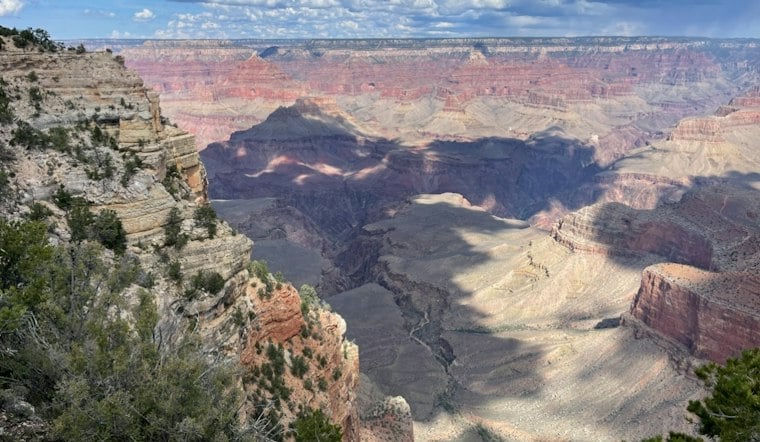
For Across Arizona Tours, the Grand Canyon fee dispute is also a business issue: the Phoenix-based operator says international customers have reconsidered trips after learning of the additional charge. The company, which has run tours since 2002, sued the Trump administration Monday, arguing the fees lack legal authorization and that international visitors are not legally required to pay them.
The fee structure took effect in January 2026, according to AZ Family. International visitors continue to pay the standard Grand Canyon entry fee of $20 to $35, but now face an additional $100-per-person charge. A separate annual pass costs non-U.S. residents $250, compared with $80 for U.S. citizens and residents.
In its lawsuit, Across Arizona Tours argues that the administration lacked authority from Congress to impose the charges. The company says the increases have cost it business because some potential nonresident customers skipped Grand Canyon visits after learning about the added expense. It is asking the court to eliminate both the nonresident entrance fee and the nonresident annual pass.
The Legal Dispute Over Fee Authority
Attorney Jacob Haas, who represents the tour company, argued that only Congress can authorize federal fees and that Congress has not authorized higher fees specifically for nonresidents. Haas said, “Federal agencies cannot make up fees as they please,” according to AZ Family.
The company also says the residency-verification process has created friction, with some customers considering questions about their status invasive. The National Park Service accepts documents such as a U.S. passport, driver’s license, state ID or Permanent Resident Card to verify eligibility for the resident rate. Kiplinger reported that verification has created a logjam for park staff nationwide.
The Administration’s Case for Higher International Fees
The Interior Department announced the increases, which apply to 11 of the most visited national parks, including the Grand Canyon, according to WCVB. Interior Secretary Doug Burgum said the policy would ensure international visitors contribute their fair share toward maintaining and improving U.S. parks.
Supporters also point to countries that charge international visitors more than locals. Egypt, Thailand and Cambodia have higher entry fees for foreign visitors, while foreign adults reportedly pay $200 to visit Ecuador’s Galapagos Islands, compared with $30 for Ecuadorian nationals, according to WCVB. Istanbul has also used higher fees for visitors, with authorities there arguing that residents help fund historic-site upkeep through taxes, according to Kursiv Media.
The Surcharge Comes Amid a Decline in International Visits
The case comes as international tourism to the U.S. has already been declining, amid shifts in tariff policy and immigration enforcement, according to WCVB’s earlier reporting. At Yellowstone, international visitors accounted for about 30% of visitors in 2018, but 14.8% in 2024, the outlet reported. Tourism-dependent businesses have warned that the new surcharge could further discourage travelers, according to U.S. News.
What the Fee Law and Visitor Data Show
The U.S. Code gives the Interior secretary general authority to set recreation fees on federal lands. It says fees should be commensurate with the benefits and services provided and that agencies should consider the aggregate effect on visitors and recreation providers. The cited provision sets out general fee authority and criteria, rather than specifying a nonresident rate—a central point in the company’s challenge. The National Park Service says Grand Canyon National Park draws more than 5 million visitors annually. That overall figure does not identify how many visitors are international, so it does not establish a pre-2026 international-visitor baseline for the park.
Backers of the fee counter that the money is meant to support park infrastructure so the financial burden doesn't fall entirely on U.S. taxpayers, Kiplinger reported. The National Park Service has also been working to recover from a government shutdown that cost an estimated $41 million in lost entrance and recreation fees, according to Kursiv Media, adding pressure to find new revenue streams even as operators like Across Arizona Tours argue the fix is coming at their expense.





