

























































For 30 years, Ruben Mandujano ran an auto repair shop at 18th Street and Damen Avenue in Pilsen. On Sunday, that same address opens as Café Jon and Galleria, a coffee shop and 4,000-square-foot private event space that Mandujano now co-owns alongside the founders of Jon Basíl Tequila, after he turned down offers from developers who wanted to buy his property instead.
The 6,000-square-foot café began weekend-only service in July and will hold its official opening on September 6, according to Eater Chicago. Mandujano, who was born in Mexico and has lived in Pilsen for 40 years, partnered with Jon Basíl Tequila co-founders Uduimoh Umolu and Belall Taher to open the space, which also serves as the tequila brand's first physical location and flagship storefront. Regular hours will run 8 a.m. to 6 p.m., Tuesday through Sunday.
Mandujano closed his auto shop two years ago and became a co-owner and partner in the new venture, a decision that keeps a piece of Pilsen's commercial fabric locally owned rather than sold off. He told Eater Chicago he was excited to stay, grow, bring new generations together, bring new ideas, and implement more diversity. The café still carries traces of its former life: memorabilia from Ruben's auto service line the walls alongside vintage parking signs, old license plates, and a repurposed car engine that now serves as a coffee table. There's also a Yamaha scooter mounted to the wall and a nod to Chicago sports history with 1990s Bulls memorabilia scattered throughout.
A Tequila Brand's First Storefront, Years in the Making
Umolu and Taher set out to create Jon Basíl Tequila back in 2015, years before it ever had a physical home. The two met as students at the University of Illinois at Urbana-Champaign, according to background reported by Forbes, and officially launched the brand in December 2018. Umolu, who has Nigerian and Ghanaian heritage, grew up in Rogers Park, while Taher was born in Palestine and later moved to Bridgeview. Their spirits company earned them a spot on Forbes' 30 Under 30 Food & Drink list in December 2020, recognition for building a millennial- and minority-owned brand from the ground up.
Café Jon takes its name from a personal story: Umolu named the brand in honor of his grandfather John and a benefactor named Basil who helped make it possible for his father to attend university in the United States, as previously reported by CBS Chicago. Jon Basíl Tequila sources 100 percent Blue Weber agave that takes 7 to 8 years to mature, blending plants from both the highlands and lowlands of Jalisco, Mexico, and the brand produces Blanco, Reposado, and Añejo expressions. According to Taher, the label has now secured national distribution partnerships and has grown to more than 900 locations across Chicago.
Coffee, Pastries, and a Baking Residency Under One Roof
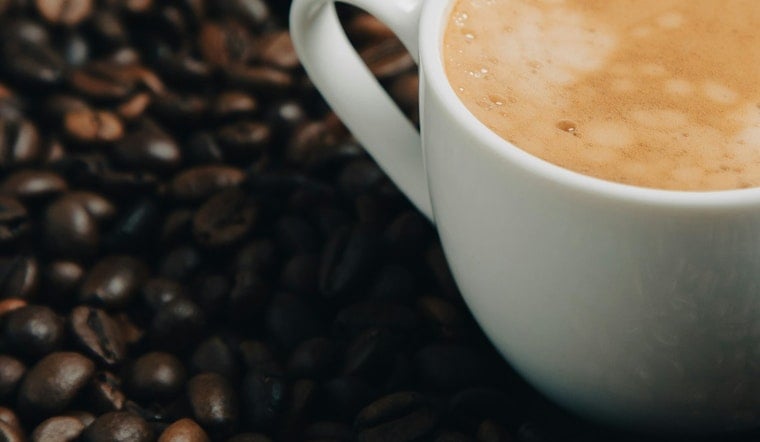
Café Jon's coffee comes from Monday Coffee Company, whose founder Felton Kizer runs the drink menu, including specialty additions like honey-rosemary and brown sugar vanilla syrups. Monday Coffee Co. was co-founded in October 2020 by Kizer and Amanda Christine Harth, and the company has its own growth story on Chicago's West Side: it opened its first stationary cafe inside North Lawndale's Starling Community Center in late 2024, a project Hoodline previously covered. The Starling center itself is a $1 million space developed by Duo Development with support from a $250,000 Chicago Neighborhood Opportunity Fund grant, per SomerCor, and before landing that permanent storefront, Monday Coffee Co. ran coffee concessions through an in-residence program at the Garfield Park Conservatory from November 2021 through spring 2023.
Pastries at Café Jon come from Saints Bakery, a baking residency housed inside the café that makes everything in-house. Beyond daytime cafe service, the owners intend to use the private event space for local artist galleries, tastings, and brand activations, giving the venue a second life as a gathering point once the espresso machines quiet down.
What Café Jon Means for a Changing Pilsen
Pilsen became Chicago's first majority-Latino neighborhood by 1970, after Mexican residents moved into the area during the 1960s following displacement from urban renewal and highway construction on the Near West Side, according to DNAinfo. Before that, the neighborhood had been populated primarily by 19th-century Czech and Polish immigrants. Today Pilsen remains a hub of Mexican culture in Chicago, even as economic pressures reshape who can afford to stay.
The share of Pilsen residents paying more than $1,000 in rent rose from 32.5 percent in 2005 to 51.5 percent in 2020, according to a 2023 University of Illinois at Chicago report. Separately, a UIC Great Cities Institute report cited by Medium found that gentrification in the neighborhood contributed to a steady exit of Latino families between 1990 and 2020, leaving only 30 percent of Pilsen households with children, a shift the same report links to underpopulated neighborhood schools. The UIC Great Cities Institute has also partnered with the Pilsen Planning Committee and a coalition of 25 local community organizations on a Quality-of-Life plan aimed at balancing preservation with investment in the area.
Against that backdrop, Mandujano's decision to redevelop his own property rather than sell to outside developers stands out as a homegrown alternative to the pattern of displacement that has reshaped Pilsen for decades. Broader economic data underscore the stakes for minority business owners generally: a 2022 Third Way study found Black-owned small businesses were four times more likely to earn under $100,000 in annual revenue than white-owned businesses. Café Jon and Galleria, built by a Mexican immigrant auto shop owner alongside a Nigerian-Ghanaian and Palestinian-American tequila brand and a Black-owned coffee company, arrives as one local answer to that disparity.



