

























































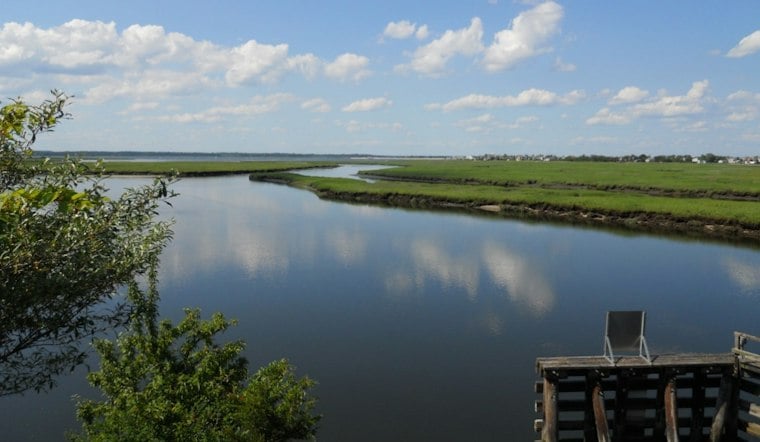
Shellfish harvesters in Plum Island Sound are getting up to 72 additional harvesting days a year after Governor Maura Healey announced expanded access to the fishery, citing significant water quality improvements documented by state regulators. The change updates how quickly shellfish beds can reopen after rainstorms, a shift expected to cut rainfall-related closures by more than half across most of the sound.
The announcement, reported by Boston 25 News, comes after the Massachusetts Division of Marine Fisheries found substantial gains in water quality across the estuary. Under the updated rules, most shellfish beds will be able to stay open when an area receives less than one inch of rain, a threshold that previously triggered closures far more often. Plum Island Sound harvesting areas had been shut down an average of 130 days a year because of rainfall, according to the outlet's reporting.
Lieutenant Governor Kim Driscoll framed the shift as a direct economic boost for the region. “Cleaner water is creating more opportunity for people who depend on shellfishing,” she said, adding that shellfishing supports families, small businesses and working waterfronts across the North Shore, per Boston 25 News.
Why Rain Has Been the Enemy of North Shore Clammers
The old rainfall standards existed for a reason: heavy rain can carry pollution from roads, parking lots and buildings into coastal waterways, and shellfish can accumulate those environmental contaminants, which can be hazardous to public health if consumed. That risk is why regulators have historically erred toward caution, closing beds quickly whenever storms hit.
The stakes of getting this wrong were on full display earlier this year. In late June, an accidental release of roughly 60,000 gallons during sewer work entered Haverhill storm drains, with flow entering waterways feeding the Merrimack River, according to The Local News. The incident led to a closure of Plum Island Beach and an advisory for the lower Merrimack River. The spill occurred right before the Fourth of July. Hoodline previously covered the Haverhill sewer spill closure as it unfolded.
Governor Healey responded to that emergency in July by announcing $300,000 in state financial relief for North Shore shellfish harvesters and oyster growers who lost income during the resulting 12-day emergency closure, according to the same publisher's reporting on Mass.gov's announcement. In Ipswich, the timing meant lost income during one of the highest-demand stretches of the year.
The Legal Mechanism Behind Emergency Closures
Emergency shellfish bed closures are part of the regulatory framework governing the fishery. The rules governing those closures address how restrictions are imposed and lifted, as well as how closure information is communicated.
Regulatory boundaries themselves have also shifted in recent years. A 2025 sanitary outfall assessment of the Ipswich wastewater treatment plant prompted the Division of Marine Fisheries to redefine and reclassify shellfish growing boundaries across Plum Island Sound, the Ipswich River and Crane Beach under National Shellfish Sanitation Program guidelines, according to state records.
Research Efforts Target Pollution at Its Source
Behind the policy announcement is a wider push to understand exactly where bacterial contamination comes from. Researchers from Northeastern University launched a project in Plum Island Sound using microbial source tracking and machine learning to pinpoint specific sources of fecal contamination, working alongside state regulators and local shellfish harvesters, according to the Stone Living Lab.
The financial stakes of that research are significant. An unusually wet year in 2023 more than halved the sound's softshell clam harvest yield, and the sound experienced repeated closures amid bacterial contamination, according to WHOI Sea Grant. Separately, UMass Lowell received a $93,165 grant to study the biodiversity and oyster genetics of three North Shore reefs, as reported by InsideLowell, since oysters function as natural water filters that help stabilize the estuary.
Pollution Isn't the Only Threat to the Beds
Rain and sewage aren't the sound's only challenges. Plum Island Sound's softshell clam beds also face biological threats. Those pressures add to the challenges affecting the fishery.
The sound's importance extends beyond any of this regulatory back-and-forth. Plum Island Sound remains a coastal softshell clam harvesting area. For today's commercial harvesters, the newly expanded access marks a rare bit of good news in a fishery affected by wastewater incidents and unpredictable weather.



