

























































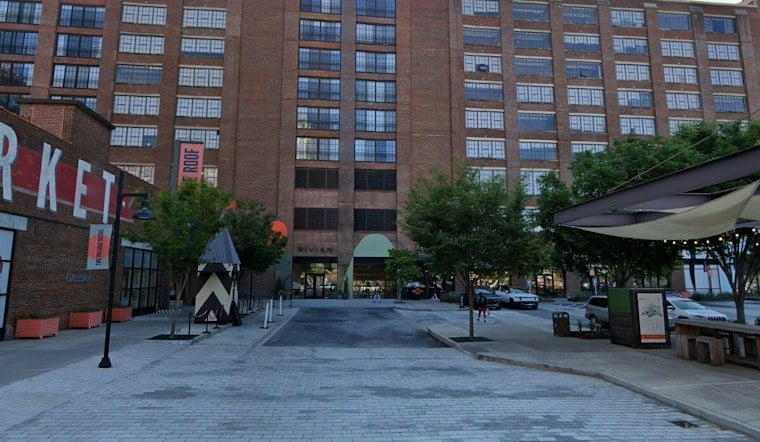
A century after Sears, Roebuck & Co. threw open the doors of its massive Atlanta warehouse and retail store, the building now known as Ponce City Market is marking the milestone with a monthlong slate of parties, exhibits and a commemorative beer. Developer Jamestown has dubbed the celebration “Ponce 100,” honoring the 100th anniversary of the 1926 building that has anchored the Old Fourth Ward through three very different eras.
The centerpiece of the celebration is a free community party set for September 26 in the Scout Courtyard, running from 2 p.m. to 8 p.m. with live music, food and drink offerings, art installations, custom merchandise and interactive workshops, according to WSB-TV. The festivities kick off a night earlier with a launch party on September 25 from 6 p.m. to 9 p.m. featuring live music and drink specials. Three Taverns Craft Brewery's Ponce Brew Terminal partnered with Ponce City Market to release a commemorative pre-prohibition-style ale for the occasion, called 100 Years on Ponce.
From Sears Warehouse to National Register
The building's roots stretch back to August 2, 1926, when the Sears regional retail store and distribution center celebrated its grand opening, drawing an estimated 30,000 visitors on its first day, according to historical detail reported by Atlanta Magazine. The $2 million construction project took six months to complete under then-Mayor Walter Sims. The Chicago-based architectural firm Nimmons, Carr & Wright designed the structure in the Colonial Revival style, with lead architect George C. Nimmons having designed multiple major catalog facilities for Sears around the country, per research from Modern Cities.
Through additions completed in 1932, 1948 and 1966, the structure expanded to 2.1 million square feet, becoming the largest brick building by volume in the Southeastern United States, according to a report from Ray, Ellis & LaBrie Consulting. The nine-story complex sits on a 16-acre lot. WSB-TV reports that Sears expanded the site into a 2-million-square-foot facility before closing its doors there in 1989.
A Municipal Detour Before Redevelopment
After Sears' closure, the City of Atlanta used the location for city hall offices, according to WSB-TV. The Bitter Southerner details that the city purchased the complex for $12 million in 1990 and converted it into municipal offices named City Hall East, with Mayor Maynard Jackson intending to centralize emergency services there but the city ultimately using only about 10% of the massive building.
The building's fortunes shifted when Jamestown purchased the property. WSB-TV reports that Jamestown bought the site in 2010, while city records cited by the City of Atlanta indicate Jamestown purchased City Hall East from the city in July 2011 for $27 million through the Atlanta Development Authority, a sale that eliminated an estimated $600,000 in annual municipal maintenance costs. Jamestown then invested more than $180 million to restore the structure, per WSB-TV, leveraging over $50 million in state and federal historic rehabilitation tax credits before the building's 2016 placement on the National Register of Historic Places, according to the Ray, Ellis & LaBrie Consulting report.
Centennial Exhibits Dig Into the Building's Past
An archival photography exhibition showcasing the preservation of the Ponce City Market building opened Friday on the second floor of the Central Food Hall and will remain on display through October 18, per WSB-TV. Jerry Hancock and Blake Burton hosted a related panel discussion and book signing, moderated by Wright Mitchell, president of the Georgia Trust for Historic Preservation.
A permanent history installation opens September 26 at the Trestle, the elevated walkway connecting the Ponce City Market building to the Atlanta BeltLine, and those historical displays will remain permanently accessible to visitors after the centennial events conclude, WSB-TV reports. Bellina Alimentari will offer paid pasta-making classes there the same day. The site's direct pedestrian connection to the BeltLine's Eastside Trail repurposed the building's historic railroad corridors, where boxcars once delivered catalog goods directly into the facility, according to the Atlanta Journal-Constitution.
A Site With History Long Before Sears
The 16-acre parcel had a life well before Sears arrived. Natural springs drew visitors in the 1870s, when the property featured two active natural springs, WSB-TV notes. The land later became an amusement park and the Ponce de Leon Ballpark, which hosted the Atlanta Crackers and the Negro American League's Black Crackers, according to WSB-TV. That earlier chapter earned the site a nickname as the “Coney Island of Atlanta,” per background compiled by FORTH Hotel Atlanta.
Jamestown CEO Matt Bronfman framed the anniversary as bigger than one building. “Ponce City Market's story is really a story about Atlanta, as it has continually evolved alongside the city,” Bronfman said, per WSB-TV. Jamestown has said it aimed to honor the building's history while creating a community-serving destination, with Ponce City Market now serving as a place for people to live, work, shop, dine and gather.
Growth Continues Alongside the Centennial
The celebration arrives as Jamestown keeps expanding the site well beyond its original historic footprint. WSB-TV reports the developer added more than 700,000 square feet of new residential, office and commercial space to the development in 2024. That expansion included 619 Ponce, a four-story mass-timber office building built from Georgia-grown timber, which software firm Sage leased in its entirety earlier this year.
The Central Food Hall has also kept churning through new tenants even as the centennial festivities take shape, from the Thai street-food concept Terminal 26 to the speakeasy cocktail bar La Cueva and a wave of sushi and ramen additions filling out previously empty Japanese food stalls. A century after Sears' boxcars rolled in along the eastern facade, the building that once distributed catalog goods to the rural South is still adding new chapters to its story.





