

























































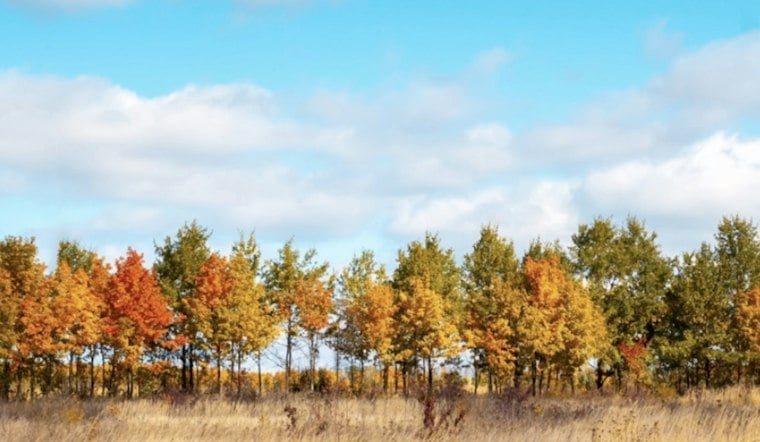
Portland's fall season isn't what it used to be. A new nationwide analysis finds the Portland metro area now experiences at least 18 additional fall days with above-normal temperatures compared to 1970, with metro-area temperatures climbing 2.7 degrees Fahrenheit over that same half-century.
The findings come from Climate Central, whose researchers examined 50 years of temperature data across the country, according to Oregon Public Broadcasting. The organization's broader review of 245 U.S. cities found that 241 of them, or 98 percent, saw higher average fall temperatures between 1970 and 2025, with autumn temperatures climbing by an average of 2.9 degrees nationally, according to 13News Now. Every county in the contiguous United States has warmed since 1970, and Portland is now counted among the fastest-warming cities in the nation, alongside Eugene and Medford, per Climate Central's findings.
Kaitlyn Trudeau, a researcher involved in the analysis, said small increases in temperature can wreak havoc on the earth, and warned that 18 additional hotter fall days could prove fatal for Portland's most vulnerable residents, the station's report notes. Heat remains the number one weather-related killer in the United States and in most places around the world, and high heat particularly threatens outdoor workers, people without access to cooling, people with existing health issues, elderly residents, and young children.
Oregon's Record-Breaking Autumn
The local trend lines up with state and federal records. Oregon set a new statewide record for its warmest meteorological fall, covering September through November, in 131 years of record-keeping, according to a December 2025 report from the National Centers for Environmental Information. Federal climate data published in January 2026 also showed that 2025 ranked as the third-warmest year on record in Oregon, with annual average air temperatures rising about 2.5 degrees Fahrenheit since 1900, a trend Hoodline covered in its report on Multnomah County's climate justice plan.
Looking ahead, the picture only intensifies. Per the seed report, Portland could see about four days per year with temperatures reaching 100 degrees by midcentury, climbing to as many as 16 such days annually by 2100. The Seventh Oregon Climate Assessment, published in January 2025 by Oregon State University researchers and compiled by more than 60 scientists and other experts, projected that Oregon's annual average temperature will rise by at least 5 degrees Fahrenheit by 2074 and up to 7.6 degrees by 2100 under high greenhouse gas emissions scenarios, with the largest increases occurring during summer and early fall.
Wildfires, Water Supplies, and Disease Risk
Assessment authors wrote that infectious diseases in Oregon's animals will continue to evolve as the climate changes, and warmer temperatures could also increase the spread of West Nile virus through mosquitoes, the same report found. Rising temperatures could shift the timing of certain agricultural products and drive higher energy affordability costs for residents, per the seed report's findings.
Hotter fall days could extend wildfire seasons, and longer, hotter, drier, and windier autumn conditions could produce more extreme fire behavior. Oregon has already burned more than 2.5 million acres during the 2026 wildfire season, incurring roughly $236.2 million in fire-related costs as of August. Warming winters and earlier snowpack melts are also accelerating how quickly water moves through mountain watersheds into streams, reducing streamflows during late summer and early autumn when water demand peaks, according to an April 2026 Oregon State University study reported by OPB.
Uneven Heat Across Portland Neighborhoods
Not every Portland neighborhood feels this warming equally. Thermal mapping conducted by Portland State University researchers found that East Portland neighborhoods like Lents reached 124 degrees during extreme heat events, driven by low tree canopy and dense asphalt, compared to just 99 degrees in the leafier West Hills, according to Inside Climate News. That disparity carries added weight given that Portland's urban tree canopy cover has actually declined, dropping from 33.4 percent in 2015 to 32.4 percent, according to city tracking data reported in July 2026 by the City of Portland Parks and Recreation.
In response, city officials are funding programs aimed at planting 10,000 trees annually through 2028 to help combat urban heat. Multnomah County has also taken its response to court: in June 2023, the county filed a $52 billion lawsuit against 17 major fossil fuel corporations and energy consultants, seeking damages and climate adaptation funding after the 2021 Pacific Northwest heat dome killed 69 county residents.
Regional utilities are adjusting as well. In a December 2025 regulatory filing with the Public Utility Commission of Oregon, utility provider PacifiCorp cited state climate assessments warning of extended dry autumn conditions and longer wildfire seasons to justify its 2026–2028 wildfire mitigation investments. Temperature increases across the region, researchers say, are caused by human-caused climate change and continued fossil-fuel burning, with the Southwestern United States warming fastest among U.S. regions and Climate Central's findings described as consistent with the latest Oregon Climate Assessment.





