

























































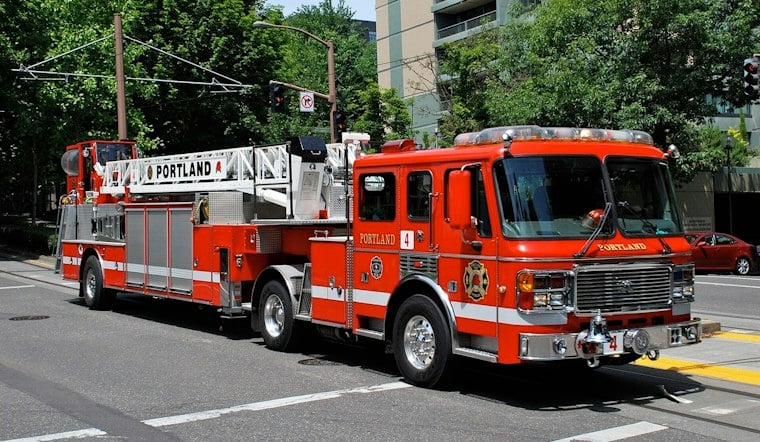
Portland firefighters pushed into a burning structure Thursday evening, swept the interior for anyone trapped inside, and found the building empty before turning hose lines on the flames. The update came directly from crews on scene as the search wrapped up and suppression efforts began.
“Interior crew has made entry and no one is inside. They are getting water on the fire now,” Portland Fire & Rescue posted Thursday evening, confirming the building was unoccupied and that crews had moved from search mode into active suppression. The bureau, which protects life, property and environment across the city, posts real-time updates during active incidents as a way of keeping residents informed while operations are still underway.
The quick search-then-suppress sequence follows standard department procedure. Under Portland Fire & Rescue's structure fire protocols, initial interior crews perform a rapid primary search to confirm whether anyone is trapped while simultaneously advancing hose lines to knock down the flames, according to the City of Portland. Firefighters prioritize clearing potential victims in zero-visibility conditions before shifting into overhaul, the mop-up phase that follows once the main body of fire is out.
A Department Stretched Thin on a Heavy Call Day
Portland Fire & Rescue is Oregon's largest fire protection provider, running 31 stations across a 160-square-mile service area with 29 engine companies and 10 ladder truck companies covering more than 615,000 residents. In fiscal year 2024–2025 alone, the bureau logged 89,422 emergency incidents, generating more than 113,000 total unit responses citywide — a call volume that spans structure fires, medical emergencies, hazmat incidents, and technical rescues.
The bureau also benchmarks itself against National Fire Protection Association standards, aiming to get the first engine or truck company to high-priority calls within 5 minutes and 20 seconds at least 90 percent of the time, per the city's own performance data. That kind of speed matters most in the opening minutes of a structure fire, when crews are still trying to determine whether anyone is inside.
A Day Already Marked by Solemn Tributes
Thursday's fire call landed on a day already heavy with remembrance across Portland. Firefighters stood at attention on station aprons at 6:59 a.m. and 7:28 a.m. for moments of silence marking the 25th anniversary of the September 11 attacks, timed to the exact moments the World Trade Center towers collapsed, with a public ceremony also held at Waterfront Park, according to Oregon Public Broadcasting.
The same day brought grim news from the region's wildland firefighting community. The U.S. Forest Service announced that a wildland firefighter battling the Austin Fire in Mount Hood National Forest died in a hospital from injuries sustained two days earlier, KGW reports. The loss underscored the close regional coordination among Oregon fire agencies during an already dangerous fire season.
Dry Conditions and Budget Pressure Loom Over Operations
Thursday's blaze also unfolded under an active citywide burn ban. Portland Fire & Rescue and the Multnomah County Fire Defense Board imposed the mandatory ban starting June 15, prohibiting outdoor debris fires, fire pits, and open flames because of high summer temperatures and dry vegetation, Hoodline previously reported in its coverage of a flagged SE Portland fire hazard.
The department is also operating under fiscal strain. In January, IAFF Local 43 leaders raised public safety concerns after the City of Portland instructed the bureau to evaluate budget reduction scenarios of up to 10 percent, or $26.7 million, for the 2026–2027 fiscal year, according to KATU. Local 43 represents roughly 680 non-command sworn firefighters and personnel under a collective bargaining agreement running through 2027, per the City of Portland, and has pushed back on cuts that could affect staffing during high-volume fire seasons like this one.
City safety guidelines instruct residents never to re-enter a fire-damaged structure until inspectors or fire officials issue a formal safety clearance, and forbid occupants from restoring utility connections on their own, a standard the bureau has reiterated after past residential fires. The cause, location details, and estimated damage from Thursday's fire had not been released as crews continued operations on scene.





