

























































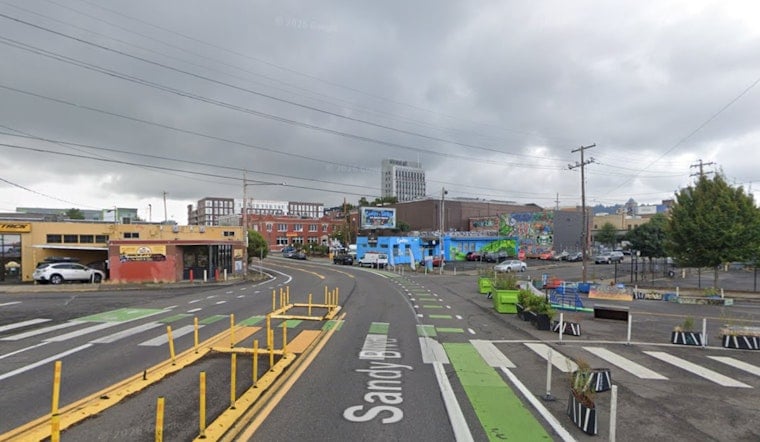
A leaking roof is standing between Portland Indigenous Marketplace and its long-held dream of a permanent home. The nonprofit, which has spent years hopping between borrowed rooms and pop-up tents, is now racing to shore up a former warehouse at 737 SE Sandy Blvd before winter rains cause more damage, with organizers hoping to eventually turn the building into a full-fledged cultural center for Portland's Native community.
The organization launched a “Raise The Roof” GoFundMe campaign in August 2025, seeking $13,000 to replace the building's aging, leaking roof, according to the fundraiser. That repair is considered the urgent first step before any interior renovations or outdoor plaza construction can begin. As Oregon Public Broadcasting reports, the marketplace is targeting a full opening of the permanent space, known as Project 737, by 2028.
An anonymous donor provided the building to Portland Indigenous Marketplace in 2024, giving the group, for the first time since its founding, a permanent address to call its own. Founder Lluvia Merello launched the marketplace in 2018 after hosting a Black Friday Indigenous Marketplace event that same year, and the organization became a registered 501(c)(3) nonprofit in 2020, per OPB's reporting. Merello started her own business, Indigenous Come Up Jewelry, in 2017, and envisions Project 737 as a cultural center centered on Indigenous art.
From Pop-Ups to a Permanent Roof Over Its Head
Before landing at 737 SE Sandy Blvd, the marketplace bounced between temporary spaces. It began by hosting three mini Native marketplace events during Last Thursday on Alberta Street in 2018, then operated out of the African Youth and Community Center Dream Center before that site was designated for affordable housing, according to Portland Indigenous Marketplace. Starting in November 2022, the group leased space inside the historic Yale Union building, owned by the Native Arts and Culture Foundation.
Along the way, the marketplace received a grant from the Oregon Metro Community Placemaking Program in 2019, and Great Spirit Church served as its fiscal sponsor during its early years, the OPB report notes. The organization has hosted livestreamed events on Facebook during the COVID-19 pandemic and now runs dozens of marketplace events annually, serving well over 250 vendors. For the first time in 2026, the marketplace began charging vendors $25 per day for event booths, after years of offering booths for free.
A Building With Roots in Native Trade History
The location itself carries historical weight. Sandy Boulevard was an important trade route for Native people before colonization in the Portland metropolitan area, connecting the Willamette River to the Columbia and Sandy rivers, according to background compiled by Portland Indigenous Marketplace. Part of the 737 SE Sandy Blvd property also once contained a natural pond, which is inspiring designers to incorporate sustainable stormwater features into the site plan.
On September 7, 2025, Depave and Portland Indigenous Marketplace unveiled a preliminary site design for the property, created in collaboration with Klamath Tribes artist Rowena Jackson, according to Klamath Tribes News. The design features artwork of the endangered c'waam fish, native to the Upper Klamath Basin and culturally significant to the Klamath Tribes. Portland Indigenous Marketplace is partnering with Depave to build the outdoor plaza portion of the project.
That plaza work connects to broader neighborhood safety efforts. In September 2026, Depave, Oregon Walks, and AARP Oregon hosted a community walk audit at the site to gather public input on a proposed “Future Green Plaza” pocket park and traffic safety improvements at SE Sandy Boulevard and SE Stark Street, according to Oregon Walks. Sandy Boulevard is a high-crash corridor that has drawn targeted infrastructure investment.
What the Finished Space Could Look Like
Once renovated, Project 737 is envisioned as a community center and central hub for the Indigenous community in the Portland area. Plans described in OPB's reporting include an indoor area for makers and events, workshops and public classes, a gift shop or gallery space, and possibly concerts. More frequent marketplace events would also take place at the finished site.
LaDonna Dempsey, a Portland Indigenous Marketplace team member and owner of Dempsey Designs Beadwork who identifies as a Two-Spirit Diné citizen, said the physical space will let Indigenous artists, makers, performers, families and community members gather and share culture, per OPB's account. The vendors and artisans the marketplace serves represent diverse regional and global Indigenous heritages, including Diné, Warm Springs, Lakota, Klamath, Quechua, Mexica, Haitian, and Fulani communities, according to the organization.
A Broader Push for Native Space in a Costly City
The push for a permanent home comes against a backdrop of steep housing and commercial rent increases that have repeatedly squeezed Native artists out of Portland. The Native American Youth and Family Center responded by developing Mamook Tokatee, a 56-unit affordable housing project in Cully that includes dedicated studio and living space for Native artists, according to a case study published by HUD USER. The Portland metro area holds one of the largest concentrations of urban Indigenous populations in the country, with Native American and Alaska Native residents making up nearly 2% of the city's population, a demographic legacy tied to federal relocation policies in the 1950s that moved thousands of Tribal members into major cities like Portland.
Since its founding, Portland Indigenous Marketplace has been 100% women-led, with an all-female Board of Directors, staff, and Vendor Policy Committee. The project has drawn formal letters of support from a wide coalition of local groups, including the Native Wellness Institute, Historic Parkrose, Gresham Historical Society, Southeast Uplift, and the Portland State University Indigenous Nations Studies Department, intended to help with grant applications and institutional partnerships.
In the meantime, the marketplace continues its regular event schedule while fundraising for the building. An upcoming Indigenous Marketplace event is set for September 12 and 13 at Electric Blocks, 1615 SE 3rd Ave. in Portland, running from 10 a.m. to 4 p.m. on the Saturday, open to anyone who wants to support Native artisans as the organization works toward opening the doors at 737 SE Sandy Blvd by 2028.



