

























































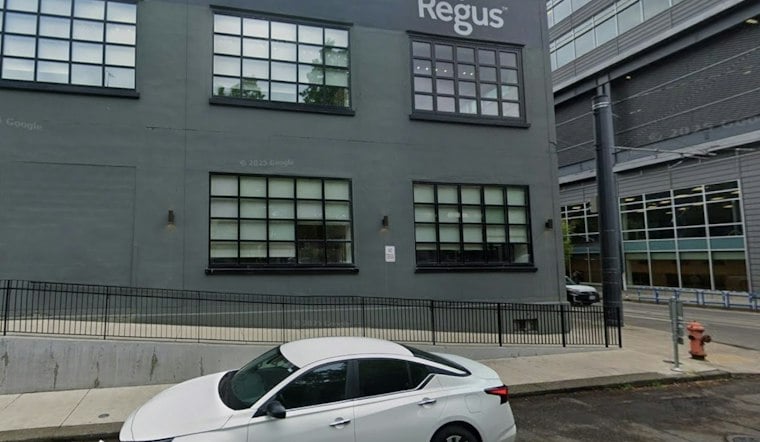
Portland’s largest overnight-only homeless shelter went dark on Friday, shuttering 200 beds in the Pearl District that had housed more than 2,700 people over the past year. The Northrup Shelter, run by the Salvation Army out of a leased office building at 1435 NW Northrup Street, had operated nightly from 8 p.m. to 6 a.m. since opening in 2025 as a centerpiece of Mayor Keith Wilson’s push to move people off the street.
The closure was announced earlier this year, and as reported by Oregon Public Broadcasting, Wilson himself described Northrup as the city’s highest-cost shelter facility. Public records obtained in July showed the Salvation Army billed Portland nearly $2 million over a 10-month span just for staffing at the site, a cost driven in part by hiring an out-of-state temp agency based in Los Angeles, according to KGW. The city had signed an $18,000-a-month lease with Sturgeon Development Partners in May 2025 to rent the 16,000-square-foot space specifically for shelter operations, per court documents tied to the case.
Kim Beeler said the shelter created a place of safety and community for more than 2,700 people, per OPB’s report. But that legacy came alongside mounting neighborhood friction. The owner of a neighboring apartment building sued the city and the Salvation Army in March, alleging inverse condemnation, nuisance, and negligence, and seeking $6 million in damages over claims that open drug use and sanitation problems near the shelter had devalued the luxury building.
A Costly Exit From a Costly Lease
Getting out of the Northrup lease wasn’t cheap either. City officials paid $108,000 in early termination penalties to the property owner before negotiating an extension that let the shelter keep running through late 2026 without additional rent, KGW reported. Despite that arrangement, city leadership opted to close the facility early rather than continue absorbing the Salvation Army’s staffing bills.
Occupancy at Northrup had also been sliding. The shelter averaged just 98 nightly guests in December 2025, down sharply from its capacity, according to figures attributed to Laura Rude in OPB’s reporting. Steve Cook noted that shelter demand is typically at its lowest in summer, but he also warned there may be nowhere for people to go once Northrup closes for good.
Nearby Shelter Already Turning People Away
Three blocks from Northrup, Bethanie’s Room — a 70-bed, privately funded overnight shelter for women and nonbinary people run by Blanchet House — has been nearly full every night since it opened in February. Staff there have already had to turn away people seeking shelter, a strain likely to intensify as Northrup’s 200 beds disappear from the map.
Northrup’s closure marks the second overnight-only shelter shutdown in Portland this year, following the Centennial neighborhood shelter’s closure in April. Several other city-run shelters have seen bed reductions or outright closures in 2026 due to budget shortfalls, undercutting Wilson’s signature campaign promise to rapidly expand low-barrier overnight capacity.
A Shrinking Citywide Bed Count
Wilson had set a goal of opening 1,500 new overnight shelter beds by December 2025 and said he’d reached it, according to OPB. But many of those newly opened beds were reportedly inaccessible at the time he announced the milestone, and Portland stopped updating much of its online shelter-resource tracking earlier this year. The city now operates 530 overnight shelter beds, per its shelter availability website — part of a broader decline the City of Portland itself has confirmed, projecting just 580 regular adult overnight beds this winter compared with 876 the previous winter.
That contraction traces back to a $172 million citywide budget shortfall. Wilson’s proposed FY 2026–27 budget sought to close the gap by cutting 30% from the shelter budget and defunding up to 951 beds, according to OPB. Multnomah County and Metro had declined to renew tens of millions of dollars in temporary funding that had propped up the 2025 shelter expansion.
Meanwhile, the county’s unsheltered population has grown, per county data cited in OPB’s reporting. Multnomah County’s Homeless Services Department estimated nearly 18,000 people were experiencing homelessness countywide earlier this year, including roughly 8,800 living unsheltered — though Wilson has publicly disputed the county’s methodology, arguing changes in data tracking artificially inflated the unsheltered figure.
Debate Over Where the Money Should Go
City records from late 2025 showed emergency overnight shelters running at just 50% to 60% nightly utilization, compared with a 92% occupancy rate at county-funded shelters, according to the Willamette Week. A January report recommended shifting some shelter funding to housing assistance.
The debate over overnight-only models has also exposed gaps in daytime services. Because shelters like Northrup required guests to leave by early morning, community organizations have opened daytime spaces such as Good Circumstance in Old Town to fill the hours when unhoused residents otherwise lack shelter or basic facilities — a shift Hoodline detailed in its report on the day space for women that opened last month. Portland has no immediate plans to open new shelters this year, even as Northrup staff spent Thursday helping remaining guests find alternative places to sleep after weeks of updating regulars about the closure.





