

























































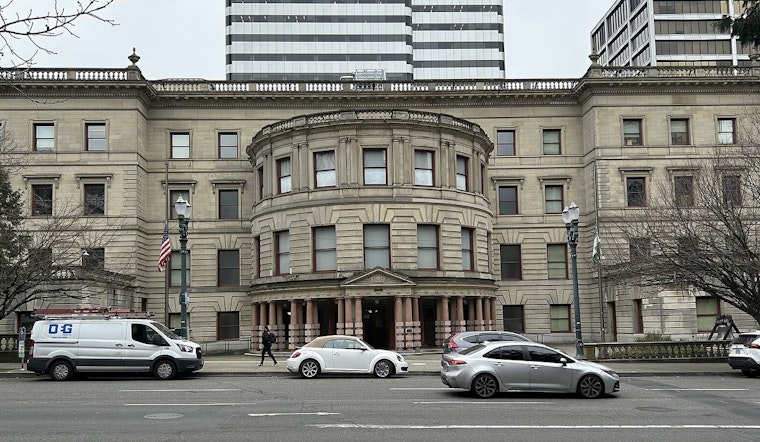
Portland's Housing and Permitting Committee has thrown its support behind a resolution that would discourage the city from signing secret nondisclosure agreements with data center developers, but the measure stops well short of banning the facilities themselves. Sponsored by Councilors Tiffany Koyama Lane and Mitch Green, the resolution urges the city administrator to keep negotiations over potential data center deals out of the shadows and instead notify the full council when inquiries come in.
The committee voted that the full city council should approve the resolution's direction, according to KATU. But the resolution does not ban data centers, does not change Portland's zoning code, and does not legally prohibit the city administrator from actually signing an NDA if one comes across the desk. It is, at its core, a statement of council intent focused on transparency and early notification rather than a hard legal barrier.
Koyama Lane said communities elsewhere have watched NDAs get used to advance data center projects before residents ever learned early negotiations were happening. Green, for his part, said he was not aware of Portland previously signing an NDA specifically involving a data center, but he framed the resolution as a way for the council to express its will in partnership with the mayor and city administrator. He put the goal plainly: the council wants to avoid the public learning about an NDA six months, 18 months, or two years after the fact.
Why NDAs Are Suddenly a Flashpoint
The push against secrecy has roots in a very different fight. In introducing the resolution on August 13, Koyama Lane specifically cited nondisclosure agreements used during early, secretive negotiations over Moda Center renovations as a major driver of public distrust the council wants to avoid repeating, according to a statement posted on Portland.gov. That episode left council members wary of any deal-making process where the public is the last to know.
Public testimony at the committee echoed that worry. Alice Christine Walker, who represented the East Columbia Neighborhood Association, said residents should be able to participate before major industrial projects become locked in. Leslie Kochen, who identified herself as a member of Extinction Rebellion PDX and the Oregon Data Center Defiance Coalition, argued that secrecy can exclude communities from major development decisions and asked councilors to replace the word urge with prohibit in the resolution's language, a request the committee did not adopt.
Where Data Centers Could Actually Go in Portland
Small and midsized data center operations already operate in Portland, often occupying vacant or underused office and retail buildings rather than sprawling suburban campuses. The 15-story tower at 707 SW Washington St. already houses the Lumen Portland 2 data center and the Windstream Portland data center, per KATU's reporting. Hoodline previously reported that Silicon Valley firm Menlo Equities acquired that same tower building in May, a deal that stirred speculation about further office-to-data-center conversions downtown.
Per Portland's Bureau of Planning and Sustainability, cited by Sandra Wood, the city's zoning code classifies data centers as industrial office use, and industrial office uses are generally allowed in commercial mixed-use and employment zones. The bureau identified about 10 locations around Portland that could accommodate large hyperscale facilities, while DataCenterMap.com lists nine companies with data center facilities in downtown Portland already. Most of downtown could potentially accommodate a data center through redevelopment of office towers or other underused space, though Portland's relatively small lots make it less conducive to the sprawling campuses that traditional hyperscale facilities typically require, since those need large sites, significant power infrastructure, and fiber connections.
Koyama Lane said she worries hyperscale data center development downtown could undermine Portland's efforts to restore activity to its urban core, since hyperscale facilities employ relatively few people compared with traditional office uses. That concern lines up with economic research Portland councilors highlighted in supporting the NDA push, which cited national cases where public subsidies for hyperscale facilities amounted to roughly $13 million per job created, according to the councilors' statement.
A Statewide Retreat From Data Center Incentives
Portland's caution reflects a broader pullback happening across Oregon this year. State House Bill 4084 took effect June 5, temporarily barring new data centers from accessing property tax exemptions through the Enterprise Zone program until 90 days after the 2027 legislative session ends, according to Davis Wright Tremaine. Oregon tech companies had previously saved more than $450 million annually through those exemptions. Governor Tina Kotek initially opposed excluding data centers from Enterprise Zone credits before lawmakers added the temporary pause, and she has since convened the Oregon Data Center Advisory Committee, which is due to finish a stakeholder report evaluating energy demand, environmental impacts, and tax policy in October.
Hillsboro, which hosts 35 operating data centers, more than any other Oregon city, enacted a 120-day land-use moratorium on July 27 blocking new applications for data centers and battery storage facilities where those uses make up more than 20 percent of a site's space, construction value, or power capacity. Clackamas County commissioners voted unanimously in August to begin a moratorium process of their own, a step that requires 45 days of public notice before formal adoption, while Woodburn officials have started reviewing local zoning policy to prepare for developer inquiries, according to KGW. Four Oregon Democratic lawmakers have separately announced plans to introduce a statewide three-year moratorium on new large data center construction in the 2027 legislative session, citing grid strain, water use, and loss of agricultural land.
Power costs have shifted too. The Oregon Public Utility Commission's Order No. 26-154 created a distinct customer class for large data centers served by Portland General Electric, raising their power rates by roughly 29 to 30 percent while slightly lowering rates for residential and small business customers starting in July. Hoodline reported that a 1-cent-per-kilowatt-hour surcharge on very large data centers now funds local energy efficiency programs, grid repairs, and rooftop solar projects, a mechanism the Oregon Citizens' Utility Board has praised for protecting residential affordability.
What Comes Next for Portland
Advocates who testified before the committee raised concerns about electricity demand, water use, pollution, and effects on surrounding neighborhoods from large-scale data centers, with some calling outright for a moratorium. The committee added an amendment calling for the council to continue exploring what a local data center moratorium or ban could look like, leaving that broader question unresolved even as the narrower NDA resolution moves toward a full council vote.
For now, Portland has not implemented any moratorium or ban on new data centers as a result of the committee's action, and the city has not resolved whether to change where and how hyperscale facilities can be built. City officials have signaled the council may consider formally prohibiting data center NDAs through a change to city code if the resolution's approach proves inadequate, but that remains a possibility rather than a plan.





.jpg)