

























































Nearly 22,000 Duke Energy customers across Cary and Morrisville lost power Thursday afternoon just as temperatures in the Triangle climbed to a dangerous 101 degrees, marking the region's eighth day this year above the century mark. The outage knocked out traffic signals and air conditioning along some of western Wake County's busiest corridors at the worst possible moment for anyone without a backup plan for the heat.
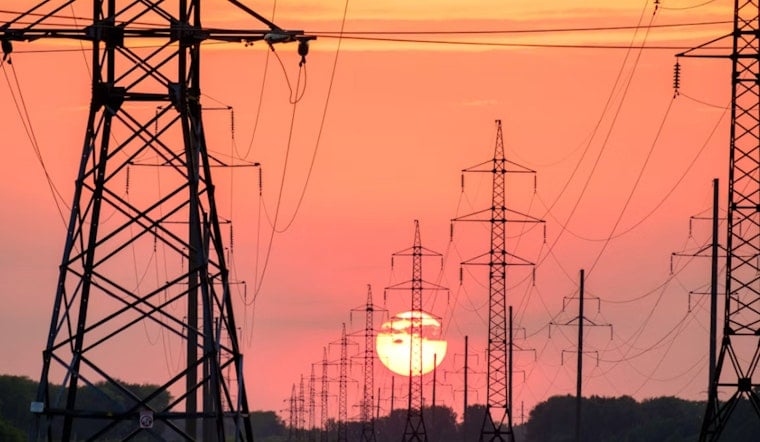
The Duke Energy outage map showed nearly 22,000 customers without power across Wake County on Thursday, according to WRAL. Affected areas included the Preston area, Cary Parkway, Maynard Road, Davis Drive, Weston Parkway, Chapel Hill Road, Evans Road, Morrisville Parkway, and James Jackson Avenue, where Wake County operates the Western Human Services Center as a designated cooling shelter during heat advisories, per Wake County Government. A Duke Energy spokesperson told WRAL the outage stemmed from a transmission line outage, and the utility estimated power would be restored by 5 p.m.
The National Weather Service confirmed Raleigh touched 101 degrees Thursday, the eighth time this year the city has crossed the 100-degree threshold, a milestone flagged in a post from meteorologist Matthew Hwx. Separately, North Carolina's Weather Authority reported that Duke Energy's preliminary explanation pointed to damage on major transmission lines, along with a fallen tree in one section, though the utility's final technical determination once crews completed repairs was not confirmed in the outlet's report.
Why One Fault Knocked Out Two Towns
The scale of Thursday's blackout traces back to the type of line that failed. High-voltage transmission lines carry power from generating plants to multiple regional substations at once, so damage upstream can cascade across municipal boundaries in a way a routine neighborhood circuit fault cannot. Duke Energy Progress has told regulators that 75% of its North Carolina customers are covered by automated self-healing grid technology, which the company says spared more than 1.1 million customer outages through October 2025, according to filings cited by Duke Energy. But that self-healing system is built for localized distribution faults, not major transmission failures, which typically require manual physical inspection before substations can be re-energized.
The outage's reach across two municipalities also underscores how tightly Cary and Morrisville's emergency operations are linked. Cary Police manage 911 dispatching and public safety coordination for neighboring Morrisville under an interlocal agreement, Hoodline has previously reported, meaning a single transmission failure straddling both towns' commuter arteries becomes one coordinated traffic and dispatch problem rather than two separate ones.
Dark Signals Mean Mandatory Four-Way Stops
With traffic lights dark along Cary Parkway, Davis Drive, and other major roads in the outage zone, drivers faced a legal obligation rather than a suggestion. Under North Carolina General Statute § 20-158(b)(6), motorists approaching an intersection with non-functioning signals due to a power failure must treat it as a four-way stop, according to the Delton Barnes Law Firm. Failure to do so is considered a leading cause of collisions in the aftermath of power outages, making the rule especially relevant on high-traffic corridors serving two of Wake County's most populous and fastest-growing communities.
Cary, the second-largest municipality in Wake County, had an estimated 178,637 residents as of 2024, per USAFacts. Morrisville, meanwhile, has grown nearly 10% since 2020 to top 33,000 residents, according to World Population Review, cementing its status as one of the fastest-growing residential and tech corridors in the state alongside its proximity to Research Triangle Park. That growth means more residents and commuters funneling through the same handful of arteries left dark by Thursday's failure.
A Familiar Pattern for Wake County's Grid
Thursday's outage is not the first time a single roadside or infrastructure failure has rippled across Wake County traffic and power systems. In August 2023, a vehicle struck a power pole in North Raleigh, cutting power to nearly 100 customers and blocking a major corridor for hours, Hoodline has reported before. Utility industry data also shows Duke Energy Progress maintains an annual transmission loss rate of roughly 3.50% across its regional grid, according to FindEnergy, a baseline reminder that even without a fault, some power is lost simply moving electricity across long-distance lines.
Duke Energy's estimate Thursday put restoration around 5 p.m., but the company's public timeline had not been confirmed as final at publication. Whether backup power held at cooling centers like the Western Human Services Center on James Jackson Avenue, and what technical cause crews ultimately identified once transmission lines were fully restored, remain open questions as Cary and Morrisville residents wait out both the outage and the heat.





