

























































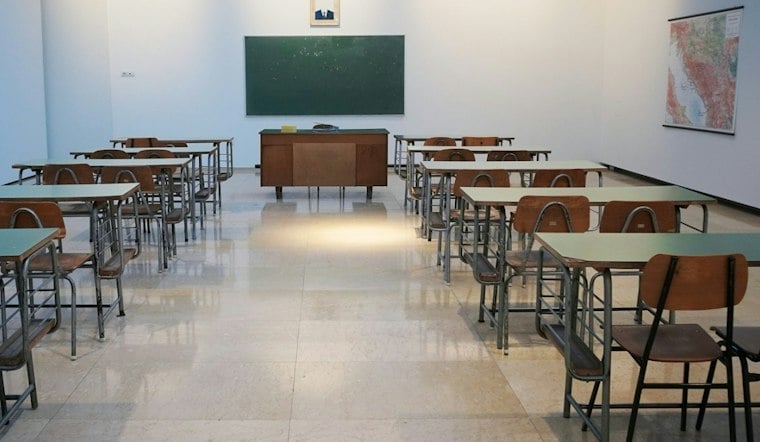
Classrooms at Gage Elementary School in San Carlos reached 89 degrees over the past two days, according to a parent who said a broken air conditioning unit had left students sitting in the heat for hours with no cooler place to go. San Diego Unified told NBC 7 that the classroom currently had working air conditioning and that a technician would conduct a status check. The building sits within San Diego Unified School District, where a regional heat wave has been pushing outdoor temperatures into the triple digits, hitting 106 degrees in some areas.
Taylor Hammond, whose 6-year-old son attends Gage Elementary, told NBC 7 San Diego that the heat is affecting his child, who comes home with heat rashes and has complained about how hot his classroom gets. Hammond said his son has not been moved to an alternative space, even as thermometers in the building recorded classroom temperatures climbing into the 90s. He has reached out to the school principal, the school district, and the county board of education trying to get the issue addressed, and the district told him it would look into the situation.
Teacher Turns to Spray Bottles and Parent Fans
The strain on Gage Elementary has fallen partly on the classroom teacher, who has been struggling with the reported conditions since the start of the school year and has asked families for help. Per the same NBC 7 San Diego report, the teacher has been bringing spray bottles from home to spray children down in the classroom and has asked parents to bring in fans and to pressure administrators about the reported problem.
San Diego Unified's HVAC team has been working with Gage Elementary on the repair, and the district said a technician would conduct a status check on Friday, per a district statement carried by the station. The district acknowledged that air-conditioning malfunctions can occur when units work overtime during extreme heat, and said its classrooms do have air conditioning installed, with the Gage Elementary classroom currently listed as having working AC per that same statement. The district also said it has made alternative spaces with working air conditioners available, including other classrooms and the library, intended to keep students and educators safe during the heat wave.
A Pattern That Predates This Heat Wave
The frustration in San Carlos echoes a broader pattern across San Diego Unified. The district spent $460 million between 2013 and 2019 to install HVAC systems across schools, according to CalMatters, helping bring air conditioning to schools across the district. San Diego voters have backed that push with four local school construction bonds totaling $11.5 billion since 2008, with cooling upgrades repeatedly pitched as a core promise to taxpayers, as Voice of San Diego has reported.
Yet installing hardware hasn't guaranteed it stays running. During a single 30-day stretch of a 2024 heat wave, San Diego Unified logged more than 1,100 heating and cooling repair work orders despite having AC units on every campus, according to Axios. It's a sign that aging systems can buckle under the exact conditions they're meant to handle.
Different Districts, Different Responses
Not every San Diego County district is handling this month's heat wave the same way. Coronado Unified School District implemented a minimum day on Wednesday, with students leaving at 12:30 p.m., while San Diego Unified and Cajon Valley Union School District monitored conditions and moved activities indoors as needed, according to CBS 8 San Diego. Chula Vista Elementary School District moved recess, lunch, and physical education indoors. Oceanside Unified School District has leaned on portable air conditioners and fans to keep classrooms tolerable, and NBC 7 San Diego has received separate reports of classrooms there reaching 90 degrees.
San Diego Unified and other districts have responded to extreme heat by monitoring conditions and moving activities indoors as needed. California law requires schools to keep interior temperatures within “normally acceptable ranges,” but sets no maximum temperature cap for K-12 classrooms occupied by students, according to the UCLA Luskin Center for Innovation. Workplace heat-safety protections are distinct from those school temperature standards.
State Funding for Repairs Just Ran Out
The timing compounds the problem. In September 2026, California lawmakers and Governor Gavin Newsom allowed the CalSHAPE grant program to lapse without extending funding for school HVAC repairs, sending unspent funds back to utility ratepayers, according to LAist. San Diego Unified had received $12 million through the program, but that money was earmarked solely for system assessments rather than actual repairs.
The stakes extend beyond any single classroom. Nonprofit research group UndauntedK12 estimated that climate-related weather disruptions cost California public school students roughly 500,000 hours of instructional time during the 2024-2025 school year, according to The 74. For families like the Hammonds, that broader trend is showing up in a very specific place: a San Carlos classroom that reached 89 degrees, while the district said it currently had working air conditioning and planned a status check.




