

























































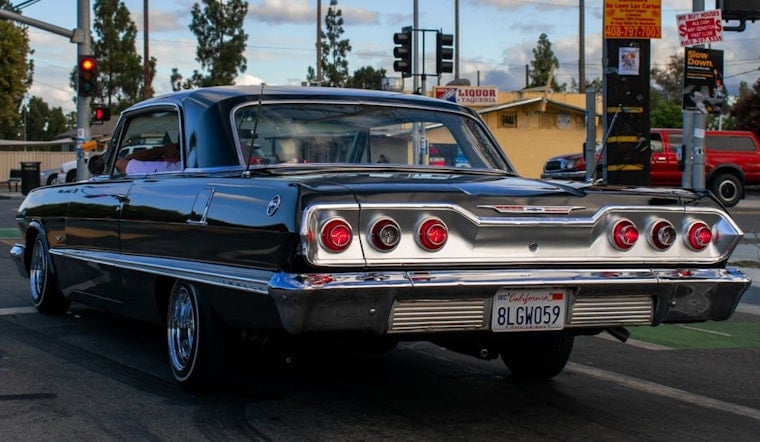
Custom cars will line Santa Clara Street between Third and Seventh streets in front of San Jose City Hall this Sunday as the city's Lowrider Day returns for its fourth year, running from noon to 6 p.m. with lowrider cars, live music, food, local vendors, community resources and afternoon performances. The festival marks the anniversary of the San Jose City Council's repeal of a decades-old cruising ban, a policy that once restricted the very culture now being celebrated at City Hall's front door. According to the City of San José, the city's overall Envision 2040 General Plan was adopted in Nov 2011, placing the downtown festival corridor within a longer-term neighborhood planning framework.
The event, held this year on September 6, is hosted by Anthony Tordillos, Peter Ortiz and the United Lowrider Council of San Jose, according to San José Spotlight. The San Jose City Council repealed the city's cruising ban in 2022, and the annual celebration grew directly out of that repeal. San Jose Spotlight reports the council proclaimed September 6, 2026 as 2026 Lowrider Day on September 1.
A Ban Born of the 1980s, Undone Decades Later
Cruising had been illegal in San Jose since 1986, with No Cruising zones that effectively restricted lowriders for decades, according to Atlas Obscura. The policy prohibited vehicles from repeatedly driving past police traffic-control points in congested areas. The San Jose City Council voted unanimously on June 28, 2022, to repeal the ordinance and eliminate all associated fees and penalties, a repeal championed by then-Councilmember Raul Peralez, as reported by The Drive. According to the City of San José, its Vision Zero program provides interactive data on all types of San José crashes, offering a public source for examining collision patterns near former no-cruising areas.
Former San Jose Police Chief Anthony Mata confirmed in 2022 that the department had issued no citations specifically for cruising since implementing its electronic citation tracking system in 2007, even as advocates argued the unenforced law still enabled pretextual police stops. That June, Peralez symbolically unbolted and removed the city's final official No Cruising Zone sign in front of City Hall during a public celebration surrounded by local car club members. Per San Jose Spotlight, Peralez experienced discrimination in his youth from the cruising ban and later helped repeal it as a councilmember.
From City Hall to the State Capitol
San Jose's local repeal helped trigger a broader legislative shift. The California State Legislature adopted Assembly Concurrent Resolution 176 with bipartisan support on August 22, 2022, encouraging municipalities to repeal cruising bans, per United Lowrider. Governor Gavin Newsom then signed Assembly Bill 436 into law in October 2023, taking effect January 1, 2024, prohibiting all California cities and counties from enforcing local cruising bans or vehicle height restrictions. Sacramento had already repealed its own anti-cruising ordinance in May 2022, ahead of the statewide law.
San Jose's place in that history runs deep. The intersection of Story and King roads in East San Jose served in the 1970s as a major lowrider hub and a center of Northern California's Chicano car culture, according to Atlas Obscura. Peter Ortiz, who grew up in East San Jose, remembered seeing lowriders around King and Story roads and during Cinco de Mayo and other cultural celebrations, San Jose Spotlight reports. The city was also the 1977 birthplace of Lowrider Magazine, founded by San Jose State University students to document Chicano culture, art and custom automobiles.
Teaching the Next Generation
Cruising has been part of Chicano culture since the 1940s and became a symbol of Mexican American resistance against discrimination during the civil rights movement of the 1960s and 1970s, per San Jose Spotlight's reporting. That history took a darker turn in the 1990s, when cities across the country created laws prohibiting cruising as it became nationally associated with gang violence and illegal activity.
Ricardo Cortez, a United Lowrider Council member responsible for history and youth education, said lowrider culture can be reclaimed from negative narratives and has become part of San Jose's cultural identity. Cortez teaches students about lowriding's origins, historically significant cars, hydraulics and San Jose's role in the culture, and he wrote The ABCs of Lowriding, a children's book on the subject. David Polanco, president of the United Lowrider Council of San Jose, said the city is a pillar of lowriding within the broader lowrider world.
Building Bridges With Police and Neighbors
The United Lowrider Council of San Jose builds relationships with city agencies, nonprofits, schools and community organizations, and works with the San Jose Police Department when organizing events and cruises. Ortiz said he plans to partner with police on future events and organized cruises, and told San Jose Spotlight he is excited for Chicano culture to be displayed at City Hall.
Ortiz added that lowrider and cruising enthusiasts include working professionals with families, pushing back against old stereotypes. Public events like Sunday's festival help residents see the people behind the cars rather than the stereotypes that fueled decades of bans, according to the same report. Hoodline first covered the proposal to repeal San Jose's ban back in 2022, before the council's unanimous vote made it official.





