

























































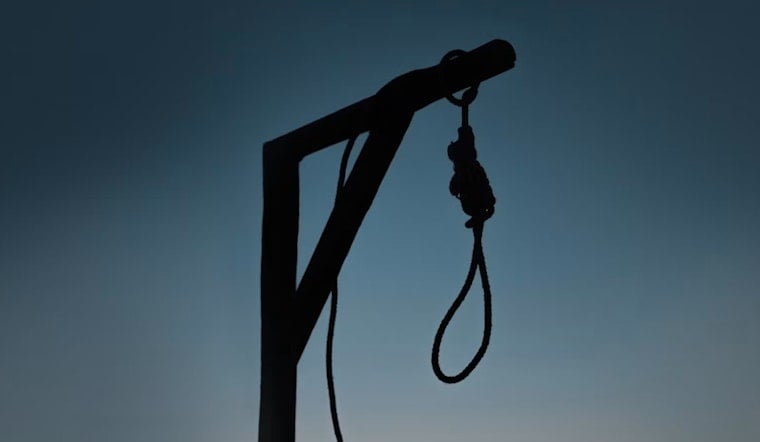
A Sandy man says he's watched from thousands of miles away as his 20-year-old cousin was sentenced to death in Iran for taking part in anti-government protests, while her twin sister received a 25-year prison term for the same demonstrations. Masoud Nourmohammadi, a naturalized U.S. citizen who manages technology for a health company, has spent recent weeks speaking publicly about the case of Taraneh and Romina Rahimi, hoping international attention might save his cousin's life.
Nourmohammadi told KSL that the sisters were peacefully protesting and that there was no evidence against them. He said his family has endured extreme hardship for the past eight months, and that he has personally faced death threats since going public, with family members inside Iran also targeted. The twin sisters, both 20, took part in demonstrations in Isfahan on January 8 and 9, according to the outlet's report, and were abducted from their home about a week later.
According to KSL's reporting, the sisters were missing from their family for roughly four months and were subjected to beatings, torture, and rape while held in a prison in Isfahan, emerging with broken legs, swollen faces, and hair loss. Their mother was permitted to visit them in prison in May. Taraneh and other defendants were tried on charges including waging war against God, destruction of public property, assembly and collusion, and propaganda against the state.
A Mass Trial With Death Sentences for Ten
The sisters were part of a larger group of 16 defendants tried together in what's known as the Isfahan Shohada Square case, following arrests stemming from the January protests. Branch 1 of the Isfahan Revolutionary Court handed down initial verdicts on August 31, sentencing ten defendants, including Taraneh, to death and 11 years in prison each, according to the Hengaw Organization for Human Rights. Six other defendants, including Romina, received long prison sentences totaling 146 years, with Romina's individual term set at 25 years.
The Jerusalem Post reports that Judges Morteza Barati and Mohammadreza Tavakoli presided over the trial at Dastgerd Prison, and notes that Judge Barati has a documented history of issuing capital verdicts against political dissidents in Isfahan. Hengaw's reporting adds a striking detail to the case file: video evidence reportedly showed Taraneh attempting to stop a homeless man from being beaten during the unrest, and the organization noted that prosecutors presented no documented evidence linking any of the 16 defendants to the deaths of an IRGC member or a homeless man during the protest. The indictment itself contained no direct murder charges against the defendants, per Hengaw's account.
Due Process Concerns Cloud the Proceedings
Defense lawyers representing the 16 defendants were denied access to substantial portions of the case file and refused adequate time to review evidence before hearings, according to the Human Rights Activists News Agency. That kind of restricted access is common in Iran's Revolutionary Courts, which frequently limit legal counsel for political detainees. Taraneh now has 16 days to appeal her death sentence, and a team of human rights lawyers plans to attempt that appeal before Iran's Supreme Court.
Nourmohammadi says he plans to seek support from Utah's congressional delegation and has sought political sponsorship to help his cousins' case gain visibility. Public pressure and diplomatic attention have become central to that strategy, given the scale of the crackdown surrounding the case.
An Unprecedented Escalation for Female Protesters
Taraneh Rahimi and 43-year-old Leila Abolhasani have become the first two women sentenced to death in Iran in connection with the January 2026 protests, according to The Times of Israel. Abolhasani, a mother of two teenagers, was sentenced to death by an Isfahan court on the same waging war against God charge for allegedly setting fire to a store during the protests, though her relatives say she was only filming the scene; her case has since been submitted to the Supreme Court for review. The Times of Israel, citing the Norway-based NGO Iran Human Rights, reports that Iranian courts had already executed at least 29 men on charges tied to the protest movement before extending death sentences to female defendants.
That execution campaign has drawn international scrutiny beyond the two women's cases. The UN-backed Independent International Fact-Finding Mission on Iran confirmed in July that Iranian judicial authorities had acknowledged executing at least 23 men in protest-related cases between March and July, according to Radio Free Europe/Radio Liberty. Human rights advocacy organizations have separately estimated that more than 500 people have been killed by Iranian state security forces since the protests began in January, per the Jerusalem Post, while Amnesty International has reported thousands died in the protests following the government's backlash.
Protests Rooted in Economic Collapse
The demonstrations that swept Taraneh and Romina Rahimi into custody trace back to strikes by shopkeepers and bazaar merchants in Tehran in late December 2025, who took to the streets over soaring inflation and a collapsing currency, according to Radio Free Europe/Radio Liberty. Those commercial strikes evolved into general anti-government demonstrations as youth and university students joined in, eventually turning into mass nationwide street protests calling for an end to the Islamic Republic system, driven by inflation, government mismanagement, and declining living conditions.
The unrest later intersected with a dramatic geopolitical turn: President Donald Trump sent U.S. forces to attack the Iranian government on February 28, teaming with Israeli forces in a military campaign that killed Ayatollah Ali Khamenei and other top Iranian officials, according to KSL's reporting. The Iranian government has continued its repression in the aftermath, with the mass trial in Isfahan among the clearest examples of that ongoing crackdown.
For Nourmohammadi, the fight now centers on the narrow appeal window his cousin has left. He has spoken publicly to draw attention to both sisters' cases, even as that decision has brought threats against himself and relatives still inside Iran. The Rahimi twins' ordeal echoes a wave of diaspora activism that has rippled through American cities since the protests began, including rallies at San Francisco's Ferry Building and demonstrations that later spread to Los Angeles and Florida, as per Hoodline.





