

























































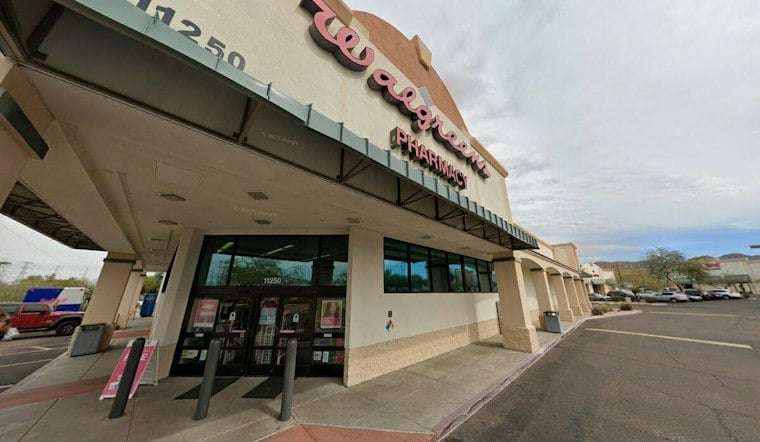
Shoppers who walked into the Walgreens on Via Linda near Shea Boulevard and Frank Lloyd Wright Boulevard in Scottsdale on the reported exposure date—September 8 according to 12News and September 9 according to Arizona's Family—between 8:00 a.m. and 10:25 a.m. may have been exposed to measles, according to the Maricopa County Department of Public Health. Officials say a Valley resident who later tested positive for measles was in the store during that window, and shoppers did not need direct contact with the patient to be at risk.
The exposure was reported by Arizona's Family, which noted the infected resident is believed to have picked up the virus while traveling outside Maricopa County. People who were in the Walgreens during the exposure window are urged to watch for measles symptoms through September 29, since the virus can linger in the air for up to two hours after an infected person leaves an enclosed space, according to the outlet's report. 12News reported an exposure window from 8:00 a.m. to 10:25 a.m.
Symptoms typically appear seven to 12 days after exposure but can emerge as late as 21 days out, per the station's report. Early warning signs include a high fever above 101 degrees, red and watery eyes, a cough, and a runny nose.
A Local Outbreak Just Declared Over
The timing is notable: Maricopa County had officially declared its previous local community outbreak closed on September 16, just a day before the Scottsdale exposure alert went out, according to a Maricopa County health department bulletin. Health agencies typically close outbreaks once two incubation cycles pass without a new locally acquired case, but this latest infection has been associated with travel without establishing that it was not locally acquired, showing how easily an outside case can reignite concern even after transmission has stalled.
Maricopa County has now recorded 28 measles cases in 2026, a steep jump from the roughly one case per year the county averaged over the previous three decades, as detailed by the Arizona Emergency Information Network. Nationally, the picture is even starker: the Centers for Disease Control and Prevention had counted 3,294 confirmed measles cases across 47 U.S. jurisdictions through September 10, compared with 2,289 cases for all of 2025.
Vaccination Rates Sliding Statewide
Only 87.4% of Arizona kindergartners were up to date on their MMR vaccine during the 2025–2026 school year, ranking the state 44th among 48 reporting states, according to the Arizona Public Health Association. That figure sits well below the roughly 95% threshold needed for herd immunity. Meanwhile, 10.6% of Arizona kindergartners obtained an exemption from at least one vaccine during the same school year; the vast majority of those exemptions were non-medical, as reported by Axios. Arizona had the third-highest exemption rate among states.
The gap plays out school by school. School-level MMR coverage figures for Maricopa County are not provided here. Compounding the problem, active provider enrollment in Arizona's federal Vaccines for Children program fell from about 1,200 providers to about 600, according to The Arizona Republic, creating access barriers for uninsured and low-income families seeking free childhood vaccines.
What to Do If You Were Exposed
Dr. Nick Staab, chief medical officer for the Maricopa County Department of Public Health, said measles is making headlines, but several illnesses are spreading and vaccines can protect against many of them. Two doses of the MMR vaccine prevent measles and also protect against mumps and rubella, and the vaccine is available year-round for anyone who is not up to date. Health officials recommend an early MMR dose for infants ages 6 to 11 months who are at higher risk of exposure.
For those who may have been exposed and are not already immune, health officials can provide guidance on next steps, particularly for infants at higher risk of exposure.
This is not Arizona's first brush with measles this year. Earlier in 2026, Arizona had recorded 344 measles cases since the start of 2025, mostly concentrated in Colorado City. Hoodline is also linked here for additional context.





