

























































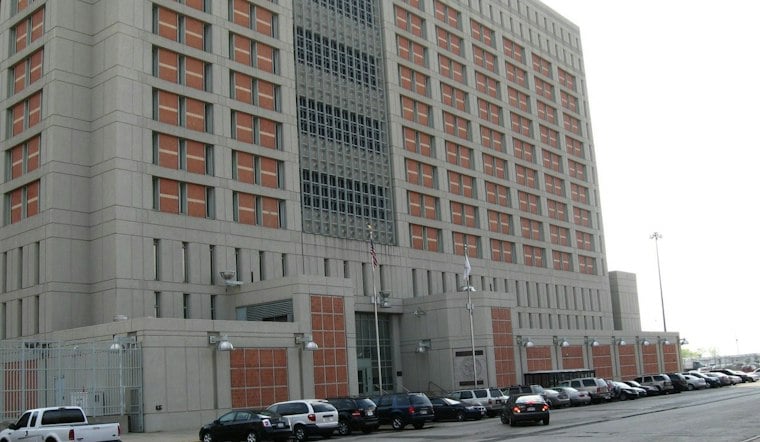
A gang-related fight at the Metropolitan Detention Center in Brooklyn on Sept. 6 sent multiple incarcerated people for medical treatment and led to lockdowns at the federal facility, according to the New York Daily News. The Bureau of Prisons confirmed that a fight occurred at about 7:25 a.m.; details about the number of injured people and the full circumstances remain under investigation.
The Daily News, citing sources, reported that the confrontation involved at least 20 people on the seventh floor of the West Building and included members of the Trinitarios and another gang. Some people were treated inside the jail and others were taken elsewhere for care. The Bureau of Prisons has not publicly provided a complete injury or hospitalization count.
The incident fits a documented management problem—but not a proven trend
The September fight is the latest safety question at a jail whose conditions had already drawn federal judicial scrutiny. In a January 2024 opinion, U.S. District Judge Jesse Furman wrote that government-provided data confirmed severe staffing shortages at MDC Brooklyn for years, according to the U.S. District Court for the Southern District of New York.
That same opinion described a recent period in which people detained at MDC had reportedly spent much or all of three weeks on lockdown after an assault on staff. The finding does not establish that staffing shortages caused the Sept. 6 fight, but it provides documented context for why another lockdown at the facility raises questions about supervision, movement and access to services.
The jail’s history also includes infrastructure failures. A federal court said a winter 2019 power outage left people inside without light or heat for a week during a polar vortex. Separately, a Justice Department inspector general report said a 2019 review found that staff did not ensure some people using continuous positive-airway-pressure machines could use them during a power outage; the related policy recommendation remained unresolved as of August 2022, according to the DOJ Office of the Inspector General.
What the available data can—and cannot—show
The Bureau of Prisons says it calculates institutional assault rates by counting assaults per 5,000 incarcerated people and reviewing chronological disciplinary records for serious and less serious assaults, according to its public safety methodology. That framework could help place the September incident in a broader comparison, but the available record here does not provide a current MDC Brooklyn assault rate or a year-over-year trend.
The distinction matters: a series of serious incidents can document recurring risks without proving that violence is increasing or that any single operational failure caused a particular fight. For the Sept. 6 confrontation, the number of injured people, the identities of those involved, the weapons allegedly used and any disciplinary or criminal consequences remain unresolved in the publicly available information.
The immediate test for the Bureau of Prisons will be whether its investigation explains how the fight began, how contraband or weapons may have entered the housing unit, and whether staffing or lockdown procedures affected the response. Until those findings and injury figures are released, the event is best understood as a new incident at a facility with a documented history of staffing, lockdown and infrastructure problems—not, by itself, proof that those problems have worsened.



