

























































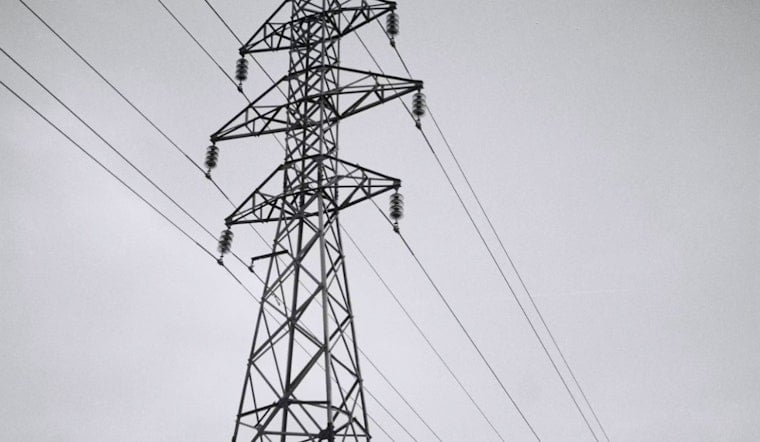
Severe thunderstorms tore across metro Atlanta Saturday evening, toppling trees onto homes and roadways and knocking out power to more than 50,000 customers, with utility crews still assessing the damage and unable to offer a timeline for full restoration. Winds gusting up to 60 miles per hour and hail as large as one inch in diameter battered Fulton, DeKalb and Gwinnett counties as the storm system rolled through the region.
The scope of the outages grew well beyond initial estimates as electric membership cooperatives began reporting their own numbers on top of Georgia Power's count. According to FOX 5 Atlanta, Fulton County alone had more than 34,000 reported outages attributed to Georgia Power, while Cobb EMC reported more than 900 customers without power and had not provided an estimated restoration time. Jackson EMC reported more than 5,000 people without power in Hall County, also without a timeline for full restoration. Georgia Power itself had not provided an estimated time for full restoration as crews worked to assess storm damage and downed trees across its service territory.
In Roswell, fire crews responded to numerous calls about trees down across roadways and into yards, including one large tree that fell onto a home. The Roswell Fire Department reported no injuries and worked to clear roadways blocked by fallen trees. Severe storm warnings stretched across Roswell, Dunwoody, Doraville, Duluth and Alpharetta as the system moved through, with additional warnings covering portions of Gwinnett, DeKalb and Fulton counties.
Storm Cell Tracked Directly Over Virginia Highland
The National Weather Service office in Peachtree City issued a severe thunderstorm warning at 6:44 p.m. EDT Saturday, tracking a storm cell moving directly over Atlanta's Virginia Highland neighborhood at 20 mph, according to a meteorologist's storm-tracking post. The warning flagged wind gusts up to 60 miles per hour and hail up to one inch in diameter as threats to roofs, siding and trees across Fulton, DeKalb and Gwinnett counties — a dense, tree-heavy corridor where falling limbs routinely land on power lines and rooftops.
Beyond the power outages, the storm's reach extended into regional transportation. The Federal Aviation Administration issued a ground stop at Hartsfield-Jackson Atlanta International Airport Saturday evening, while emergency crews responded to dark traffic signals on Peachtree Street in Buckhead and tree strikes on homes across Atlanta and DeKalb County, per WSB-TV. The station also reported that, as of midnight, more than 16,000 Georgia Power customers and 9,000 Georgia EMC customers remained without power in metro Atlanta.
Extreme Heat Set the Stage for the Storm
Saturday's storm complex formed amid extreme heat blanketing north and central Georgia, where afternoon heat index values were expected to top 100 degrees Fahrenheit under a Hazardous Weather Outlook, according to the Cobb Courier. Sudden downbursts have repeatedly slammed metro Atlanta's grid late this summer.
The pattern isn't new. Historical data from the National Weather Service office in Peachtree City shows damaging thunderstorm winds strike north and central Georgia an average of 19 days a year, with severe weather peaking in July and August — a trend Hoodline previously reported after an earlier round of overnight storms left thousands dark across the region last month.
Tree Canopy and Grid Investments Collide
Atlanta's identity as the “City in a Forest” is central to why storms like this one keep cutting power. A Georgia Tech urban tree canopy assessment found the city's canopy coverage fell to 45.7% in 2023, with an average loss of a quarter-acre per day between 2008 and 2023, or roughly 91 acres annually, WSB-TV reported. Fewer mature trees haven't stopped the outages, since the trees that remain are often close to aging power lines.
Georgia Power has poured $1.3 billion over three years into its Grid Investment Program, funding smart-grid technology, undergrounded lines and infrastructure hardening meant to automate rerouting and speed recovery, according to a company release carried by PR Newswire. Meanwhile, Grice Connect also reported on Georgia Power's rates.
Vegetation management near major roads is also addressed in Georgia Department of Transportation materials, which call for annual schedules for each of GDOT's seven districts.
As with previous storms this summer, restoration crews are expected to follow Georgia Power's standard protocol of repairing high-capacity main transmission lines serving the largest numbers of customers before moving to neighborhood lines and individual homes, a sequence Hoodline outlined. That means residential streets with heavy tree canopy, like those in Roswell and Virginia Highland, could face longer waits for power to come back on than commercial corridors and public infrastructure.





