

























































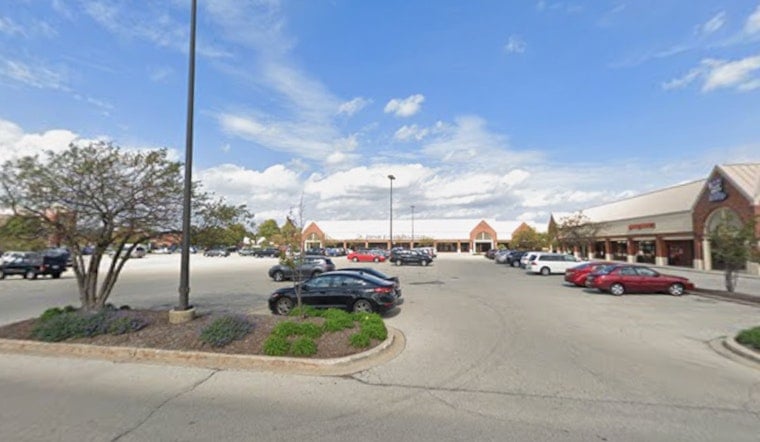
A sprawling shopping center on Skokie's west side has changed hands for $122 million, marking the largest Chicagoland retail property sale in a decade. Village Crossing, the 722,457-square-foot power center at 5507 West Touhy Avenue, closed in the waning days of August 2026 when Chicago-based investment firm Fairbourne Properties acquired it from institutional seller Nuveen Real Estate.
The deal works out to roughly $172 per square foot for a property that is 95 percent leased across 69 commercial spaces, according to The Real Deal. Village Crossing's tenant roster includes Best Buy, Dick's Sporting Goods, Altitude Trampoline Park, Michaels, OfficeMax, PetSmart, Five Below, Barnes & Noble, an Ulta Beauty and an AMC movie theater, per a breakdown from Bisnow. The center was originally merged from several individual shopping centers into the mega-property that exists today.
Financing for the acquisition came together despite the deal's size, with Draper and Kramer's commercial finance group originating the loan. The same Bisnow report notes that Senior Vice President Bill Stewart pointed to strong competition among lenders eager to fund the transaction, a sign that debt markets remain hungry to finance stabilized, multi-tenant suburban retail even with borrowing costs still elevated.
From Factory Floor to Retail Powerhouse
Village Crossing's site carries its own industrial backstory. The 63-acre parcel was once home to an AT&T and Teletype Corporation manufacturing plant that employed 1,000 workers before the factory shut down in 1987, according to background compiled on Wikipedia. Trammell Crow Company redeveloped the site into the power center that opened in 1989, turning a shuttered telecommunications plant into one of the North Shore's dominant retail destinations.
Fairbourne Properties, the buyer, was established in 2016 and is headquartered on Michigan Avenue in Chicago. The firm's portfolio already spans 18 commercial properties, including Oak Lawn Commons in Oak Lawn and Louis Joliet Pointe in Joliet, the report notes.
Nuveen's Pivot Away From Power Centers
For Nuveen, offloading Village Crossing fits a pattern the firm has followed across several markets this year. Nuveen regards physical retail as fundamental to its strategy, but it has been steering that strategy specifically toward grocery-anchored centers rather than big-box power centers like Village Crossing.
Locally, Nuveen acquired the Jewel-Osco-anchored Elston Plaza on Chicago's northwest side for $27 million, and it purchased The Shops of Uptown in Park Ridge — anchored by Trader Joe's — for about $26 million, as Hoodline previously reported. Nuveen also bought an Aldi-anchored shopping center in Margate, Florida for $46.3 million in April 2026 and, on the national stage, closed on a 956,865-square-foot grocery-anchored portfolio from Sterling Organization for $298 million in March. Capital for those moves has flowed in part from Nuveen's U.S. Cities Retail Fund, which raised $330 million, including a $250 million commitment from Australia's Retail Employees Superannuation Trust.
The fund's grocery push has come with some give-backs elsewhere. Nuveen sold retail space at the base of the Palmolive Building to L3 Capital for $64.5 million, a transaction that included a 28 percent discount off an earlier valuation.
A Decade-High Price Tag for Chicagoland Retail
Before Village Crossing's sale, the priciest Chicagoland retail transaction on record was the $147 million paid in 2016 for the retail portion of the landmark Sullivan Center department store in the Chicago Loop. Village Crossing's $122 million price tag now stands as the largest sum paid for a single Chicagoland retail property in ten years, even though it trails the Sullivan Center's total dollar figure — a reflection, per the reporting, of how suburban power centers have overtaken high-street urban retail as the region's premier investment target.
That shift is playing out against a broader surge in the market. Retail transaction volume across the Chicago metro area rose about 30 percent in the year ending June 2026, with average prices holding near the mid-$330s per square foot and cap rates sitting in the upper 7 percent range, according to Bisnow's market data. The region's overall retail vacancy rate stood at 5.3 percent in mid-2026 — just 50 basis points above its historic low — though suburban power centers hit hardest by big-box closures were running vacancy closer to 6 percent, per a separate Marcus & Millichap report. Against that backdrop, Village Crossing's 95 percent occupancy places it well above the typical power center in the current market.
Skokie's Shifting Retail Map
The sale also lands amid broader changes to Skokie's commercial landscape. Just a few miles away, Westfield Old Orchard mall is pursuing a multi-phase redevelopment that includes demolishing its former Bloomingdale's store to make way for more than 400 residential apartments alongside new open-air retail space, Hoodline reported in 2024. Between that residential-retail overhaul and the record-setting sale of Village Crossing, Skokie's two flagship shopping destinations are each being reshaped by the same forces reordering suburban Chicago retail — one through a change in ownership, the other through a change in what gets built on the land itself.





