

























































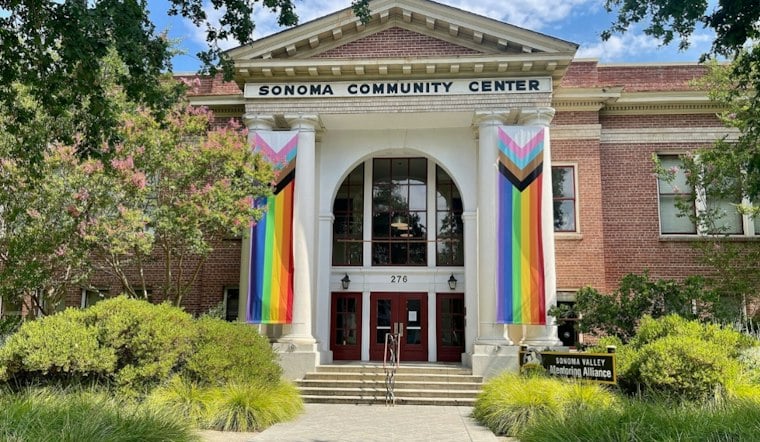
A pair of Buster Keaton silent comedies is coming back to life on East Napa Street, complete with a live pianist recreating the sound of a 1920s movie house. The Sonoma Community Center is hosting a Buster Keaton double feature screening One Week and The Balloonatic, with doors opening at 6 p.m. and the show starting at 6:30 p.m. in Andrews Hall at 276 East Napa Street.
The event, reported by The Press Democrat, pairs Keaton's 1920 directorial debut One Week with his 1923 comedy The Balloonatic, blending comedy, live music and silent film into a single evening. Tickets cost $10 per person, and proceeds support the Sonoma Community Center's local programs. A donation-based snack bar will also be available, and the venue is providing ticket information by phone at 707-938-4626, with additional event details posted at sonomacommunitycenter.org.
A Return Engagement for Sonoma's Silent Film Accompanist
Local musician and composer John Partridge is returning to the Sonoma Community Center to provide live musical accompaniment for the screening, according to the same Press Democrat report. Partridge relocated to Sonoma in 2020 after studying composition and conducting at UC Santa Cruz, and he has since served as musical director for Sonoma Arts Live Theatre Company and conductor of the Sonoma Hometown Band, per his Navona Records artist profile.
This screening follows a recurring local tradition of scoring silent cinema live. Organizers screened Nosferatu last year, and Partridge previously accompanied a 2021 screening of Buster Keaton's Cops for the Sonoma International Film Festival, according to his own event listings. The live accompaniment aims to recreate the communal theater experience audiences had in the 1920s, when films were rarely shown in silence.
Introducing Keaton's Legacy to a New Audience
The showcase includes discussion of Buster Keaton's influence on modern physical comedy. The Press Democrat identifies Jennifer Churchill as a classic film authority. Churchill wrote Movies Are Magic, a children's book about film history, and her author profile on Goodreads notes the work carries a foreword from Turner Classic Movies host Ben Mankiewicz.
Per Churchill's remarks as reported, modern performers including Johnny Depp, Johnny Knoxville, Jackie Chan and Jim Carrey have each expressed reverence for Buster Keaton, whom audiences of his era knew as the Great Stone Face for his famously deadpan expression. Organizers have shifted the evening's focus toward slapstick comedy, giving the two Keaton shorts room to showcase the physical stunt work that made him a defining figure of the genre.
Two Films That Marked Turning Points in Keaton's Career
One Week, originally released September 1, 1920, marked Keaton's debut as an independent solo star and director after he ended his screen partnership with Roscoe “Fatty” Arbuckle, according to background compiled from Wikipedia. The Library of Congress selected the film for preservation in the U.S. National Film Registry in 2008, recognizing it as one of the most artistically significant short comedies of the silent era.
The Balloonatic, released in 1923, co-starred former Mack Sennett Bathing Beauty Phyllis Haver, who went on to play murderer Roxie Hart in Cecil B. DeMille's original 1927 silent adaptation of Chicago. Keaton ranks among the most preserved filmmakers in the National Film Registry, with seven of his works — including One Week, The General, Sherlock Jr., Cops, The Cameraman, Steamboat Bill, Jr. and The Navigator — inducted by the Library of Congress, a distinction that helps explain why his films continue to draw audiences a century later. According to the Library of Congress, fewer than 20% of American silent films still survive in complete form, underscoring the significance of continued preservation and exhibition. The Library of Congress reports that 70% of the 11,000 feature-length movies made in America during the silent era no longer exist in any form.
A Historic Building With Civic Roots
The screening takes place inside a building with its own layered history. The Sonoma Community Center occupies the former Sonoma Grammar School.
The article also mentions the Cooperage property.
The center's activities extend beyond movie nights and theater productions.




