

























































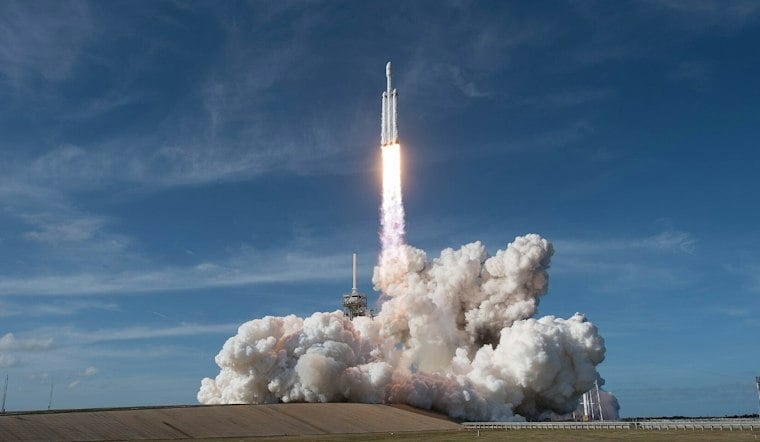
SpaceX is gearing up for what could be a milestone moment for its Starship program: the vehicle's first attempt to actually reach Earth orbit. The company's 14th test flight is now targeted for Monday morning, and if it goes off as planned, Starship will spend nearly 10 hours circling the planet before splashing down in the Pacific Ocean.
FOX 35 Orlando reporter Matt Trezza has been covering preparations for the scheduled Monday morning launch, according to FOX 35 Orlando. The mission marks Starship's 14th overall test flight and the third flight of the newer V3 vehicle, and it would be the first Starship mission tasked with actually deploying satellites into low Earth orbit, according to go4liftoff.com. That satellite payload is expected to be 26 Starlink V3 units, part of what would be the rocket's first attempt to send the fully reusable vehicle into orbit around Earth, per a report from iHeart's KISS 108.
A Shifting Launch Date
The timeline for this flight hasn't been static. SpaceX initially said it was preparing to launch the test as soon as September 22, but later reporting indicated the company moved the planned launch from that date to no earlier than September 28, according to a report from NewSpace Economy. Even now, that September 28 date is described as a target rather than a guaranteed launch date, though the FAA launch license was acquired on September 26.
Exactly when the rocket will lift off on Monday remains a bit murky too. Spacecalendar.com reported a launch window of 07:15 to 08:30 CDT, equivalent to 8:15 to 9:30 a.m. EDT, while the KISS 108 report cited a 75-minute window starting at 8:15 a.m. EDT. Flight tracking site go4liftoff.com has listed the target as 13:15 UTC; the FAA launch license was acquired on September 26.
What the Flight Plan Looks Like
Assuming liftoff happens, the plan calls for Starship to fly roughly 275 kilometers above Earth and complete approximately six orbits over nearly 10 hours, per go4liftoff.com's mission profile. The Super Heavy booster is expected to splash down in the Gulf of Mexico about seven minutes after liftoff, while the Starship upper stage is planned to come down in the Pacific Ocean west of Chile, according to the same iHeart report cited earlier.
The planned hardware for the flight is Ship 41 paired with Booster 21 as the Super Heavy first stage. This flight also carries added weight because of what didn't happen last time: Starship's previous test in July flew a suborbital trajectory that took the spacecraft into space before returning it to Earth without completing an orbit, as reported by the Lufkin Daily News. Flight 14 is also built to check out the booster's launch, separation, boostback and splashdown procedures, the paper reported at the time.
Watching From the Ground
For those hoping to catch the launch in person, the Corpus Christi Caller-Times has published local viewing information for the South Padre Island area, according to a report from Tesery. Whether Monday's countdown actually reaches liftoff remains uncertain, though the FAA launch license had been acquired by September 26.





