

























































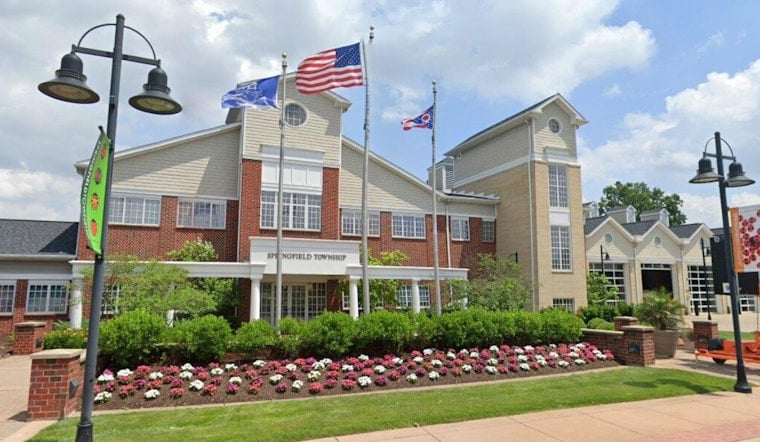
Lisa Youngblood spent years pushing through appeals before the Department of Veterans Affairs finally approved her disability benefits tied to military sexual trauma she experienced during her service. Now a Springfield Township trustee, Youngblood is sharing that story publicly for the first time, joining two other Cincinnati-area veterans in backing federal legislation that would spare future survivors the same drawn-out fight.
Youngblood was elected to the Springfield Township Board of Trustees last fall and took office in January as Vice Chair, according to Springfield Township. She is also the founder and CEO of the Greater Cincinnati Office of Reentry and has worked as a victims advocate for active and inactive military personnel who experienced sexual trauma. As reported by WCPO 9 Cincinnati, Youngblood said all survivors' stories are different, but they share the same underlying pain.
Two other Cincinnati-area veterans, Victoria Levine and Theresa Burns, also shared their stories with the station. Levine, who joined the Marine Corps at age 17, said she was drugged and has since been prescribed 17 different medications; she began receiving VA compensation three years ago and said she remains proud to be a Marine. Burns said her substance-use problems stem from what she experienced in the Army and has been sober since a drunken-driving charge in 2002. WCPO 9 reported that military sexual-assault victims often delay reporting what happened to them for years, and that experts say official figures likely underestimate the actual number of victims.
A Bill Aimed at the Reporting Delay
All three veterans support new federal legislation that would make benefits retroactive for survivors of military sexual trauma, per the station's report. H.R. 7976, known as the Moral Injury Recognition and Restitution Act, was introduced in the House in March by Rep. Salud Carbajal (D-CA) and Rep. Don Bacon (R-NE), according to Rep. Carbajal's office. The bill would adjust the effective date of MST disability compensation claims to the day after a veteran's discharge, rather than the date a claim is filed, eliminating the financial penalty survivors face for delayed reporting. The bill has been referred to a committee for veterans' issues, the same account notes. Congress.gov lists H.R. 7976 as dated 18 Mar 2026 and says its latest action was referral to the House Veterans' Affairs Subcommittee on Health on 04/09/2026.
The Department of Veterans Affairs says at least one in three female veterans experience some type of sexual trauma during their service, a figure the agency's own screening data breaks down further: universal clinical screening shows roughly 1 in 3 female veterans and 1 in 40 male veterans receiving VA healthcare report experiencing military sexual trauma, according to VA Mental Health. Because men make up a much larger share of the overall military, a significant total number of male veterans are affected alongside female veterans, the agency notes.
Why Approval Rates Lag Behind Combat Claims
A June 2026 report by the National Academies of Sciences, Engineering, and Medicine found that disability claims stemming from military sexual assault or harassment were approved at a rate of 18.2%, compared to 27.6% for combat-related claims, over a five-year study period, as detailed by Military Times. The report attributed the gap to dual evidentiary standards that require strict military service records for non-PTSD MST physical and mental health claims, standards that don't apply the same way to combat-related trauma.
In Fiscal Year 2024, the VA received 39,711 military sexual trauma claims and granted benefits in roughly two-thirds of cases, with approved claims averaging an 80% disability rating and about $2,500 in monthly compensation, the outlet's reporting on VA data shows. Approval rates for MST-related PTSD claims have climbed from roughly 41% in 2011 following administrative evidentiary reforms, though the gap with combat claims persists for non-PTSD conditions.
Following the National Academies report, U.S. Senator Richard Blumenthal called on the VA in June to update its policy so that non-PTSD MST claims could rely on indirect marker evidence, such as documented behavioral changes, rather than official military service records, according to the U.S. Senate Committee on Veterans' Affairs. Current VA policy allows that kind of indirect evidence only for PTSD claims, creating an uneven standard for survivors dealing with anxiety, depression, or other conditions tied to the same trauma.
A VA Office of Inspector General report cited in 2026 found that the agency's accuracy rate for processing MST claims dropped by nearly 10 percentage points between fiscal years 2019 and 2024, according to Military Times' reporting. That decline came despite the VA's efforts to centralize MST claims processing at specialized regional operations centers; the agency centralized its MST disability rating claims to specialized regional offices in May 2021 and opened a dedicated MST Remote Operations Center in FY 2022, according to VA News, a step meant to route sensitive cases exclusively to specially trained veteran service representatives.
Health Care Access Versus the Fight for Compensation
While the path to disability compensation remains contested, VA regulations mandate that health care for physical and mental health conditions related to military sexual trauma is provided free of charge, regardless of service-connection status, length of service, or whether an official military report was ever filed. Locally, the Cincinnati VA Medical Center offers dedicated MST programs, including virtual and in-person Courage Group therapy sessions led by specialized MST coordinators, using encrypted telehealth technology so survivors across the region can participate privately. According to the Cincinnati VA Medical Center, it offers military sexual-trauma care through its mental (behavioral) health clinics. According to VA News, more than 250 Veterans have participated in the Cincinnati Veterans Affairs Military Sexual Trauma program's Courage Group.
Hoodline has previously reported on related threads in this national story, including a story on veterans housing conditions that cited the same VA screening statistics on female veterans, and a story on a Phoenix veterans center that detailed the VA's free MST healthcare policy. Youngblood's decision to share her own story publicly for the first time adds a local, personal face to a debate that has largely played out in Washington and in federal research reports.
Veterans in crisis or seeking support can reach the Veterans Crisis Line by dialing 988 and pressing 1, and military sexual trauma resources are available through the Department of Veterans Affairs. For Youngblood, Levine, and Burns, the fight now shifts to Congress, where H.R. 7976 awaits committee action that could determine whether future survivors face the same years-long battle they did.





