

























































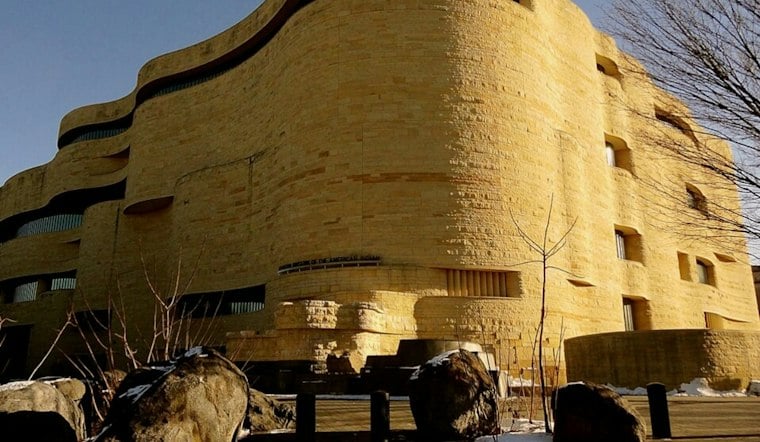
A tanned hide coat that belonged to 19th-century Mohican leader John Quinney is finally back with his people in northeast Wisconsin, the end result of a repatriation fight that stretched across roughly five decades. The Stockbridge-Munsee Mohican Nation reclaimed the coat from the Smithsonian along with a handful of other culturally significant artifacts, closing out a saga that began with a rejected request and ended last month with a ceremony at a tribal museum.
According to the Milwaukee Journal Sentinel, the Smithsonian had labeled the coat as an artifact from the Métis First Nation in what is now Canada rather than identifying it as belonging to Quinney. Quinney was appointed grand sachem in 1852 and served until his death in 1855, helped secure a home for tribal members on Menominee land in northeast Wisconsin and played a central role in the tribe's survival after Mohicans were forced from western Massachusetts, the newspaper reported.
The tribe's first effort to recover the coat came roughly 50 years before the Journal Sentinel's report, when Bernice Miller, then the tribal historic preservation officer, submitted a request that the Smithsonian's National Museum of the American Indian denied. The dispute reflects a statutory distinction: the National Museum of the American Indian operates under the National Museum of the American Indian Act, while the Native American Graves Protection and Repatriation Act establishes repatriation requirements for covered museums and federal agencies, according to the U.S. National Park Service.
Decades of Bureaucratic Roadblocks
The Journal Sentinel reported that Smithsonian representatives sought evidence the coat had been used by Quinney in his official capacity as sachem. The coat had passed through one of Quinney's descendants before reaching the Smithsonian, while the tribe has maintained that it never authorized the item's removal.
A change in Smithsonian policy created a new path for the claim. In 2022, the institution adopted its Shared Stewardship and Ethical Returns Policy, according to the National Museum of the American Indian.
That policy change enabled researchers Bonney Hartley and Sherry White to assemble historical documents, letters and newspaper articles supporting the coat's significance to the tribe and the circumstances of its removal, the Journal Sentinel reported. White told the newspaper that establishing the cultural significance of artifacts has repeatedly placed a substantial evidentiary burden on the tribe. Smithsonian representatives agreed to return the coat within the year before the newspaper's report.
A Long Line of Quinney Family Heirlooms
The coat is among several Quinney family items the tribe has sought to reclaim from institutional collections over the years, though the cited Federal Register notice does not describe those items.
Past-year repatriations have now returned all remaining known Quinney family items to the tribe, the Journal Sentinel reported. Alongside the coat, the tribe has received wampum strings and a presidential peace medal from the Smithsonian, silver armbands from a museum in England, arm and leg sashes from the Wisconsin Historical Society Museum in Madison, Austin Quinney's bow from the Oneida Nation Museum, and Austin Quinney's powder horn from the Milwaukee Public Museum.
The Milwaukee Public Museum has also returned Quinney family items as part of the tribe's repatriation efforts.
Doubts About Care, and a Recurring Burden of Proof
The repatriation effort unfolded amid broader delays in returning Native American remains and cultural items. A U.S. Government Accountability Office audit reported in October 2023 that, 33 years after NAGPRA's passage, museums had completed the repatriation process for 48 percent of reported Native American human remains and 71 percent of associated funerary objects, according to SaveHistory.org.
Revised federal NAGPRA regulations that took effect in January 2024 established a mandatory Duty of Care. For museums that receive federal funds, the rules require free, prior and informed consent from tribal nations before displaying or conducting research on Native American cultural items, according to the Peabody Museum at Harvard. The rules do not govern the Smithsonian through NAGPRA because the institution operates under its own statutory framework.
How the Repatriation Frameworks Differ
The Smithsonian's Shared Stewardship and Ethical Returns Policy is an institutional framework for considering ethical returns, including cases in which the Smithsonian holds legal title or custody. The National Museum of the American Indian says the institution's repatriation activities are governed by the National Museum of the American Indian Act, 20 U.S.C. §80q, rather than NAGPRA, according to the National Museum of the American Indian. NAGPRA, by contrast, establishes a defined process for covered human remains and associated funerary objects. The National Park Service says that process includes inventories, consultation, repatriation requests and formal repatriation statements; its National NAGPRA Program also provides compliance guidance and maintains selected inventories, summaries, grant records and Federal Register notices.
A Ceremony in Bowler, and Plans for the Future
The tribe held its repatriation ceremony at its tribal museum last month. More information about the museum is available from Travel Wisconsin.
The Stockbridge-Munsee Mohican Community has Mohican and Munsee Delaware ancestry and a history of migration through New York and Indiana. The community's history is discussed in the linked material.





