

























































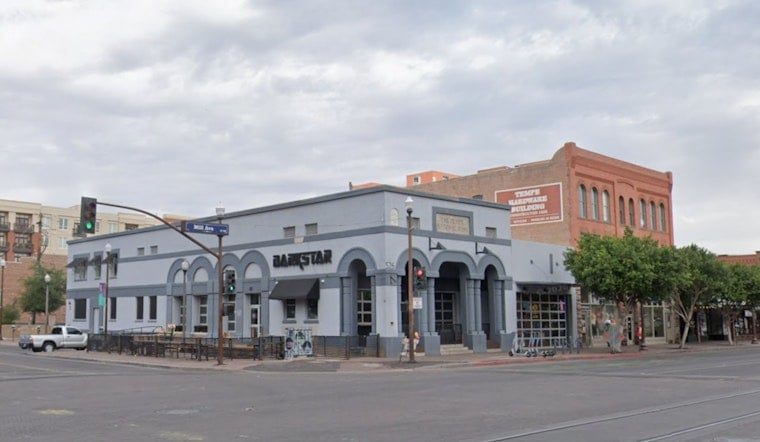
Two of downtown Tempe's oldest commercial buildings are about to get new life, and city leaders are hoping to fill them with small, local businesses rather than the kind of chains that dominate much of Mill Avenue. The Tempe City Council held public hearings on Monday, August 31, on ordinances that would let the city negotiate and execute lease agreements for the Tempe National Bank building and the Tempe Hardware building, with a final vote scheduled for September 10.
Tempe already owns both properties outright. According to ABC15, the city acquired the Tempe National Bank building at 526 S. Mill Ave. in January 2026 and closed on the Tempe Hardware building at 520 S. Mill Ave. in June 2026. Sales prices for the transactions were not disclosed per Maricopa County records, the station reported.
A Bank That Became a Nightclub
The Tempe National Bank building, built in 1912, once housed a popular live music venue, per the same ABC15 account. That venue was Darkstar Theater, a two-story EDM nightclub and live music venue that closed in early 2026 after operator Scott Price declined to renew his lease in anticipation of the city's purchase, according to Phoenix New Times. Price publicly backed selling the building to the city, arguing it would protect the structure's historical integrity while opening the door to new downtown attractions, the outlet noted. Price has since redirected his energy toward a new venue concept, RePUBLic, which Hoodline covered in February.
Commercial space inside the Tempe National Bank building totals nearly 10,000 square feet, while the adjacent Tempe Hardware building offers roughly 2,000 square feet of available commercial space, according to the Daily Independent. Mayor Corey Woods told the outlet that city ownership is meant to help small businesses secure affordable rent in the downtown core, a goal that stands in contrast to Mill Avenue's typically high commercial rents.
An Existing Tenant Could Expand
The Tempe Hardware building already has at least one tenant in place. Consignment shop Tempe Toes currently operates inside the building, and municipal staff reported the business could potentially expand its footprint there, the Daily Independent reported. City staff also indicated they remain open to considering additional prospective tenants for whatever commercial space is left.
Two Landmarks With Deep Roots
Both buildings carry architectural significance well beyond their age. The Tempe Hardware building, constructed in 1898 and designed by territorial architect James Creighton, is the oldest remaining three-story brick commercial structure in Maricopa County, according to the City of Tempe. Originally known as the Odd Fellows Hall, it served as the Tempe City Council's meeting location prior to 1924 and housed the Tempe Hardware Company on its ground floor from 1906 to 1976, per city records.
The Tempe National Bank building, constructed in 1912 and designed by Phoenix architect Leighton Green Knipe in the Egyptian Revival style, is recognized as the first commercial structure built in that style anywhere in Arizona, city records show. The bank itself was established in 1901 by pioneer business leaders including future U.S. Senator Carl Hayden, according to the City of Tempe.
How the City Ended Up Owning Both Buildings
The path to city ownership began January 8, 2026, when the Tempe City Council voted unanimously to authorize negotiating the acquisition of both historic Mill Avenue buildings, aiming to prevent future private redevelopment inconsistent with their historic character, per 12News. That council action stipulated that purchase prices could not exceed fair market value based on appraisals. Tempe bought both properties from Calgary-based real estate developer Wexford Developments, which is also involved in high-density residential projects nearby in downtown Tempe.
The acquisitions were made possible by voters, who approved Question 2 of a special bond election in November 2024, authorizing up to $248.5 million for parks, municipal infrastructure, and historic preservation projects as part of a larger $581.5 million bond measure, according to the Daily Independent.
Part of a Bigger Downtown Balancing Act
The city's move to directly own and lease out these two landmarks fits into a broader pattern of Tempe securing public control over historic assets along the Mill Avenue corridor even as high-density development reshapes the skyline around them. In April, Wexford Developments coordinated the relocation of the 1903 Harry Walker House and agreed to transfer ownership of the historic First Congregational Church sanctuary to the City of Tempe as preservation commitments tied to its 30-story student housing tower. That same month, the city installed a 94.5-foot, 36,300-pound illuminated MILL AVE catenary sign over the street, part of ongoing placemaking investments meant to draw foot traffic downtown.
Mill Avenue's commercial lineup has also been shifting on its own. A longtime piano bar closed on the strip in August after a 23-year run, underscoring how much turnover the corridor has seen even as the city works to lock in affordable space for the businesses that remain. Whether Tempe's leasing plan succeeds in keeping small operators like Tempe Toes on Mill Avenue, rather than losing more storefronts to closures, may hinge on what the council decides at its September 10 hearing.



