

























































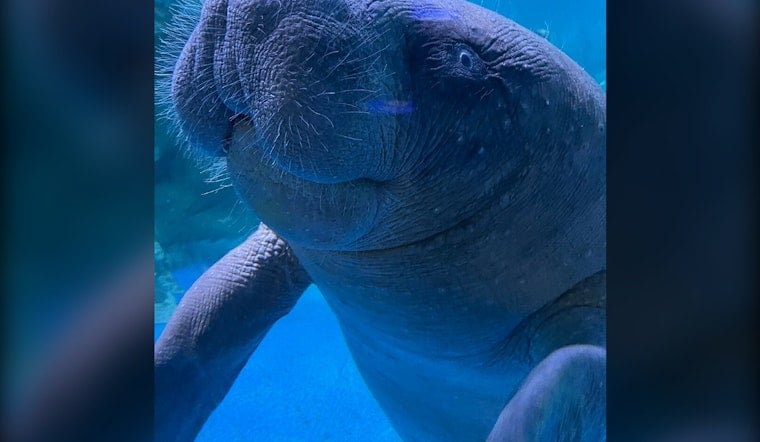
A more than 1,400-pound manatee is recovering at SeaWorld Orlando after veterinarians amputated its right pectoral flipper, the result of a severe entanglement in a crab trap that left the animal struggling to breathe in the Indian River Lagoon near Titusville. The rescue began when a Titusville couple noticed something unusual bobbing through the water behind their home: a yellow buoy trailing a distressed manatee that could barely reach the surface for air.
Terry Morse and her husband spotted the animal from their waterfront property and watched it for hours before calling for help, according to FOX 35 Orlando. The couple had noticed the buoy moving erratically with the manatee, a telltale sign that the crab trap and line attached to it were restricting the animal's movement and making it difficult to breathe. Rescuers eventually reached the manatee by boat and kayak and removed the trap, then transported the animal to SeaWorld Orlando, where it arrived on August 27, according to SeaWorld officials cited by the outlet.
Why Crab Trap Lines Are So Dangerous
Float lines connected to crab traps pose a severe hazard to manatees, which often explore floating objects with their flippers and mouths and can quickly become wrapped in the tether ropes, according to Save the Manatee Club. Entangled animals can end up dragging heavy traps for miles, leading to deep tissue cuts, severe infection, and restricted breathing — injuries that can ultimately force veterinarians to amputate a flipper just to save the animal's life. In this case, veterinarians determined that the damage to the manatee's right pectoral flipper was too severe to save, and amputated it during surgery.
The animal has since started eating again and is healing well, receiving around-the-clock care and support from SeaWorld's animal care and veterinary teams. That kind of surgical intervention followed by long-term recovery isn't new territory for the park's rescue program, which reached a milestone of 1,000 manatee rescues in March 2025 since opening its critical care center in 1976 — one of only five such facilities in the country, per Fox 35 Orlando. The park rescued 61 manatees and returned 38 to the wild in 2024 alone.
Losing A Flipper Doesn't Mean Losing The Wild
Despite the amputation, wildlife experts say the manatee has a real shot at returning to the lagoon someday. Manatees rely primarily on their tail fluke rather than their pectoral flippers for forward propulsion, meaning animals with a single flipper can still navigate, feed, and survive successfully once healed, according to the Clearwater Marine Aquarium. Pectoral flippers mainly assist with steering and grasping vegetation, while the tail handles the heavy lifting of swimming.
There's recent precedent for that kind of recovery close to home. In August, SeaWorld Orlando completed the rehabilitation and wild release of a manatee named Ralston, who also lost a pectoral flipper to a crab trap line entanglement and spent months in specialized care before being returned to the water, as shown in footage covered by Attractions Magazine.
What To Do If You Spot A Manatee In Trouble
State wildlife officials want anyone who spots a distressed or entangled manatee to call the Florida Fish and Wildlife Conservation Commission's Wildlife Alert Hotline at 1-888-404-3922 rather than attempting to cut the lines themselves. Improper line cutting without professional assessment can worsen an animal's injuries or leave hidden monofilament embedded beneath the skin. FWC researchers also note that legitimately tagged manatees carry a rigid antenna protruding from a floating buoy, which helps the public tell the difference between a tracked animal and one genuinely tangled in trap gear.
Terry Morse said the rescue should serve as a reminder for people living along Florida's waterways to keep an eye out for manatees in distress, and to report injured or struggling animals to the FWC rather than intervening directly. She said she simply wanted the manatee to get help once she and her husband realized something was wrong.
A Lagoon Still Recovering, And New Capacity On The Way
The rescue unfolded in the Indian River Lagoon, a waterway that generates $28.3 billion in annual regional economic value across five Florida counties. The lagoon endured a federally declared Unusual Mortality Event from December 2020 through April 2022 that claimed 1,255 manatees, driven largely by seagrass loss and starvation; that mortality event was officially closed in March 2025 after seagrass conditions improved, Hoodline has previously reported.
Statewide, manatee mortality reached 632 in 2025 according to preliminary FWC statistics, up from 565 in 2024 and 555 in 2023, driven largely by cold stress, red tide, and watercraft collisions — though the 2025 toll remained below the five-year average of 731 deaths. To help curb one contributing hazard, the FWC runs dedicated trap retrieval programs that charge a $10 fee per trap recovered to owners and rely on commercial licensing fees to clear abandoned crab traps from state waters; tampering with an unauthorized trap without state permission carries felony penalties under Florida law.
Regional rehabilitation capacity is also set to grow. The East Coast Zoological Foundation set a December 2026 groundbreaking date for the $140 million Bowen Aquarium and Conservation Center at Port Canaveral in Brevard County, a project aimed at expanding manatee care capacity near Titusville while drawing more than 500,000 annual visitors as a regional conservation hub.




