

























































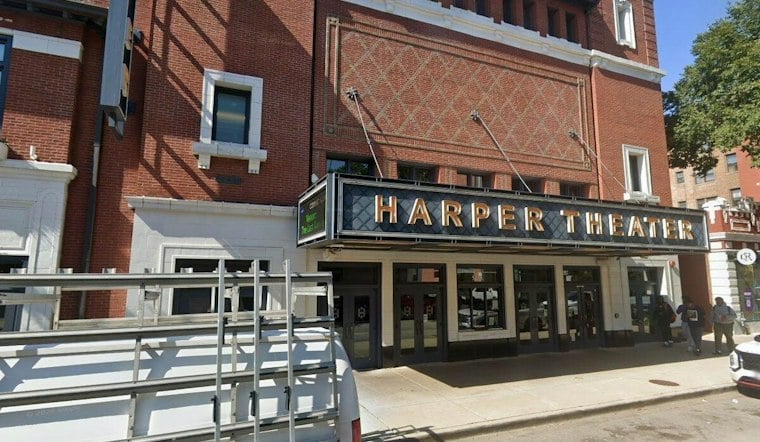
The Chicago Underground Film Festival is scheduled to present “Driven,” a 12-minute short, at Chicago's Harper Theater in Hyde Park later this month. The film carries unusual weight because it includes the final screen performance of Chicago artist Tony Fitzpatrick, who plays a rideshare passenger in a film directed by his children, Max and Gabrielle Fitzpatrick. Tony Fitzpatrick died in October 2025 at age 66 and had watched a rough cut before his death.
According to WBEZ Chicago, “Driven” follows a Chicago rideshare driver, played by 34-year-old Max Fitzpatrick, who picks up passengers while grappling with heartbreak and rejection. As the story unfolds, the driver becomes increasingly consumed by harmful rhetoric from a self-help podcaster he listens to during his shifts. The film was written by Max and his 31-year-old sister Gabrielle, who also directed it, marking the first project the siblings have made together, and both appear on screen alongside their father.
The short will have three sold-out showings on September 24 and September 26-27 at the Harper Theater, premiering as part of the Chicago Underground Film Festival. The festival's 33rd edition, running from September 23 to 27, is billed as the longest-running underground film festival in the world, and this year's lineup was selected from 2,904 global submissions, according to Screen Magazine.
A Story Drawn From the City's Streets
In comments reported by WBEZ, Max Fitzpatrick said the film draws partly on his own experiences and considers how people who feel isolated can be influenced by online personalities offering prescriptive answers. He called the project a “love letter” to his father, whose life provided material for the story.
A Film in a Growing Illinois Ecosystem
“Driven” is a small, locally made project arriving amid broader growth in Illinois production. The State of Illinois Newsroom reported that film production expenditures reached $703 million statewide in 2025, supporting an estimated 18,000 industry hires. In a separate snapshot, the Illinois Department of Commerce and Economic Opportunity reported 11 film projects, $4,992,805.19 in production spending and 499 job hires in FY24's fourth quarter; those figures do not establish “Driven”'s budget or eligibility for incentives.
The state also supports nonprofit pathways into filmmaking. Its FY2023 annual report says the Illinois Film Office backed programs including Free Spirit Media, Independent Film Project-Chicago and the Midwest Independent Film Festival Summer student program, though it does not connect those programs to “Driven.” The Harper Theater's setting likewise has a community-access dimension: according to University of Chicago News, the Hyde Park theater has participated in a partnership that offered local teens free tickets to see “Selma.”
The elder Fitzpatrick spent years working blue-collar Chicago jobs before committing fully to art and acting, including stints as a taxicab driver, bouncer, bartender, day laborer and boxer, and he often drew storytelling inspiration from riding along on business trips with his father, a burial vault salesman, as reported by CBS News. That working-class Chicago backdrop threads directly into the fictional rideshare driver his son now plays on screen, and the film was shot around the city with a mostly local cast and crew, including actors Chris Conrad, Paul Rae, Lindsay Kaymen and Alvaro Ajredini, per the festival's event listing.
“Driven” leans on its Chicago setting throughout, with shots of local landmarks including Jefferson Park murals by artist Ed Paschke, the Diversity Rock 'n' Bowl sign, and the Heart O' Chicago Motel sign woven into the film's visual texture. Paschke was one of Tony Fitzpatrick's own mentors, tying the younger generation's visual choices back to the artistic lineage their father helped carry forward. Gabrielle Fitzpatrick, who grew up in Ukrainian Village and studied international relations in Italy before gaining hands-on film experience through a program in Mexico, said working artists have to bet on themselves, per WBEZ's reporting.
A Life That Spanned Stages, Galleries and Album Covers
Tony Fitzpatrick was, by any measure, a Chicago polymath: a visual artist, actor, writer and gallerist whose work reached far beyond the screen. His printmaking and mixed-media collages, often built around Chicago lore, urban ephemera and wild birds, are held in the permanent collections of the Metropolitan Museum of Art, the Museum of Modern Art, the Art Institute of Chicago and the National Gallery of Art, according to The Art Newspaper.
On screen, he appeared in films including “Philadelphia,” “Chi-Raq” and “Primal Fear.” On stage, he won a Joseph Jefferson Award for Best Actor in 1991 for Prop Thtr's production of “Mass Murder” and later starred in Studs Terkel's “Race” at Lookingglass Theatre in 2003, a career the Steppenwolf Theatre notes also included a trilogy of stage shows he wrote and performed himself. He was also known for a nearly 30-year run as an album cover artist for musician Steve Earle, having first gained wide recognition for designing the cover of the Neville Brothers' 1989 album “Yellow Moon,” a piece Fitzpatrick credited with launching his commercial art career, according to the Hexton Gallery.
A Mentor's Legacy Across the City
Fitzpatrick spent decades building spaces for other Chicago artists, founding and running Big Cat Press, Firecat Projects, World Tattoo Gallery and Dime Gallery in Wicker Park, institutions that became showcases for emerging local talent. In 2021, he created an exterior mural titled “Night and Day in the Garden of All Other Ecstasies” on Steppenwolf Theatre's campus, dedicated to the theater's former artistic director Martha Lavey, according to a Steppenwolf Theatre Facebook post.
Weeks before he died, Fitzpatrick published his final book, “The Sun at the End of the Road: Dispatches from an American Life,” a collection of prose, poetry and artwork released by Eckhartz Press, which expedited the book's release so he could see it published before his death, per the Chicago Literary Hall of Fame. Now, with “Driven” set to premiere at the Harper Theater, his final screen performance arrives as one more chapter in a body of work his own children helped carry to the finish.




