

























































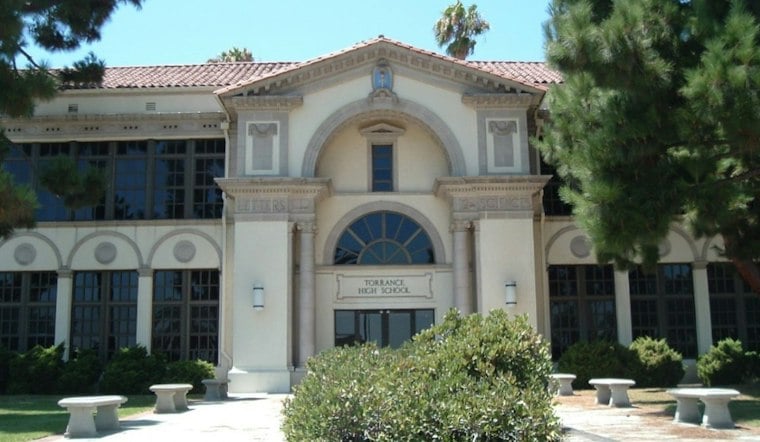
Torrance Unified School District classrooms are baking through a Southern California heat wave with just 25% of them air conditioned, according to a district spokesperson, and a $520 million bond that could have funded a fix never even made it onto the November ballot. Parents behind a petition drive that gathered more than 1,500 signatures wanted district leaders to ask voters for the money. Instead, families are left with portable fans, ice blocks, and hydration stations while they wait for a longer-term solution.
The gap between Torrance and its neighbor to the south is stark. As reported by LAist, Long Beach Unified schools already have air conditioning in 90% of classrooms and expect to hit full coverage in every remaining building by the end of 2027. Torrance, meanwhile, relies on district-issued bond measures for facility upgrades while also having access to occasional grant programs such as CalSHAPE, and most of its school buildings date to the 1960s. A district spokesperson told the outlet that third-party polling showed insufficient voter support for placing the $520 million bond on the ballot, an assessment echoed by a district official identified only as Baillie regarding the same polling result.
Why the Bond Never Reached Voters
Passing a school bond in California requires 55% plus one of voters to say yes, and the proposed Torrance measure would have needed to clear that bar to fund electrical-system upgrades and air conditioning across all 34 of the district's campuses. Deputy Superintendent Keith Butler said Torrance schools have relied on hydration stations for several years already, and the same report notes the district's nutrition services team freezes blocks of ice for student and staff use during hot stretches. Torrance parents cannot simply buy and install a window unit themselves — the same account explains that a typical home unit wouldn't effectively cool a 960-square-foot classroom holding 27 students, a teacher, and possibly an instructional aide. Beyond that, the district's aging electrical systems were never built to carry the load that large air-conditioning units require.
Long Beach has taken a different funding path. Voters there approved Measure Q, a $1.7 billion facility bond, in November 2022, according to Long Beach Unified School District, after surveys found 80% of the district's buildings were more than 50 years old. That measure followed 2016's Measure E and was specifically aimed at campuses that earlier funding hadn't reached. In the meantime, Long Beach Unified is providing portable fans in classrooms that still lack air conditioning and has installed heat-blocking window covers as stopgap measures, per the district report on facility upgrades.
No Ceiling on Classroom Heat, No Statewide Fix
California's Education Code requires public school facilities to maintain interior temperatures within “normally acceptable ranges,” but the state sets no upper temperature limit and no requirement that classrooms have air conditioning at all, according to the UCLA Luskin Center for Innovation. That's a notable gap given that California childcare facilities must keep rooms between 68 and 85 degrees. By contrast, Cal/OSHA's Heat Illness Prevention in Indoor Places of Employment standard, in effect since July 2024, requires school districts as employers to provide cool-down areas and water once indoor workplace temperatures hit 82 degrees, and to measure temperature or heat index at 87 degrees and implement feasible engineering controls, according to the California Department of Industrial Relations. In other words, state rules protect the adults working in a hot classroom more explicitly than they protect the students sitting in it.
State lawmakers have moved more aggressively on outdoor heat risk. Senate Bill 1248, known as Yahushua's Law, required every California public and charter school district to adopt written weather safety protocols for extreme heat and outdoor activities by July 1, 2026, according to the California Department of Education. The law followed the 2023 death of a 12-year-old Riverside student who collapsed during PE in extreme heat. Torrance Unified is now discussing union-approved weather days, and a local emergency declaration would require the district to consult labor unions before adjusting the school schedule — changes that could mean extending the school year or shifting to a student-free professional development day. Possible thresholds for triggering a weather day may focus on National Weather Service alerts elevating a heat advisory to an extreme heat event.
Why Districts Can't Just Close Schools
School funding depends on attendance and instructional time, which limits how freely districts can shut down campuses during a heat wave. A state-declared emergency allows schools to close temporarily without having to make up the lost teaching time, but short of that, Long Beach Unified spokesperson Eric Mitchell said the district will not close schools for extreme weather unless directed to by the Long Beach Public Health Department or a state-authorized emergency response agency. Torrance has adopted a workaround in the meantime, rotating classrooms through available cooling zones so every student and staff member gets a turn.
A Statewide Funding Puzzle
The Torrance-Long Beach divide reflects a broader statewide problem: California has no dedicated, ongoing funding stream for school construction, according to CalMatters. Districts instead lean on local property tax bonds like Long Beach's Measure Q or on periodic state bond measures like Proposition 2, which California voters passed in November 2024 authorizing $10 billion in state bonds, including $8.5 billion for K-12 facility modernization and energy-efficiency HVAC grants. Even then, districts must supply local matching funds to draw down that state money, a structure that CalMatters notes tends to favor wealthier districts that can raise bond funds locally. The Public Policy Institute of California has found that roughly 38% of California public school students attend schools that don't meet the state's minimum facility safety standards.
State HVAC-specific grant money has also become harder to access. The California Schools Healthy Air, Plumbing, and Efficiency program, known as CalSHAPE, had set aside nearly $1 billion in utility ratepayer funds under a 2020 law to help schools upgrade aging ventilation and cooling systems. But access to CalSHAPE funding has become harder, and this September, California lawmakers and Governor Gavin Newsom failed to extend the program, allowing utility companies to reclaim $191 million in unspent HVAC funding, according to CalMatters. That leaves districts like Torrance with fewer dedicated pathways to pay for the electrical and cooling overhauls their campuses need.
Research suggests the stakes of leaving classrooms uncooled go well beyond comfort. A study published in the American Economic Journal: Economic Policy and analyzing 10 million U.S. high school students found that without air conditioning, every 1-degree increase in average school year temperature reduces that year's learning by 1%, according to the American Economic Association. Harvard Kennedy School research has found that cumulative school-day heat exposure is three times as damaging to academic achievement for low-income and minority students, contributing to roughly 5% of the racial achievement gap. For now, families in Torrance are watching a heat wave move through Southern California with the same fans, ice blocks, and rotation schedules the district has used for years, while the bond that might have changed that remains stuck off the ballot.





