

























































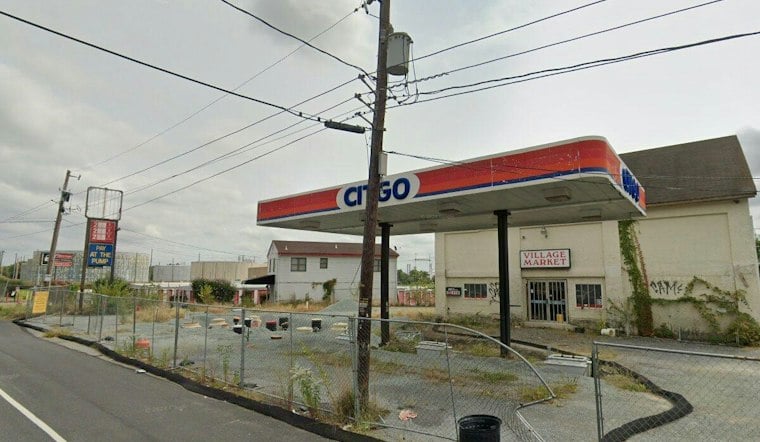
A 24.4-acre stretch of land at 4001 Ridge Road, sitting roughly 100 feet from residential rowhouses near the former Congoleum flooring plant, has become the center of a fight between two adjoining Delaware County municipalities and the residents who live in their shadow. Trainer Borough's zoning officer issued a favorable preliminary zoning determination for a data center there in August, while neighboring Lower Chichester Township said in July that data-center use was not permitted under its current zoning.
The parcel straddles the municipal line, with most of the land in Trainer Borough and a small portion in Lower Chichester Township, according to WHYY. The municipalities have different preliminary zoning positions on the proposal: Trainer issued a favorable preliminary determination, while Lower Chichester said data-center use was not permitted under current zoning. As NBC10 Philadelphia reported, the potential data center would be surrounded by homes on at least two sides, bordering residences in Trainer and across the municipal boundary in Marcus Hook.
Neighbors Say They're Being Punished
Lorraine DeLassio, who lives about a football field from the site, told NBC10 she feels residents are being punished and don't deserve to have the project land in their backyard. She said she moved to the area 14 years ago and doesn't want a data center at her front door. Another resident, Christine Reeder, questioned why the project would be sited in her densely populated neighborhood at all, rather than somewhere with more open space.
Those concerns brought residents from Trainer and Marcus Hook together for a community meeting Wednesday, where people voiced worries about noise, pollution, and what the facility could mean for property values, per the station's report. Zulene Mayfield, chairperson of Chester Residents Concerned With Quality Living, said people at the meeting are concerned, afraid, and want to learn how to fight together. She said residents who already deal with significant pollution have come together to oppose the project.
From Warehouse to Data Center
The pivot to a data center is a fairly recent one. Link Logistics originally marketed the site as the “Juniper Pointe Logistics Center,” a proposed 443,000-square-foot industrial warehouse, and inquired in April about data center zoning instead, according to the same account from WHYY. Link Logistics was founded by Blackstone in 2019 to manage industrial real estate. The company's former chief investment officer, Nicholas Pell, moved over to lead the newly created Blackstone Digital Infrastructure Trust, which is built to acquire stabilized data center assets, per Link Logistics.
Trainer Borough officials said the borough has not received a formal data-center application, and the borough's mayor said officials are aware of the proposed project but that formal project approvals have not been granted, per NBC10's reporting. A Link Logistics spokesperson confirmed to the station that the company received a favorable preliminary opinion from Trainer Borough, but stressed that opinion is not a building permit and that any project the company pursues would still require an application and borough approvals. In a company statement, Link Logistics said it is evaluating opportunities to enhance the property in ways that support regional industrial and economic growth, and that transparent community engagement would be essential if plans move forward, adding it would engage residents and stakeholders throughout Trainer Borough's full review process should the project advance.
A Town Already Living With Industry
Trainer Borough has fewer than 2,000 residents and already hosts the Monroe Energy oil refinery along the Delaware River, while sharing borders with heavily industrial environmental-justice communities in Chester and Marcus Hook, WHYY notes. That backdrop helps explain why residents are quick to organize against any new industrial-scale use nearby, including a proposed data center.
State Regulators Sound Grid Alarms
The local fight is unfolding as Pennsylvania regulators raise their own warnings about the data center boom statewide. On September 14, the Pennsylvania Public Utility Commission released an independent study cautioning that unchecked data center expansion could push the regional PJM power grid past reliability planning standards between 2027 and 2030, increasing blackout risks nearly sixfold by 2030 under baseline scenarios, according to the Pennsylvania Public Utility Commission. Days earlier, on September 10, the commission voted 5-0 to open regulatory proceedings updating emergency electric load control rules and to schedule a technical conference on how to allocate the massive power costs tied to data centers.
State lawmakers have moved on the issue too. In June, the Pennsylvania House of Representatives voted 197-5 to pass House Bill 2198, which would repeal the state's sales tax exemption on data center equipment — an exemption fiscal analysts project will otherwise cost state revenues $188.4 million in fiscal year 2026-27 and up to $1.9 billion through 2031, according to City & State Pennsylvania. Governor Josh Shapiro separately issued Executive Order 2026-05 on August 18, directing state agencies to prevent electric grid infrastructure expansion costs from being passed along to residential and small-business ratepayers.
Delaware County's Own Countermeasure
Closer to home, Delaware County Council approved putting a $120 million open space conservation bond referendum on the November ballot, which county leaders have said could give municipalities funding to buy up land and resist large warehouse or data center developments — a measure Hoodline previously covered. For now, residents in Trainer and Marcus Hook are simply waiting to see what happens next, watching to see whether Link Logistics ever files a formal application, and whether that application lands in the borough that approved it or the township that didn't.





