

























































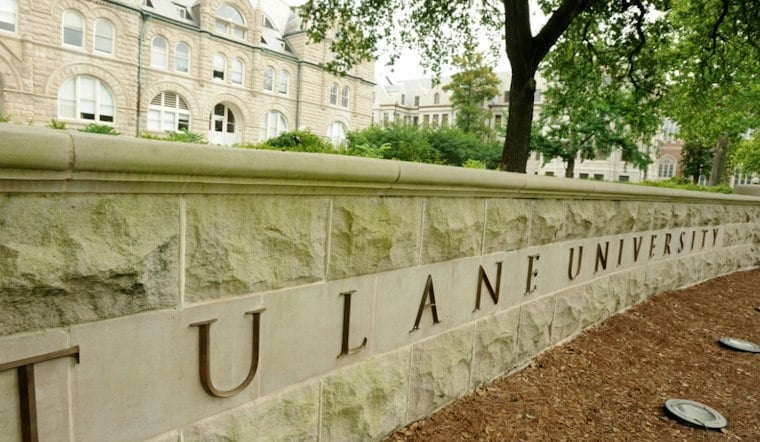
More than 40 sessions, dozens of energy executives and three days of debate over who powers America's AI future are headed to Tulane University's uptown campus starting Monday. The Future of Energy Forum, organized by the Tulane Energy Institute, runs September 28 through 30 and is free to attend, spotlighting Louisiana's outsized role in the nation's energy industry.
Pierre Conner, executive director of the Tulane Energy Institute, put it bluntly in comments reported by NOLA.com: “all pipelines lead to Louisiana.” It is not just a turn of phrase. The Henry Hub, located in Erath, Louisiana, serves as the physical delivery point and official national benchmark price for NYMEX natural gas futures, connecting 13 major interstate and intrastate pipeline systems, according to the U.S. Energy Information Administration. And Cheniere Energy's Sabine Pass terminal in Cameron Parish is the largest LNG export facility in the country, having shipped 39% of all U.S. LNG export cargoes since domestic exports began in 2016, per the America First Policy Institute.
Conner also said energy is having a moment, driven by rising costs and concerns about reliability and sustainability, adding that societal energy consciousness has reached a level not seen since the early 1970s, when the oil embargo caused prices to quadruple in a short period, the outlet reported. Tulane launched the forum three years ago to spark conversations among industry leaders, researchers, policymakers, technology experts and consumers, and last year's event drew more than 1,700 participants and over 125 speakers, including keynotes from Shell USA President Colette Hirstius and Entergy Chair and CEO Drew Marsh, according to Biz New Orleans.
Who's Coming to New Orleans
This year's keynote lineup includes David Lacerte, a federal energy regulator; Jason Wells, CEO of CenterPoint Energy; and Jonathan Brightbill, the Energy Department's top lawyer, per the same NOLA.com account. The broader participant list reads like a who's-who of Gulf Coast energy: Geoffrey Richardson, senior vice president of commercial and business development at ExxonMobil; Kevin McMahon, vice president of production assets for Gulf of America at Shell; and Claudia Morrow, senior vice president of corporate development and strategy at Vistra Corp.
State regulators will also have a seat at the table. Dustin Davidson, secretary of the Louisiana Department of Conservation and Energy, and Jean-Paul Coussan, a Louisiana public service commissioner, are both listed as forum participants. So is Gray Stream, executive chairman and president of Gulf Coast Sequestration, along with Julie Stokes, president and CEO of Ellevate Louisiana, Ian Walch, vice president of energy markets at Enfra, Darryl Willis, corporate vice president for the energy and resources industry at Microsoft, and John Weiss, vice president of sustainability and environmental policy at Entergy.
AI's Massive Appetite for Power
Data center growth is one of more than 40 session topics, and the numbers explain why. Meta finalized an expanded power agreement with Entergy Louisiana in March under which Meta will fund seven new gas-fired power plants generating 5.2 gigawatts, plus 240 miles of 500-kV transmission lines and battery storage, to feed its $50 billion Hyperion data center campus; Utility Dive's $27 billion figure refers to Entergy's planned investment in new generation, according to Utility Dive. At full 5-gigawatt operational capacity, the Hyperion site is projected to consume an estimated 43.8 terawatt-hours of electricity annually — nearly matching New York City's 46.9 TWh and roughly eight times New Orleans' 2025 consumption — per Visual Capitalist.
Forum sessions will also dig into water use for data centers, an issue closely tied to the scale of AI infrastructure now planned across the state. Hoodline has previously reported on a Florida firm's plans for a 2.88GW gas plant near Ascension Parish to serve the same hyperscale data center boom driving demand statewide.
Carbon Capture, LNG Growth and Grid Costs on the Agenda
Carbon capture and shifting energy regulations round out the session list, arriving as Louisiana considers a major regulatory shift. An April 2023 proposal to grant Louisiana primacy over Class VI underground carbon storage injection wells named LDNR. Separately, Hoodline reported that Livingston Parish residents fear a CO2 pipeline could run past homes and schools.
Louisiana's export infrastructure keeps expanding too. The U.S. Energy Information Administration projected in October 2025 that North American LNG export capacity will more than double, from 11.4 billion cubic feet per day in early 2024 to 28.7 Bcf/d by 2029, concentrated heavily along the Texas and Louisiana Gulf Coast. Louisiana is already the largest LNG-exporting state in the country, the NOLA.com report noted, a position reinforced by Woodside Energy's $17.5 billion final investment decision last year for its Calcasieu Parish LNG facility, which Hoodline covered as the largest foreign investment in state history.
Reliability Questions Follow the Investment Boom
All that capital-intensive investment carries long payouts and real friction, Conner said, noting that changing policies make energy projects difficult to execute. That tension is playing out closer to home too: Entergy Louisiana's $270 million grid-hardening project in Jefferson Parish, part of a $1.9 billion statewide resilience plan responding to Hurricane Ida's destruction of 30,000 utility poles, is projected to push consumer bills higher through 2029, as Hoodline has reported.
The forum will also address how U.S. actions in Venezuela could affect the Gulf Coast oil industry and how the midterm elections might shape energy investment decisions. Conner said solutions exist at the intersections of competing energy objectives — a framing that will likely echo across all three days of sessions covering reliability, resiliency, accessibility and affordability. Tulane President Michael Fitts spoke at a previous edition of the forum in New Orleans, underscoring the university's continued role as host for a conversation that keeps growing alongside the state's energy footprint.





