

























































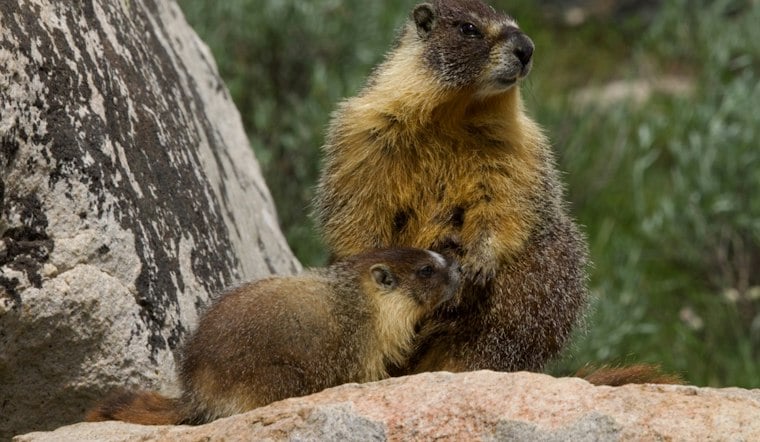
Yggdrasil Urban Wildlife Rescue is asking Bay Area drivers who recently returned from the mountains to check their vehicles after two yellow-bellied marmots were found in the region. Both animals are recovering at the rescue center, and their origins have not been determined, according to KRON4.
Two separate sightings
The first marmot was reported near Albion and 16th streets in San Francisco’s Mission District, where neighbors saw it eating flowers. San Francisco Animal Care and Control received the calls, and the animal was later taken to Yggdrasil’s Potrero Hill facility, KQED reported.
A second animal was later captured at a job site in Antioch and brought to the same rescue. Yggdrasil said the cases could be connected if the marmots entered the engine compartments or undercarriages of parked vehicles and traveled with them, a possibility also reported by KTLA.
The rescue is seeking information from people who recently drove through high-elevation areas, including Tahoe, Truckee, Yosemite or Sequoia. Those routes remain unconfirmed. Reports cited by KRON4 and KTLA mentioned travelers returning from the Burning Man area as one possibility among several.
How unusual are the sightings?
The Bay Area sightings are atypical relative to the animal's documented California distribution. According to the California Department of Fish and Wildlife, yellow-bellied marmots are common and widespread in or near rocky areas in the Sierra Nevada, Cascades and White Mountains. The department's California range maps represent each species' maximum current geographic extent within the state, providing a statewide reference for where yellow-bellied marmots are normally found.
Why vehicles are a concern
Yellow-bellied marmots normally occupy mountainous terrain in the Sierra Nevada rather than urban gardens. They are the largest members of the ground squirrel family and can reach about 15 pounds during the summer, according to KQED. Wildlife rescuers say the animals may investigate vehicles for salt and other minerals and can be attracted to antifreeze, which is toxic if consumed; GearJunkie has also reported on the behavior.
Marmots can damage radiator hoses, belts, wiring and other components, and an animal that is not noticed before departure may be carried far from the mountains. The National Park Service says vehicles in the Mineral King area have sometimes been disabled by this kind of damage and that marmots have occasionally traveled as far as Southern California, according to its vehicle guidance.
Advice for vehicle owners
The National Park Service recommends inspecting under the hood and beneath the vehicle before starting after a mountain trip. Drivers should look for an animal, chewed parts, fluid leaks or unusual sounds, and check hoses, belts, wiring and insulation for damage. Before entering marmot habitat, the agency advises washing the vehicle’s exterior, undercarriage and engine compartment.
For vehicles parked in areas with marmot activity, the agency recommends using a tarp to block access and covering the wheel wells. It no longer advises relying on chicken wire, and it warns drivers not to use poison or other methods that could harm animals, people or the environment, according to the National Park Service.
The potential damage can be expensive in remote areas. A September account of marmot activity around Sequoia National Park described disabled vehicles and towing bills of more than $1,000 for the trip down a remote 23-mile mountain road, according to Ordealist.
Anyone who believes they may have transported one of the two marmots, or who has information about their origin, can contact Yggdrasil Urban Wildlife Rescue at 510-421-9897.


