

























































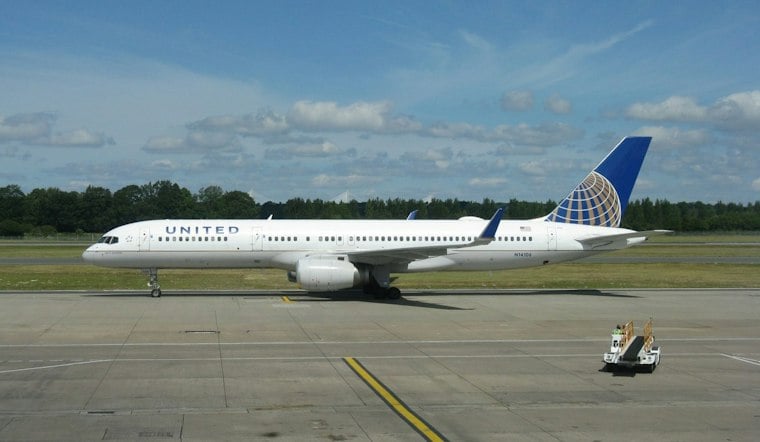
United's published MileagePlus Travel terms and conditions say unused TravelBank cash expires 12 months after its issue date. That policy became relevant for customer Alison Gil after a United chatbot told her that her $200 credit would remain active for five years from the date it was deposited. United later said the credit was due to expire on September 27, 2026, acknowledged the chatbot's error and sent Gil a replacement travel certificate.
Gil consulted the chatbot to understand how long her $200 TravelBank credit would remain available, according to NBC Chicago. The system gave her a five-year answer. Weeks later, an automated United email warned that the credit would expire on September 27, 2026, and a representative told her the chatbot's answer was incorrect: the applicable policy allowed one year and could not be changed, the station reported.
United later acknowledged that its chatbot had provided incorrect information. The airline said TravelBank expiration can vary based on how funds were issued, apologized for the confusion and sent Gil a $200 electronic travel certificate, according to the outlet's reporting. United also said its chatbot carries a disclaimer telling customers that its answers may not always be complete or relevant.
A Pattern Companies Are Still Grappling With
Gil's experience reflects a broader customer-service problem rather than a question about airline credits alone. A Chicago-area customer separately told NBC Chicago that a question about a refund fee led a United chatbot to cancel an entire trip, while online forums contain other complaints about inaccurate airline-chatbot answers. The station also cited at least two studies of major AI chatbots in which roughly half of responses contained errors, misleading information or missing context.
What United's Terms and U.S. Oversight Say
The current MileagePlus Travel terms state that unused TravelBank cash expires 12 months after its issue date. United has separately said that expiration can vary depending on how the funds were received, so travelers should check the terms attached to the specific credit rather than rely on a chatbot's generalized answer. At the federal level, the Federal Trade Commission announced a crackdown on deceptive AI claims and schemes in September 2024. Congress also has the CHATBOT Act, but its status remains listed as introduced in the legislative record.
That error rate tracks with academic research elsewhere. A study of an LLM-based Dutch customer-support chatbot, described on arxiv.org, found that its evaluation approach could identify incorrect messages in 55% of cases, testing both yes-or-no questions and questions requiring instructions. The same research notes that AFAS, the company behind the chatbot studied, logged nearly 112,000 support inquiries in 2023 from more than 3 million software users, and built the chatbot specifically to automate answers without proportionally growing its human support team.
Experts Say Accountability Hasn't Caught Up
V.S. Subrahmanian, a professor of computer science at Northwestern University, told NBC Chicago that AI systems are expected to make mistakes but that there should also be some responsibility for those mistakes. He said chatbots can reduce costs for companies, but that they often lack the human ability to dynamically listen and assess whether information actually sounds correct. Subrahmanian called for a regulatory structure with checks and balances around how these systems are deployed, per the same report.
United's stumble isn't the first time an airline chatbot has cost a company real money. In 2022, Air Canada's chatbot incorrectly promised passenger Jake Moffatt a bereavement fare after he had already booked a full-price flight to attend his grandmother's funeral, according to the BBC. A British Columbia tribunal later ruled in Moffatt's favor after he relied on that incorrect refund information, awarding him a partial refund of C$650.88, or roughly US$482, according to Manatt. Moffatt had provided screenshots of his chatbot conversation as evidence in the case, the law firm's analysis notes. Separately, in 2018, a WestJet chatbot sent a passenger a link to a suicide-prevention hotline for no obvious reason, the BBC also reports.
What Travelers Can Do
Consumer advocates recommend saving screenshots of chatbot conversations, since that saved record can provide proof if the information later turns out to be wrong, per NBC Chicago's reporting. On the legislative side, a bill known as the CHATBOT Act has been introduced in Congress, according to records on Congress.gov, though its current status remains listed only as introduced. For now, travelers dealing with airline chatbots are left with the same advice that helped both Gil and Moffatt: get it in writing, or in this case, in a screenshot.



