

























































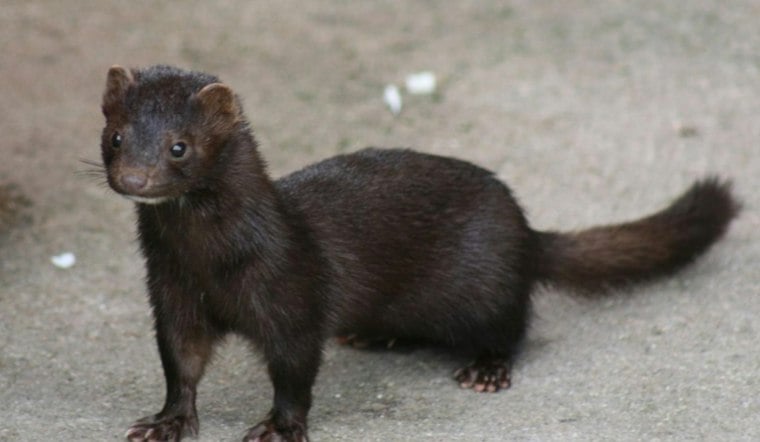
Seven captive American mink in Utah have tested positive for H5N1 avian influenza, according to a federal tracking dashboard, marking a case that advocacy groups say could be the first documented outbreak of bird flu in captive mink in the United States. Despite that federal confirmation, the farm's location, its size, and how many animals were actually sickened remain hidden from public view; testing began in early August and the infections were confirmed on August 17.
What the Federal Dashboard Confirms — and What It Doesn't
The USDA dashboard lists seven infected mink, as detailed in a report from Avian Flu Diary.
One of those accounts comes from the Salt Lake Tribune, which separately described the case as the first documented outbreak of bird flu in captive mink in the U.S. An estimate based on obtained Utah records said 80% of the herd could die.
A Records Request That Came Back Redacted
A public-records request concerning highly pathogenic avian influenza in American mink was made to the Utah Department of Agriculture and Food. On Sept. 17, a 61-page UDAF records release was published alongside a press release.
Notably, the released records masked the farm's exact location. UDAF stated that additional records, or portions of them, were redacted or withheld because they were relevant to an ongoing investigation under Utah Code Ann. § 63G-2-305(10)(a).
Why Mink Farms Worry Flu Researchers
Mink are particularly susceptible to influenza and coronaviruses, and captive mink farming can permit rapid spread and evolution of viruses within a confined animal population, according to background compiled in Avian Flu Diary's report.
The concern isn't confined to one farm or one country. Finland's fur industry saw more than 70 farms infected with highly pathogenic avian influenza H5N1 in 2023, with more than 500,000 animals culled as a result. Finland's Institute for Health and Welfare warned that same year that avian influenza poses a risk to public health and that health security improvements are needed at fur farms. Avian Flu Diary also reported a Canadian farmed-mink H3N2 event involving swine and human origins.
What H5N1 Means for Human Health
The World Health Organization maintains that H5N1 does not appear to transmit easily from person to person and that sustained human-to-human transmission has not been reported; the WHO notes that the human cases detected so far are mostly linked to close contact with infected birds, other animals, or contaminated environments. Still, the WHO cautions that infections in humans can cause severe disease with a high mortality rate when they do occur.
Farms and Governments Keep the Details Close
Advocacy groups have raised concerns about Utah's response to the outbreak, and the pattern of limited disclosure isn't unique to this case — farms and governments broadly remain reluctant to provide details on such outbreaks, per Avian Flu Diary's reporting. A commentary published in The Lancet Regional Health Europe in September called for banning fur farming altogether, reflecting a wider push among public-health voices to treat mink operations as a structural risk rather than an isolated hazard.
The broader U.S. bird flu picture underscores why any mammal spillover draws scrutiny. According to CIDRAP, citing USDA's Animal and Plant Health Inspection Service, 85 U.S. cattle herds have had confirmed H5N1 infections so far in 2026, and the preceding 30-day window alone included three confirmed dairy-herd detections — one in Utah and two in Texas — plus outbreaks confirmed in two commercial and three backyard poultry flocks. Against that backdrop, the unresolved questions surrounding Utah's mink farm — its size, its exact location, and the true scope of animal deaths — remain open, with no government agency named in available reporting having answered them on the record.


