

























































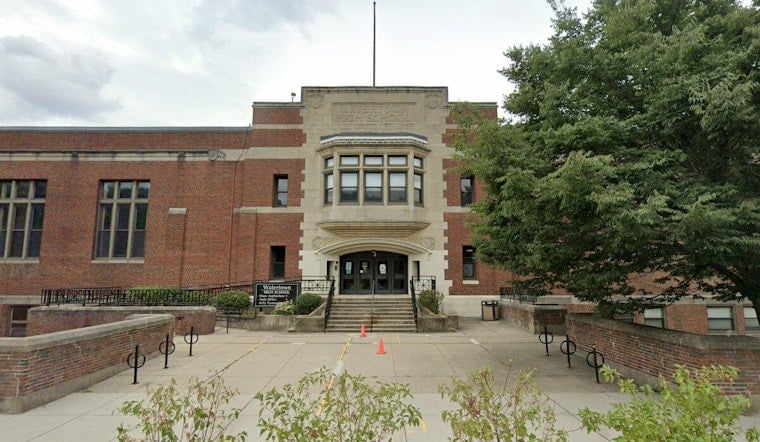
Watertown High School officially opened its doors this week, and students begin classes there on Sept. 9 inside a $219 million building that city leaders call the largest capital investment in the town's history. The 200,000-square-foot facility rose on the same compact 4.27-acre lot as the century-old school it replaced, and it now holds a distinction no other American high school can claim: net-zero energy status paired with LEED v4.1 Platinum certification.
The milestone was first detailed by WCVB, which reported that Watertown High School became the first high school in the United States to achieve both net-zero energy and LEED v4.1 Platinum status. City leaders told the station the new facility represents the future of school buildings in the country, and Joel Giacobozzi said the building is everything the community has always wanted and what its children deserve, according to the station's report. Emma Harmon, a student quoted in the same report, said she is excited to have her senior volleyball season at the new gym.
Building Up, Not Out, on a Tight Urban Lot
Fitting a full high school onto such a small parcel forced designers to think vertically. According to Ai3 Architects, the building combines a four-story academic tower with a two-story community core, all constructed directly over a 128-space underground parking garage. That layout let the district squeeze a full-size high school, plus outdoor amenities, onto the same footprint once occupied by the demolished 1925-era building.
To make up for the lack of ground-level space, designers added an outdoor amphitheater, student gardens, hard-surface learning zones built on top of the parking structure's roof, and a flexible multi-purpose field placed on the footprint of the old school, per Ai3 Architects. The flex-field gives students dedicated on-campus physical education space for the first time, the firm notes.
Net-Zero Systems Built Into the Foundation
The building's net-zero performance comes from a rooftop solar array paired with on-site battery storage, plus a deep geothermal well field drilled beneath the property to power all-electric air-source and ground-source heat pumps, according to CBS News. Those ground-source wells offset heating and cooling demands for a building used by the community seven days a week, the outlet reports. The approach lines up with Watertown's municipal climate policy, which mandates that new construction meet net-zero energy or near-net-zero standards, a rule bolstered by the city's status as a designated Massachusetts Green Community since 2010, CBS News notes.
Classrooms for Robotics, Culinary Arts and Broadcast Journalism
Built to hold 720 students in grades 9 through 12, the school includes dedicated Chapter 74 vocational and technical spaces for robotics, engineering, carpentry, culinary arts and early childhood education, alongside a fabrication lab, TV studio and black box theater, according to The Vertex Companies. Those vocational suites sit directly inside the building's core academic atrium rather than being tucked into a separate wing.
Three Years in Modular Classrooms at Moxley Field
Getting to opening day required a long detour. Before construction began in November 2023, the city demolished the old high school and shifted operations to a temporary modular campus at PFC Richard Moxley Field, where students attended classes from autumn 2023 until August 2026, per Watertown Public Schools. Project leaders completed substantial construction in spring 2026 and spent August moving staff back into the new building to have it fully operational ahead of the Sept. 2 open house and the Sept. 9 start of classes, according to WBZ NewsRadio.
A $219 Million Project With No Tax Override
Perhaps the most notable detail for local taxpayers is how the city paid for it. Watertown funded the $219 million high school project, along with the total reconstruction of three municipal elementary schools, without asking voters to approve a Proposition 2½ property tax override, according to Watertown Public Schools. Major Massachusetts school infrastructure projects typically lean on voter-approved debt exclusion tax increases, which makes Watertown's approach an outlier among districts undertaking similarly large rebuilds.
The high school is the flagship project in Watertown's district-wide Building for the Future master plan, following earlier net-zero rebuilds of Cunniff Elementary School and Hosmer Elementary School, per Ai3 Architects. The Vertex Companies served as owner's project manager, Ai3 Architects designed the building, and Brait Builders Corporation served as general contractor, with the Massachusetts School Building Authority providing state grant reimbursement oversight after approving the project's entry into the construction phase in March 2022.
What's Next for Watertown Schools
With the high school finished and Moxley Field's temporary campus retired, city leaders are already weighing the district's next big build. Hoodline previously reported on preliminary estimates for a $112 million middle school rebuild, part of the same Building for the Future plan that produced the new high school. How the city intends to fund that project, and whether it can again avoid a property tax override, remains an open question for Watertown residents watching the district's decade-long modernization push.





