

























































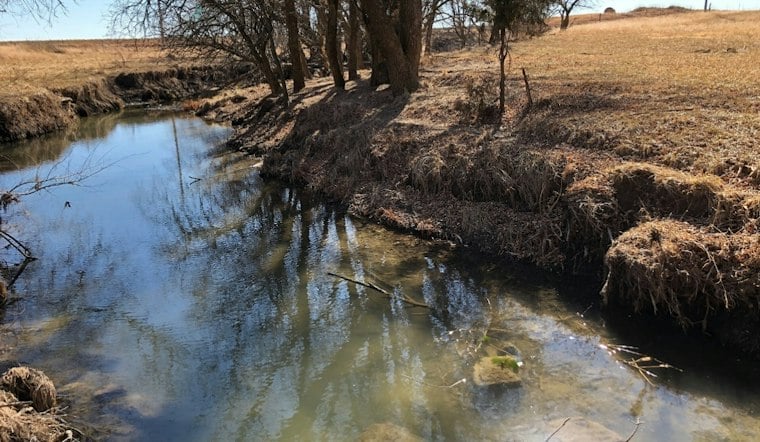
The U.S. Environmental Protection Agency has removed Kress Creek and the West Branch of the DuPage River from the federal Superfund list after a 37-year cleanup that covered about seven miles of waterways between West Chicago and the McDowell Dam near Naperville and cost nearly $150 million, according to the Daily Herald. The waterways were added to the National Priorities List in 1991 because of radioactive contamination associated with the former Kerr-McGee Rare Earth Facility.
The legal change is significant—but limited
EPA says it may remove a site from the National Priorities List when the agency determines that no further response is required to protect human health or the environment. That is the standard behind the Kress Creek action, rather than a declaration that every related West Chicago cleanup activity has ended. The agency’s general deletion guidance is available at EPA’s National Priorities List deletion page.
The removal closes the federal NPL designation for the creek-and-river site after cleanup targets were met and state concurrence was issued in late 2025, as described in the event report. It does not erase the history of contamination, automatically remove restrictions that may apply to particular properties, or prevent later government action if previously unknown contamination is found. EPA’s cleanup process allows post-construction work to include monitoring, reviews of remedy performance and enforcement of long-term site restrictions, according to the agency’s Superfund cleanup-process guidance.
Why the contamination reached the waterways
The creek cleanup was one part of a larger West Chicago legacy. Lindsay Light and Chemical began processing monazite ore and producing thorium and rare-earth compounds in the early 1930s. Mill tailings were stored at the facility and, before the material was recognized as hazardous, were distributed for use in landscaping and construction. Stormwater and other movement of the material spread contamination beyond the original industrial property, according to EPA’s Lindsay Light site history.
That history also explains why the delisting should not be read as the end of every Kerr-McGee-related issue in the community. The current action concerns Kress Creek and the West Branch of the DuPage River. The original Rare Earths Facility remains under a different cleanup and regulatory framework, and the West Chicago Residential Areas site remains a separate Superfund matter, according to the EPA material cited in the event account.
West Chicago already shows that cleanup milestones do not arrive all at once
A separate Kerr-McGee site in West Chicago illustrates the staggered nature of Superfund work. At the Sewage Treatment Plant site, river cleanup and habitat restoration took place from 2004 through 2008, and EPA removed that site from the National Priorities List in 2013. The agency identifies it as a separate site, so its earlier deletion is a precedent for the timing of federal closeout—not evidence that the Kress Creek and river work was completed earlier. The comparison comes from EPA’s Illinois Superfund reuse profile.
The Kress Creek action therefore marks a site-specific transition: the federal remedy for the waterways has reached the point at which NPL listing is no longer necessary, while related properties and facilities can remain subject to separate oversight. The distinction matters in a community where the contamination originated at one industrial complex but affected multiple locations and cleanup programs.
Another Illinois comparison shows a different endpoint
Illinois’ Hegeler Zinc site in Danville demonstrates why “cleanup complete” and “long-term remedy selected” are different milestones. The 149-acre site was used for zinc smelting, cadmium processing and sulfuric-acid production from 1906 to 1954. EPA completed residential yard cleanups there in 2016 but selected long-term remedies for the former smelter and an unnamed tributary to Grape Creek in 2023, according to the agency’s Illinois profile.
Hegeler Zinc is not a direct contamination match for Kress Creek: it involved metals and sulfuric acid rather than the thorium-related legacy described for West Chicago. Its value as a comparison is administrative. It shows that property cleanup, remedy selection, restoration and NPL deletion can occur on different schedules, even within the same state.
What residents should expect next
EPA’s continuing oversight is built around five-year reviews, which evaluate whether a Superfund remedy remains protective of human health and the environment. The agency conducted 261 such reviews in fiscal year 2024, according to EPA’s annual Superfund accomplishments report. For Kress Creek, that means removal from the list is a major completion milestone, but not a guarantee that no future inspection, monitoring or corrective action will occur.
The broader national figures also put the action in perspective. EPA reported 42 proposed National Priorities List sites, 1,340 final sites and 458 deleted sites in fiscal year 2024. Those totals describe the program as a whole, not a trend in West Chicago or proof that Superfund cleanups are accelerating. For Kress Creek, the immediate significance is narrower and concrete: a long-running federal remedy for the waterways has reached the deletion stage, while other parts of the area’s radioactive legacy remain distinct questions.





