

























































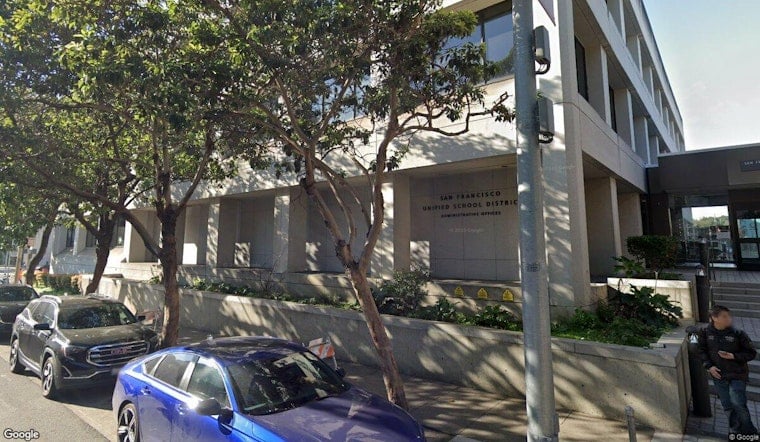
New York City and Los Angeles have both moved this month to restrict artificial intelligence tools in their classrooms, but San Francisco Unified School District still lacks a formal AI policy — and won't vote on one until March 2027. In the meantime, a parent-and-educator coalition called Tech In Check is demanding the district act now, starting with an AI reading tutor called Amira that has become the flashpoint in San Francisco's slow-moving debate.
A Petition Piles Up Signatures While SFUSD Waits
As reported by The San Francisco Standard, Tech In Check has petitioned SFUSD to disable generative AI on student devices, discontinue Amira, return to shared computer carts in grades three through eight instead of individual Chromebooks and iPads, and make paper homework the default through fifth grade. The petition had gathered 680 signatures as of September 3. Tech In Check describes itself as a coalition of San Francisco parents and educators, founded by two SFUSD employees who are also parents, and it wants the AI issue settled during the current school year rather than left to drag into 2027.
Sarah Conde-Sulzbach, one of the group's members, said she is tired of hearing that AI and screens are inevitable in the classroom, according to the Standard's reporting. Fellow parent Kiersten Reta Snavely said she wants a moratorium on AI use for all SFUSD students and has opposed deploying technologies with unknown developmental and ethical implications. SFUSD currently leaves decisions about student device use to individual schools and teachers, and the district relies heavily on digital curriculum even as it says it is still developing policies and best practices around AI.
Amira's Voice Recordings Draw Scrutiny
Amira, the AI tutor at the center of the fight, coaches children as they read aloud and has become a centerpiece of SFUSD's early literacy work, with the district expanding it to more elementary classrooms. But the tool also records children's voices, a detail that has drawn objections in San Francisco and beyond — Atlanta parents raised similar alarms over Amira's voice-data collection for kindergartners, part of a wider pattern of pushback over the same reading software.
Philippe Marchand, who reviewed studies on Amira, found that a Spark SF report crediting the tool with reading gains did not match publicly available district proficiency data, per the Standard. New Mexico parents have separately raised concerns about the recordings Amira makes. SFUSD's own public guidance on AI is described as a resource page rather than an actual policy, and the guidance itself states that much work remains. According to the California Department of Education, local educational agencies should comply with student data privacy laws and policies when addressing artificial intelligence, including requirements covered in its Data Privacy, Security, and Procurement resources. California Department of Education guidance says districts should determine how long an AI system retains student data and whether that period aligns with their data-retention policies.
Big Cities Are Moving Fast
New York City Mayor Zohran Mamdani announced a one-year moratorium on student-facing generative AI through eighth grade on September 2, arguing that technology being everywhere does not mean it belongs everywhere. New York City has shut down AI programs with dozens of companies as part of the crackdown, blocking most students from using AI tools and disabling AI components in more than 38 previously approved programs. The policy caps screen time at 30 minutes a day in grades three through five, bars individual devices through second grade, and bars teachers from using AI to grade — though it still allows teachers to use AI for lesson planning and includes carveouts for assistive technology and multilingual learners.
Los Angeles has taken its own path. The Los Angeles school board voted unanimously over the summer to bar screens in the earliest grades and cap daily device use by grade level, and Los Angeles Unified School District has since announced that internet filtering software is already blocking sites categorized as AI tools on school-issued devices. District staff said the filtering software blocks students from sites categorized as AI tools, while students age 13 and older may use AI at a teacher's direction after a digital citizenship lesson, a step Hoodline covered as parents pushed for a fuller classroom ban. Common Sense Media, the San Francisco-headquartered nonprofit, praised LAUSD's screen-use decision and has said schools should teach AI literacy without requiring students to actually use AI tools.
Why San Francisco Is Moving Slower
SFUSD's board of education, made up of seven elected commissioners, has asked Superintendent Maria Su to bring them a technology policy, but the board isn't scheduled to review it until February and won't vote until March 9, 2027. That timeline traces back to a decision Hoodline reported in June, when the board opted to maintain its existing off-and-away mobile device policy and form an ad hoc committee rather than act immediately. Once the policy is approved, SFUSD would have roughly two months left in the school year to actually implement it.
SFUSD operates independently of San Francisco City Hall, and Mayor Daniel Lurie lacks comparable authority over the district that mayors like Mamdani hold over their school systems. The city does provide roughly one-quarter of SFUSD's budget, but the school board sets its own technology rules on its own schedule. At schools that already prohibit AI use, students have simply turned to personal devices instead, according to the Standard's reporting.
The delay comes as AI use among young people has become nearly universal. A national census by Common Sense Media found that 86% of youth ages 9 to 17 have used generative AI, with 70% of teens using AI tools specifically to complete schoolwork — research the group says shows AI use is nearly universal among teenagers and preteens. Nationally, a separate survey found 60% of K-12 teachers said their district lacked clear AI policies as of 2025, while only 18% had received formal guidance from administrators, according to a report from Tech Policy Press, which suggests SFUSD's slow rollout mirrors a much broader national gap rather than an isolated failure to plan. The California Department of Education's statewide professional-learning materials are intended to help transitional kindergarten through grade 12 educators address artificial intelligence, placing SFUSD's debate within a broader effort to develop school guidance. A California Department of Education student advisory board document dated 5 Nov 2025 says the department is to develop guidance and a model policy for artificial intelligence in public K-12 schools, including charter schools.





