

























































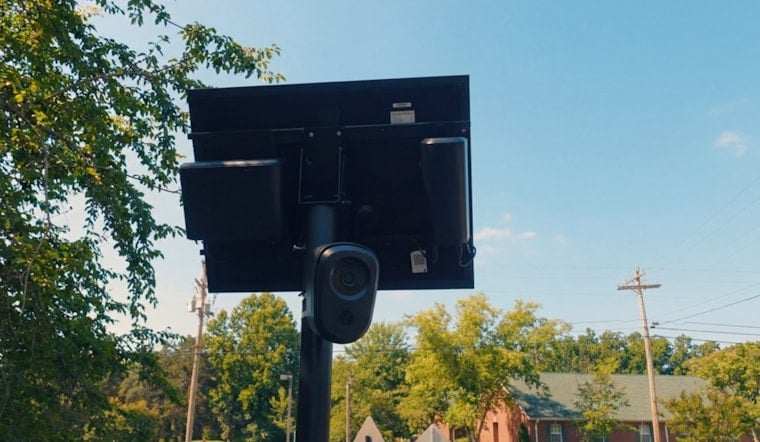
Woodland Police Chief Ryan Kinnan told the city council that the department's network of 38 Flock Safety license plate cameras has helped solve a hit-and-run, an assault with a deadly weapon, and multiple stolen vehicle cases since the system went online. But the presentation came only weeks after Woodland residents renewed their calls in August to cancel the contract entirely, arguing the cameras amount to warrantless surveillance in a city where more than half the population is Hispanic and roughly a fifth are foreign-born.
Kinnan called the technology “absolutely a game changer when conducting investigations,” according to the Sacramento Bee. The chief's presentation to the Woodland City Council came at the council's own request, after members asked the police department to include detailed information about how the system is used. Woodland has one Motorola Vigilant license plate reader in addition to its Flock network, and the city signed a two-year extension for its Flock cameras even as it committed, back in March, to reviewing how the system captures and stores information.
Automatic license plate reader technology has assisted Woodland officers with identifying suspects, comparing evidence, locating vehicles, recovering stolen cars, and making arrests, per the department's presentation. Woodland's cameras scanned more than 392,000 license plates in the past 30 days alone, and the scans included roughly 2,100 vehicles that were on police hotlists — the alert system that notifies departments when a crime-associated vehicle is captured by any Flock camera anywhere in the network.
Privacy Concerns Collide With Investigative Claims
Opponents of the program say the technology violates residents' privacy and have raised specific concerns about data security and system accuracy, the Sacramento Bee reports. Woodland has a diverse community with many immigrants and mixed-status families, and some residents have told the city council directly, in a February session, that they feared vehicle-tracking logs could end up in the wrong hands. Councilmember Mayra Vega said she appreciates and shares those concerns, even as she has also heard from constituents whose stolen property was recovered using Flock.
The tension is playing out well beyond Woodland. Grass Valley Police Chief Alexander Gammelgard announced in August that his department was indefinitely suspending its fixed-point license plate reader program and canceling its Flock Safety contract, citing concerns over data sharing, warrantless surveillance, and an unsettled legal landscape, according to ABC10. Grass Valley removed all of its Flock cameras within days of that decision, a move that followed months of community protest and internal technology reviews.
Regional Data Raises Accuracy Questions
Accuracy concerns aren't hypothetical elsewhere in the region. A Roseville Police Department analysis of 1,427 stolen-vehicle and felony alerts generated by Flock cameras in 2023 and 2024 found that 71% were misreads caused by machine-learning software errors, such as mistaking a “9” for an “8,” according to Business Insider. Roseville police have defended their continued use of the technology, saying a human-verification policy prevents those false alerts from triggering unwarranted stops. A separate July report found more than 1,000 inaccurate license plate alerts generated by the Roseville system, per the Sacramento Bee.
Woodland has its own auditing measures in place. Department policy requires annual audits, and Woodland has audited the system monthly since the start of 2026. Officials say the department tracks the reason behind every search of its Flock database, can restrict which outside agencies have access, can investigate unusual database behavior, and conducted 5,647 automatic license plate reader searches between January and June of 2026.
Outside Queries Have Sunk Contracts Elsewhere
Those safeguards matter because outside access has become the flashpoint that has killed Flock contracts in other cities. In Elk Grove, outside law enforcement agencies queried the city's license plate data more than 8 million times, an issue the Elk Grove Police Department has reviewed through its own audit, the Sacramento Bee reports. In Texas, the Pflugerville City Council voted in August to terminate its $87,500-per-year Flock contract after a resident's public records request revealed that 459 outside agencies had executed nearly 1.6 million queries of local camera data over six months — compared with just 5,078 searches by Pflugerville's own police, according to Community Impact.
A similar audit rattled the Mountain View Police Department in January, after officials discovered that external agencies had queried the city's 30 Flock cameras through enabled statewide lookup settings — a default that Mountain View's police chief publicly said left him disappointed. Not every city has moved to cancel, though: San José's City Council voted unanimously in March to keep its Flock network while adding local guardrails, including a 30-day data retention cap and a ban on placing cameras near reproductive health clinics or houses of worship, crediting the system with aiding homicide and kidnapping investigations.
State Law Limits Who Can See the Data
California law already sets some boundaries on how departments like Woodland's can share this information. Under Civil Code Title 1.81.23, enacted through Senate Bill 34 in 2015, and 2023 guidance from state Attorney General Rob Bonta, agencies are explicitly barred from sharing automated license plate reader data with federal or out-of-state law enforcement. Civil rights groups have nonetheless filed complaints alleging that dozens of California departments previously allowed exactly that kind of outside access.
State lawmakers are now trying to close remaining gaps. Senate Bill 1013, authored by State Sen. Sabrina Cervantes, advanced in August and would require public agencies to delete non-matching scan data after 30 days while restricting automated default access to national databases starting in 2027, according to CalMatters. California currently has no uniform statutory retention limit for how long local police agencies can hold onto license plate scans that don't match a hotlist.
A Vendor Under Scrutiny Statewide
Flock Safety, based in Atlanta, works with more than 7,000 law enforcement agencies nationwide, including more than a dozen in the Sacramento region, and describes itself as the largest automatic license plate recognition system in the country. The company has also drawn scrutiny of its own: in August, an employee quietly obtained a California private investigator license for Flock, a credential that legal scholars and privacy advocates have said could serve as a defensive shield against pending privacy lawsuits, as Hoodline previously reported.
The debate has already reshaped at least one nearby deployment. Rancho Cordova approved a $1 million, five-year agreement in March to deploy 53 Flock cameras across Sacramento County, a move that quickly sparked the local advocacy campaign known as Deflock Rancho Cordova. For Woodland, the path forward remains unresolved: the police department has pledged to keep auditing the system monthly, but residents' renewed push to cancel the contract this August shows the fight over Flock is far from settled.




