

























































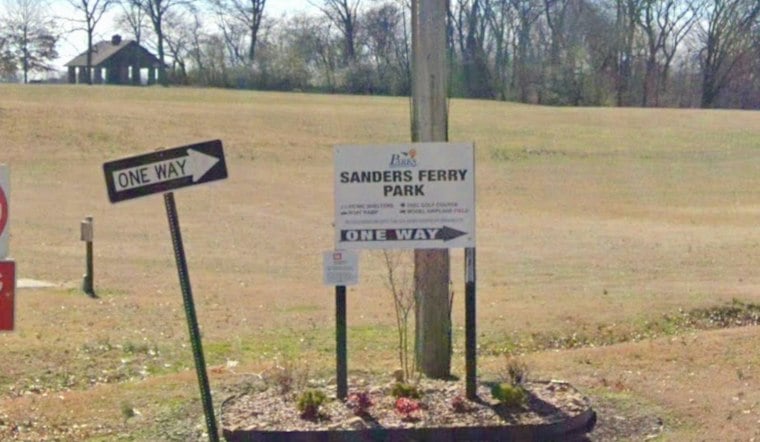
A World War II landing ship that carried troops onto Omaha Beach during the D-Day invasion has docked at Sanders Ferry Park in Hendersonville, opening its steel decks to visitors through Tuesday before continuing down the Cumberland River to Ashland City and Clarksville. USS LST-325, now operating as a floating museum, offers self-guided tours daily from 9 a.m. until the last admission at 5 p.m., giving Middle Tennessee residents a rare chance to walk the deck of one of the last operational Landing Ship Tanks from the war.
The ship is maintained in its original World War II configuration. The other surviving vessel, USS LST-510, now runs as a commercial passenger ferry between Orient, New York, and New London, Connecticut. As reported by WSMV, LST-325 was commissioned in 1943 and went on to participate in the Allied invasions at Gela, Sicily, and Salerno, Italy, before taking part in the Normandy landings at Omaha Beach.
A D-Day Workhorse With Two Battle Stars
A D-Day Workhorse With Two Battle Stars During the initial invasion on June 6, 1944, LST-325 took part in the Normandy landings and later made more than 40 supply runs across the English Channel between England and France. The ship earned two battle stars for its World War II service. Decades later, between 1951 and 1961, the vessel was reactivated as USNS T-LST-325 under the Military Sea Transportation Service, taking part in Operation SUNAC to help build Arctic radar outposts along the coasts of Canada and Greenland as part of North America's early warning defense line, per NavSource Naval History.
The station's report on the ship's history notes that LST-325 later served in the Greek Navy from 1964 through 1999, known during that period as the HS Syros. That chapter set up one of the more remarkable footnotes in the ship's story: its journey back to American hands.
Twenty-Nine Veterans Brought The Ship Home
In late 2000, a volunteer crew of 29 American military veterans averaging 72 years old, led by Captain Bob Jornlin, repaired the decommissioned ship in Crete and sailed it 6,500 miles across the Atlantic Ocean to Mobile, Alabama, arriving in January 2001, according to Chronicle Media. Evansville, Indiana, became the ship's permanent homeport in October 2005, a choice tied to the city's wartime heritage as the nation's largest inland producer of LSTs. The National Park Service notes that Evansville built 167 Landing Ship Tanks and 35 other military vessels at a 40-acre riverfront shipyard during the war, a legacy that earned the city an official American World War II Heritage City designation in 2022.
In June 2020, LST-325 moved to a new $3.6 million downtown Evansville riverfront mooring facility and visitor center on Riverside Drive, occupying the former berth of the Tropicana Casino after it relocated onshore, per the Waterways Journal. The ship now makes annual trips to river cities, per WSMV.
Where The Ship Is Stopping In Middle Tennessee
LST-325 docked at Sanders Ferry Park in Hendersonville on Wednesday and will remain there through Tuesday, September 29, according to WSMV. From there, it travels to River Bluff Park in Ashland City, where it will dock from October 1 through October 6. Warship Week is scheduled in Ashland City during that stretch, according to the Kingston Springs Gazette. The ship then heads to McGregor Park and the Cumberland Riverwalk in Clarksville from October 8 through October 12.
Visitors touring the ship can explore its steel decks. Self-guided tours are available.
Ticket Prices And What's Aboard
Adult tickets cost $20, while tickets for children ages 6 through 17 cost $10, and children age 5 and younger are admitted free, per WSMV. Constructed in 1942, the 328-foot-long, 50-foot-wide vessel is powered by two 900-horsepower General Motors V-12 diesel engines, reaching a trial speed of 11.6 knots, approximately 13.3 miles per hour, according to the Hendersonville Chamber of Commerce. The ship was built to carry vehicles on its lower deck and could beach itself with as little as four feet of forward draft, letting it land troops and armor directly onto invasion beaches.
For Middle Tennessee communities more accustomed to seeing barges and towboats on the Cumberland, the arrival of a genuine D-Day combat vessel offers a rare, hands-on link to the same inland river shipbuilding tradition that once made Evansville a wartime powerhouse. Self-guided tours remain available at each stop for the duration of the ship's stay before it turns back north toward Indiana.





