

























































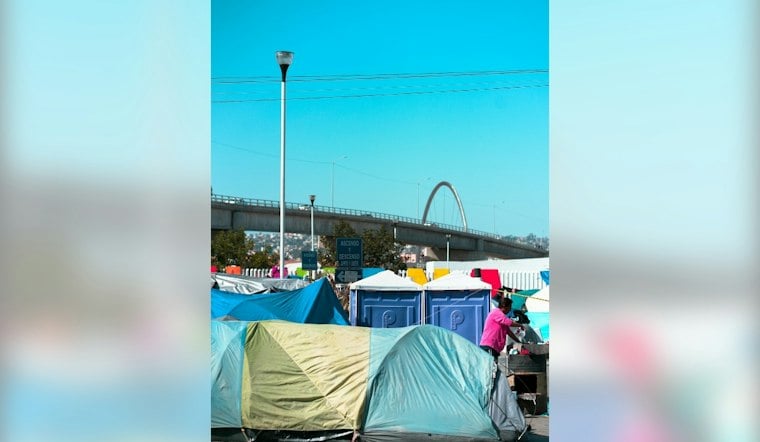
Twenty-one people have died at San Diego's city-run safe sleeping sites since the program launched in 2023, and the bulk of those deaths — 15 of them — happened at O Lot, the sprawling 581-tent site near Balboa Park. Six more occurred at the smaller 186-tent site at 26th Street and Pershing Drive. The toll has pushed San Diego City Council members to publicly question whether the low-barrier shelter model is adequately protecting the people it was built to serve.
The death count was detailed in reporting from inewsource, which found that San Diego County Medical Examiner records attribute several of the 2026 fatalities at O Lot to accidental drug overdoses. Among them: a June 4 methamphetamine overdose and a July 6 death involving a mix of fentanyl, methamphetamine, and PCP. The deaths came up during a San Diego City Council discussion Monday on the city's Community Action Plan on Homelessness, as first reported by FOX 5 San Diego & KUSI News.
Councilmember Sean Elo-Rivera did not mince words at the meeting. “It's not acceptable for anyone to die in the city's care, and it certainly can't ever be acceptable for us to know that deaths occur on a somewhat regular basis and that we're not changing the way that we're doing business there,” he said, according to the outlet's reporting. Councilmember Henry Foster III also raised concerns, saying he was struggling with efficiency, accountability, and who was in charge.
A Program Built From a 2023 Camping Crackdown
San Diego's Unsafe Camping Ordinance, passed by the City Council in June 2023, bans tent encampments near schools, parks, transit stops, and shelters at all times, and separately prohibits public sidewalk camping citywide when shelter beds are available. The safe sleeping sites opened that month. The sites are run through municipal contracts with two non-profit organizations, Dreams for Change and the Downtown San Diego Partnership, according to inewsource's reporting.
Since the program began in June 2023, roughly 3,718 unhoused individuals have participated, and 437 of them successfully transitioned into permanent or long-term housing, per the same inewsource account. City officials have pointed to that housing pipeline — along with dramatic drops in visible street encampments — as evidence the model works. Monthly counts from the Downtown San Diego Partnership showed unsheltered homelessness in Downtown San Diego and East Village fell nearly 65%, from 2,104 people in May 2023 to 756 in June 2025, a decline city officials credited primarily to safe sleeping sites and expanded shelter beds.
Audit Found Limits to the Approach
But an April 2024 performance audit by the San Diego City Auditor found that while the ordinance and safe sleeping sites reduced visible sidewalk encampments, they failed to reduce the city's overall unsheltered homeless population. That tension — fewer tents on sidewalks, but not necessarily fewer people without housing — runs through much of the debate over the program's value.
The city's own homelessness data, presented at Monday's council discussion, shows the scale of the challenge. San Diego says it needs more than 6,000 additional shelter beds or units to meet projected 2029 needs, plus more than 1,500 resources each year for prevention, diversion, and other interventions. The city served 14,769 people experiencing homelessness so far in 2026, up 37% from the 10,775 people served in 2019. Overall homelessness remains higher than that 2019 baseline, even though people exiting into permanent housing rose 36%, from 4,616 to 6,279, over the same period.
The average length of time people remain homeless has also grown, climbing from 771 days in 2019 to 980 days in 2026 — a 27% increase — while the rate of people returning to homelessness after exiting dropped slightly, by 0.7%. The city spent $280 million fighting homelessness in fiscal year 2026. Elo-Rivera said the city needs to do better on homelessness, arguing that prevention and diversion are wise investments while some city actions looked flashier but were not proven.
Deaths Fit a Grimmer Countywide Pattern
The fatalities at San Diego's safe sleeping sites are a small slice of a much larger mortality crisis among the region's unhoused population. San Diego County Medical Examiner data cited by Voice of San Diego shows unhoused deaths countywide hit a record 624 in 2023 before dropping in 2024 for the first time in a decade, with illicit drug toxicity, especially fentanyl, driving much of the toll.
This isn't the first time a death inside a city-run site has drawn scrutiny. ABC 10 News reported that an unhoused resident at a city-run safe sleeping site was found dead on a cot after several days — a case that fueled early criticism of monitoring at the camping sites.
Shelter Capacity Keeps Growing Despite the Questions
Even as council members press for answers, the city's shelter system keeps expanding. The San Diego City Council approved a homelessness budget for fiscal year 2027 funding more than 2,700 total shelter options, including 1,683 traditional shelter beds, 760 safe sleeping tents, and 350 safe parking spaces. Hoodline previously reported on 160 new shelter beds for homeless women and kids added amid that broader capacity push, and on how enforcement under the camping ordinance has collided with a $50M housing plan in East Village.
For now, the council's path forward remains unsettled. Elo-Rivera's comments Monday signaled that oversight of the non-profit contractors running day-to-day operations at sites like O Lot will likely face continued scrutiny, even as the city leans further into safe sleeping as a core piece of its homelessness strategy.





