

























































Sixty-one Somali grandmothers from across Minnesota sat down with recording equipment and sang the lullabies they once hummed to their own babies, part of a sweeping effort to capture oral traditions before they vanish. The result, a project called Sing Again, documents 67 Somali lullabies and poems for children, preserved for a generation that literacy educator Marian Hassan worries is losing its grip on the language entirely.
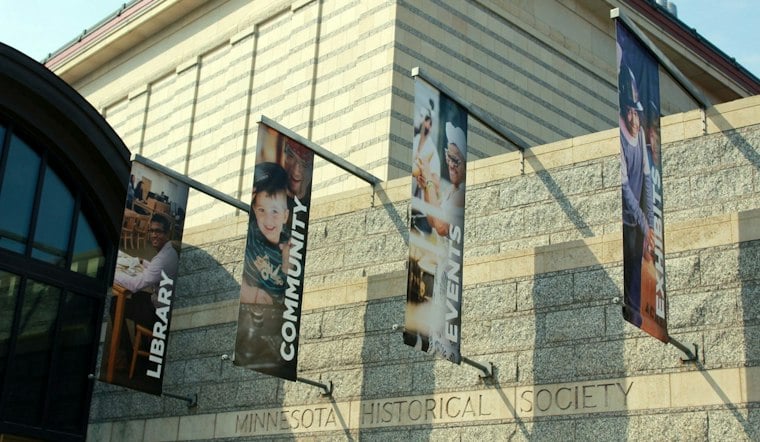
Hassan, a Somali immigrant, partnered with the University of Minnesota to gather the recordings, according to MPR News. She said the project was built to preserve the Somali language in Minnesota and to increase awareness of the culture behind it. The effort launched this month at the Minnesota History Center, where Somali elders, youth and Minnesota educators gathered to mark the preservation of these oral traditions.
A Grant That Sparked a Statewide Search
The project traces back to a Minnesota Legacy Historical and Cultural Heritage grant Hassan received in 2024. The exact size of that award is in dispute: the Star Tribune reported Hassan received a $121,000 grant, while the St. Cloud Times put the figure at $121,394. Either way, the funding let Hassan fan out across the state, recruiting grandmothers at mosques, Somali community centers and shopping malls, primarily from Minneapolis’s Cedar-Riverside neighborhood as well as Faribault, Wilmer, Rochester and St. Cloud.
Hassan found that many elders needed little convincing once they understood what was at stake. According to the same MPR News report, Somali elders were willing to participate once they learned how much Somali language use among children was declining. Hassan has watched that decline firsthand, observing significant language loss in her interactions with Somali children and youth — a trend Sahan Journal has also documented, reporting that Somali lullabies, folktales, poems and other oral traditions are quickly disappearing in the diaspora.
One Grandmother's 85 Years of Song
Among the participants is Hawa Aden, an 85-year-old grandmother of 42, who told MPR News she felt sad that the next generation of her community might not speak Somali anymore. Aden said the songs she sang to her own children are centuries old, and that parents whose children lose the language experience real sadness and loss. Her reasoning echoes what drove dozens of other grandmothers to step in front of a microphone: a fear that something irreplaceable was slipping away.
Hassan has described the experience of sitting with these women as humbling and life-changing, saying oral history is central to Somali survival and culture, passed down through poetry and song. She has said the songs carry memories of raising children, hopes for their futures, and lessons about survival and thriving — themes that run through much of Somali music, including messages about contributing to community, building good character, dependability and leadership.
Building a Curriculum for the Classroom
To turn the recordings into something teachers and parents could actually use, Hassan partnered with the University of Minnesota's Center for Advanced Research on Language Acquisition to develop a curriculum framework. The center describes the broader effort as a community-engaged collaboration led by Hassan, working to transform culturally rich oral lullabies into interactive, multilingual resources meant to support early language development, according to the University of Minnesota Center for Advanced Research on Language Acquisition. The recordings and a free downloadable curriculum are now available at singagain.org, which describes the project as documenting Somali lullabies and child-rearing oral traditions through interviews with Somali grandmothers.
Sources differ on when the project's physical materials will reach the public. The St. Cloud Times reported in 2024 that Sing-Again was expected to be completed as an illustrated bilingual volume by May 2025, while the project's own website has said the book collection and audio recordings would become available in August 2026. Hassan has said she plans to host community events sharing the curriculum in mosques and community centers later this year, and the project aims to offer an illustrated book for sale.
A Language Under Pressure
Minnesota is home to the largest Somali population in the United States, a community that grew after refugees began arriving in the early 1990s to escape civil war and famine. Somali is now the third most common language spoken at home in Minnesota, behind only English and Spanish, according to the Star Tribune. The paper also notes that the language itself has a relatively short written history, with sources differing on exactly when it was standardized — MPR News places it in the mid-1970s, while the Star Tribune dates the standardized script to the early 1970s, when Somali became the official government language.
Sahan Journal reports that more than 86,000 people of Somali descent live in Minnesota, and that language-preservation programs for Somali students have grown in response across Minneapolis Public Schools, St. Cloud schools and the University of Minnesota. Minneapolis Public Schools launched its Somali Heritage Language Program in 2021, when about 4,000 of its students identified as Somali; the program has since grown to 270 students in kindergarten through fourth grade. St. Paul Public Schools, meanwhile, opened an East African Elementary Magnet School supporting students in seven languages, a K-5 school that Sahan Journal reported had grown to more than 200 students.
Hassan has said some Somali children today cannot communicate with older family members, leaving elders grieving their inability to share their own culture. She has pointed to Somali youth at risk as an illustration of what can happen when young people become disconnected from heritage, pride and identity, and the project addresses that disconnection directly amid broader criticism and political targeting of Somali people in Minnesota. Hassan hopes the project will leave a positive mark on young people in her community, and she has said Sing Again could serve as a framework or model of language preservation for other immigrant communities facing the same slow erosion of mother tongues.





